Trump warns of wider Iran targets as Israel expands strikes


US President Donald Trump has warned that the United States could expand its military targets in Iran after Tehran rejected calls for surrender, as fighting between Iran and Israel intensified across the Middle East.
The remarks come during the seventh day of a rapidly escalating conflict that has already seen large-scale air strikes, missile attacks and rising concerns about global energy markets.
Escalation of US warnings
President Donald Trump said Washington would not pursue negotiations with Iran unless the country agreed to what he described as “unconditional surrender”. He warned that further military action was possible if Tehran refused to back down.
Speaking on Friday, Mr Trump said Iran would face severe consequences and predicted that the country could remain weakened for decades unless it surrendered or its government collapsed.
His comments came as the United States signalled preparations for a new phase of bombing operations against Iranian targets, which officials said could be among the most intense strikes since the conflict began.
Mr Trump is also expected to attend a ceremony at Dover Air Force Base to honour US service members killed during the fighting.
Israeli strikes on Tehran
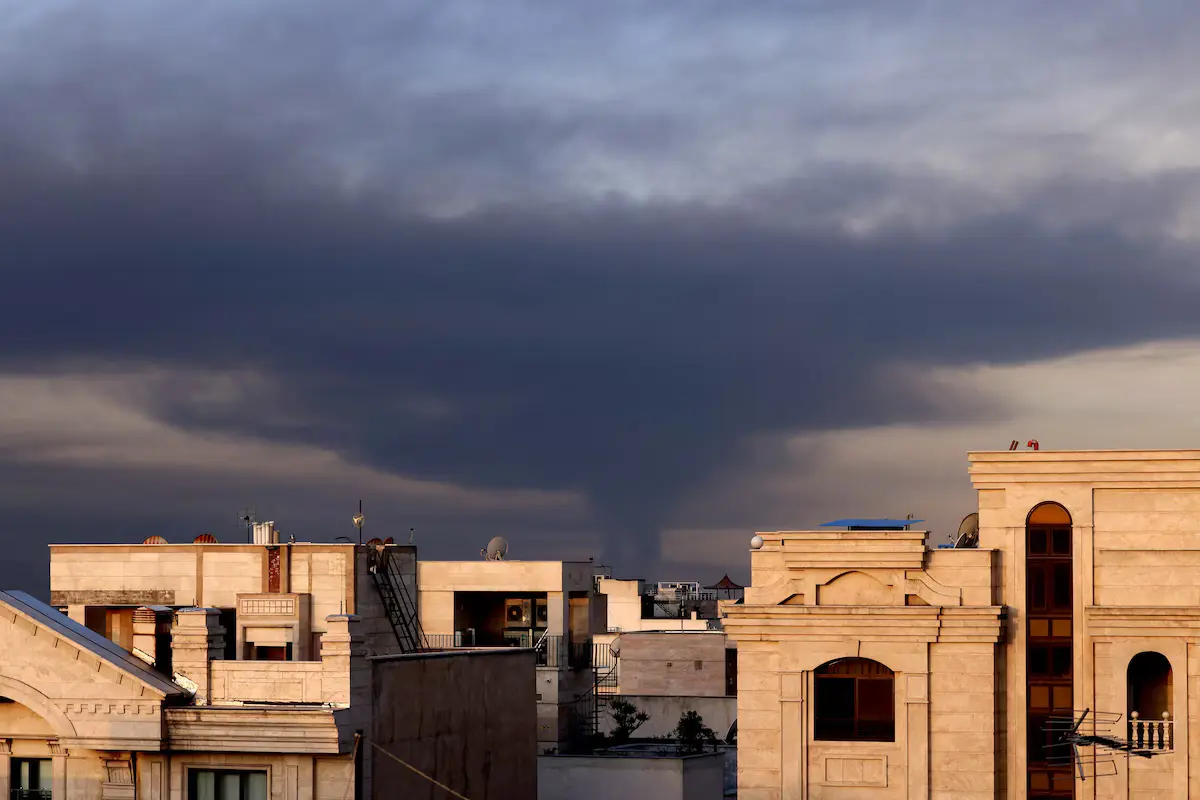
Meanwhile, Israel launched what it described as a broad wave of air strikes on the Iranian capital Tehran early on Saturday.
Video footage from international news agencies showed large explosions and heavy plumes of smoke rising above western areas of the city.
Israeli forces said the attacks targeted military facilities connected to Iran’s defence infrastructure, including sites linked to the country’s nuclear programme and military leadership.
The Israeli campaign forms part of a wider offensive involving both Israel and the United States, which officials say is intended to degrade Iran’s military capabilities.
Iran retaliates with missile attacks
Iran responded with further missile strikes against Israel and several Gulf states.
Residents in Jerusalem reported hearing loud explosions shortly after midnight local time as Israeli defence systems attempted to intercept incoming missiles.
The exchange of strikes has spread the conflict across several parts of the Middle East, raising fears of a broader regional war involving multiple countries.
Iranian officials have not indicated any willingness to surrender, and the government has instead vowed to continue its response to the attacks. Russian involvement and diplomatic contacts
The conflict has also drawn in other global powers.
According to two US officials familiar with intelligence assessments, Russia has provided Iran with information that could assist Tehran in targeting American military forces.
The Kremlin confirmed that Russian President Vladimir Putin spoke by telephone on Friday with Iranian President Masoud Pezeshkian. During the call, Mr Putin expressed condolences following the reported killing of Iran’s Supreme Leader Ayatollah Ali Khamenei during the conflict.
The development highlights the growing international dimension of the crisis and the potential for tensions between major powers.
Civilian casualties and controversy
Evidence has also emerged suggesting that an explosion that killed dozens of Iranian students at a school may have been linked to US air strikes targeting a nearby compound associated with Iran’s Islamic Revolutionary Guard Corps.
The incident has raised concerns about civilian casualties as the conflict intensifies, although US officials have not publicly confirmed responsibility for the blast.
Human rights groups and international organisations have called for investigations into the incident and urged all sides to minimise harm to civilians.
The escalating conflict has also begun to affect global energy markets.
Saad al-Kaabi, Qatar’s energy minister, warned in an interview with the Financial Times that the war could have severe consequences for the global economy.
He said a wider disruption to Gulf energy exports could “bring down the economies of the world”, warning that oil prices could climb as high as $150 per barrel if exports were significantly disrupted.
Market concerns have already pushed oil prices higher. Benchmark US crude rose above $90 per barrel on Friday, reaching its highest level in more than two years.
Analysts say the conflict between Iran and Israel risks triggering a prolonged regional confrontation with global consequences.
The Middle East remains one of the world’s most important sources of oil and gas exports, and any disruption to supply routes could affect energy prices worldwide.
Diplomatic efforts to de-escalate the situation have so far made little progress, and there is growing concern among international observers that the fighting could expand further in the coming days.
With US and Israeli strikes continuing and Iran promising retaliation, the crisis has become one of the most serious security challenges in the region in recent years.
Kerala Initiates Probe into 2006 Suicide Case Involving CEC
Extradition of Sheikh Hasina Feasible, Says Indian High Commissioner

Punjabi Makeup Artist Mad Sandhu Shot Dead in Amritsar

India Achieves Fourth Place at Asian Games 2026 Through Late Success