US Waiver Allows India to Buy Russian Oil Amid Strait of Hormuz Tensions


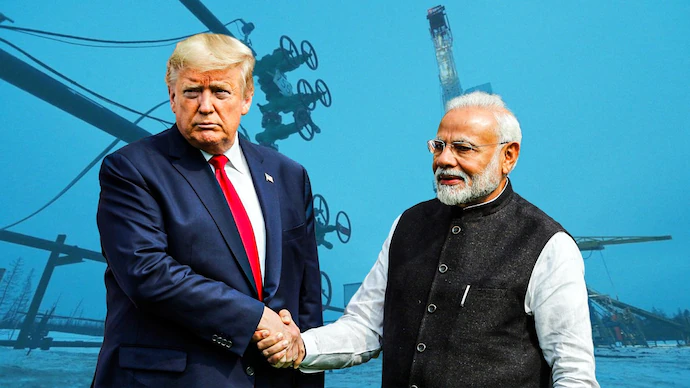
India has been granted a temporary waiver by the United States allowing the purchase of certain Russian oil cargoes stranded at sea, as conflict in the Middle East disrupts energy supplies and raises concerns over global oil markets.
The measure, announced by the administration of United States President Donald Trump, permits Indian refiners to complete transactions involving specific Russian crude shipments for a limited period, offering short-term relief as shipping through the Strait of Hormuz faces heightened risk.
Temporary waiver for Russian oil cargoes
According to the United States Department of the Treasury, the waiver applies only to Russian crude oil and petroleum products that were loaded onto vessels before new restrictions took effect earlier in March 2026.
The authorisation allows transactions connected to the sale, delivery or offloading of those shipments until early April, provided the cargo is delivered to a port in India and purchased by companies registered under Indian law.
United States Treasury Secretary Scott Bessent said the decision was intended to prevent disruptions to global oil supply during a period of geopolitical instability.
“India is an essential partner of the United States,” Mr Bessent wrote on social media. “This stop-gap measure will alleviate pressure caused by Iran’s attempt to take global energy hostage.”
He added that the United States expects India to increase purchases of American energy in the longer term.
Energy security concerns for India
India relies heavily on imported crude oil to meet domestic demand. Around 90 percent of the country’s oil consumption depends on imports, with a substantial portion traditionally sourced from the Middle East.
Energy flows from that region have been affected by the ongoing conflict involving Iran and the United States, which has created security risks for shipping through the Strait of Hormuz, a narrow waterway linking the Persian Gulf with global shipping routes.
The passage is one of the world’s most important oil transit corridors. Estimates suggest roughly one fifth to one quarter of global oil shipments move through the strait, making disruptions there particularly significant for Asian economies such as India and China.
Although Iran has not formally declared the waterway closed, several tankers passing through the area have reportedly been attacked. The incidents have raised concerns among shipping companies and insurers, leaving some vessels waiting offshore.
India’s oil supply buffer
Indian authorities say the country currently holds sufficient reserves to manage short-term supply disruptions.
Oil Minister Hardeep Singh Puri said existing crude stocks could cover roughly 25 days of demand, with additional reserves of petrol and diesel extending supply for another 25 days. When combined with India’s strategic petroleum reserves, officials estimate the country has about eight weeks of energy coverage.
A government official told reporters that the situation remains manageable, adding that India continues to receive oil from other suppliers, including the United States, West Africa and parts of Latin America.
Analysts say the temporary access to Russian crude could help stabilise supply conditions for domestic refiners during this period of uncertainty.
Return to Russian crude supplies
Since the start of the Russia-Ukraine war in 2022, India had emerged as the largest buyer of Russian seaborne crude oil, taking advantage of discounted prices offered after Western sanctions restricted Moscow’s access to traditional markets.
Earlier this year, however, Indian purchases declined after pressure from Washington and the introduction of potential tariffs tied to Russian oil imports.
Industry data indicates Russian oil accounted for roughly 21 percent of India’s crude imports in January. By February, that share had begun to rise again, approaching around 30 percent as market conditions shifted.
State-owned refiners including Indian Oil Corporation, Bharat Petroleum Corporation and Hindustan Petroleum Corporation have reportedly begun discussions with traders to secure Russian cargoes available for prompt delivery.
According to industry sources, Indian state refiners have already purchased about 20 million barrels of Russian crude from traders following the waiver announcement.
Changing market conditions
Market dynamics have also shifted since the outbreak of the latest conflict in the Middle East.
Russian Urals crude, which previously traded at deep discounts compared with global benchmark Brent crude, has recently become more expensive as supply competition increases.
Traders say some shipments are now being offered at a premium of around four to five dollars per barrel above Brent prices for deliveries scheduled in March and early April. Only weeks earlier, similar cargoes were reportedly being sold at discounts of roughly thirteen dollars per barrel.
Analysts say increased demand from India, along with possible purchases by China, could tighten global supplies of Russian export barrels.
Oil market intelligence firm Kpler said renewed Indian buying may initially focus on meeting domestic fuel demand rather than expanding exports of refined products.
Economic implications for India
Rising global oil prices remain a concern for the Indian economy, which is sensitive to fluctuations in energy costs.
Brent crude prices have climbed sharply during the week following the escalation of tensions between Iran and the United States, marking one of the steepest weekly increases since the start of the Russia-Ukraine conflict.
Economists note that even modest increases in oil prices can have a significant impact on India’s import bill. Former NITI Aayog chief executive Amitabh Kant has previously estimated that every ten-dollar increase in crude prices could add between 13 and 14 billion dollars to India’s annual import costs.
Higher energy prices can also widen the country’s current account deficit and place downward pressure on the value of the Indian rupee.
Short-term relief amid ongoing uncertainty
Experts say the United States waiver offers only temporary relief rather than a long-term solution.
Some analysts have also pointed to uncertainty over the regulatory language governing the waiver, which could create confusion for shipping companies, insurers and oil traders over which cargoes qualify.
Nevertheless, the availability of Russian shipments currently at sea may help ease immediate supply concerns for Indian refiners while the situation in the Middle East continues to evolve.
For India, the development highlights the delicate balance between geopolitical pressures and the need to secure affordable energy supplies for one of the world’s fastest-growing economies.
Kerala Initiates Probe into 2006 Suicide Case Involving CEC

Extradition of Sheikh Hasina Feasible, Says Indian High Commissioner

Punjabi Makeup Artist Mad Sandhu Shot Dead in Amritsar

India Achieves Fourth Place at Asian Games 2026 Through Late Success