Strait of Hormuz Crisis: Indian Tanker Departs Amid Gulf Tensions


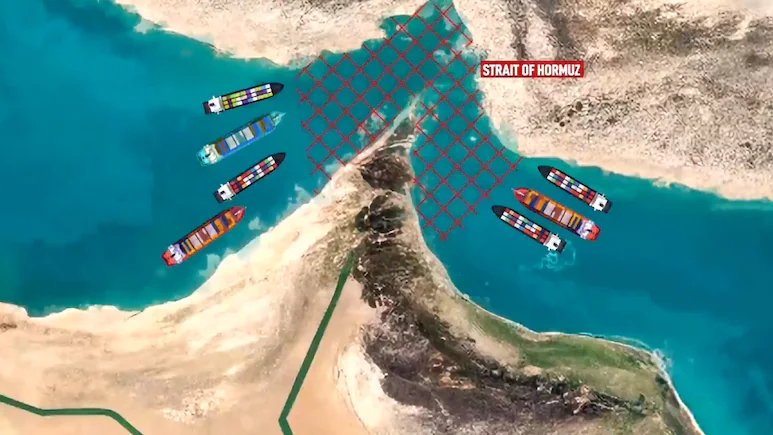
Indian maritime authorities say the tanker Jag Prakash set sail from the Gulf of Oman after days of uncertainty surrounding shipping movements near the Strait of Hormuz.
The vessel is transporting gasoline from Sohar Port in Oman and is scheduled to unload its cargo at Tanga Port in Tanzania later this month, according to ship-tracking data.
Officials confirmed that the departure took place while several other Indian-flagged ships remain stranded in the region amid heightened security risks.
Rajesh Kumar Sinha, Special Secretary in India’s Ministry of Ports, Shipping and Waterways, said four Indian-flagged vessels had been located east of the Strait of Hormuz earlier in the week.
“One vessel has now sailed while three vessels remain on the eastern side with 76 Indian sailors onboard,” he told reporters.
A much larger group of Indian ships remains west of the narrow maritime passage inside the Persian Gulf.
According to Sinha, 24 Indian-flagged vessels were still waiting in those waters on Friday, carrying a total of 677 Indian crew members.
Shipping disruptions linked to regional conflict
Shipping traffic through the Strait of Hormuz has been severely disrupted over the past two weeks as hostilities between Iran and the United States and Israel escalated.
The conflict intensified after Iranian authorities accused the United States and Israel of launching attacks on Iranian territory that resulted in the death of Iran’s Supreme Leader, Ayatollah Ali Khamenei, on 28 February.
Iran has responded by targeting commercial shipping and restricting passage through the strategic waterway.
The Strait of Hormuz connects the Persian Gulf to the Arabian Sea and is widely regarded as one of the world’s most important energy transport routes.
Under normal conditions, about one fifth of the global supply of crude oil and liquefied natural gas passes through the narrow corridor each day.
Security analysts say the disruption has created a significant risk to global energy supply chains, particularly for countries in Asia that rely heavily on Gulf exports.
Commercial vessels targeted in attacks
Maritime monitoring organisations report that commercial vessels have increasingly come under attack in and around the strait since the conflict escalated.
Data compiled by the United Kingdom Maritime Trade Operations centre, the International Maritime Organization and Iranian authorities indicates that roughly 20 commercial ships have been targeted or affected by incidents in the region.
Among them are at least ten oil tankers that were either struck, attacked or reported damage between the start of the conflict and 11 March.
The incidents have contributed to a sharp decline in shipping traffic through the waterway.
Industry analysts say only a small fraction of vessels that would normally pass through the strait have continued their journeys during the current crisis, while others have diverted or halted operations due to safety concerns.
In several reported cases, tankers have caught fire following attacks or explosions.
Iran’s position on shipping access
Iranian officials have indicated that passage through the strait may still be permitted for some countries.
Iran’s Deputy Foreign Minister Majid Takht-Ravanchi said vessels from certain nations had been allowed to transit the route despite the broader restrictions imposed during the conflict.
Separately, Iran’s Ambassador to India Mohammad Fathali suggested that Indian ships could receive safe passage through the strait because of the long-standing relationship between the two countries.
“Yes, because India is our friend. You will see it within two or three hours,” the ambassador said when asked about possible safe transit for Indian vessels.
Fathali described India and Iran as partners with shared interests in the region and said the two countries maintain a relationship built on cooperation.
He also referred to support provided by India to Iran during periods of tension, emphasising that the relationship remained important to Tehran.
Strategic importance of the Strait of Hormuz
The Strait of Hormuz has long been regarded as a strategic chokepoint for the global energy trade.
At its narrowest point, the passage is roughly 50 miles wide and serves as the main gateway for oil and gas exports from Gulf producers including Saudi Arabia, Kuwait, Iraq, Qatar and the United Arab Emirates.
Any disruption to shipping through the strait can have immediate consequences for global energy markets.
Energy traders and shipping companies have been closely monitoring developments in the region as the conflict unfolds.
Higher insurance costs for vessels, rerouting of tankers and delays in cargo deliveries are already being reported across international shipping networks.
Context
India is among the world’s largest importers of crude oil and depends heavily on maritime routes through the Persian Gulf to meet its energy needs.
A significant portion of India’s crude oil and liquefied petroleum gas imports typically pass through the Strait of Hormuz.
Because of this reliance, developments in the waterway are closely watched by policymakers in New Delhi.
Indian authorities have been coordinating with shipping companies and international partners to monitor the safety of Indian vessels and crew members in the region.
The departure of the Jag Prakash tanker is therefore seen as a sign that some maritime movement remains possible despite the ongoing conflict, although much of the shipping traffic through the strait continues to face severe disruption.

Ceasefire Agreed in Oleshky Amid Ukraine's Humanitarian Crisis
Donald Trump Hints at US Interest in Cuba After Conflict in Iran
UK Court Rules Against India in RAKIA Investment Dispute

India Raises Concerns Over Chinese Border Patrolling Deviations