Strait of Hormuz Oil Tanker Reaches India Amid Middle East War


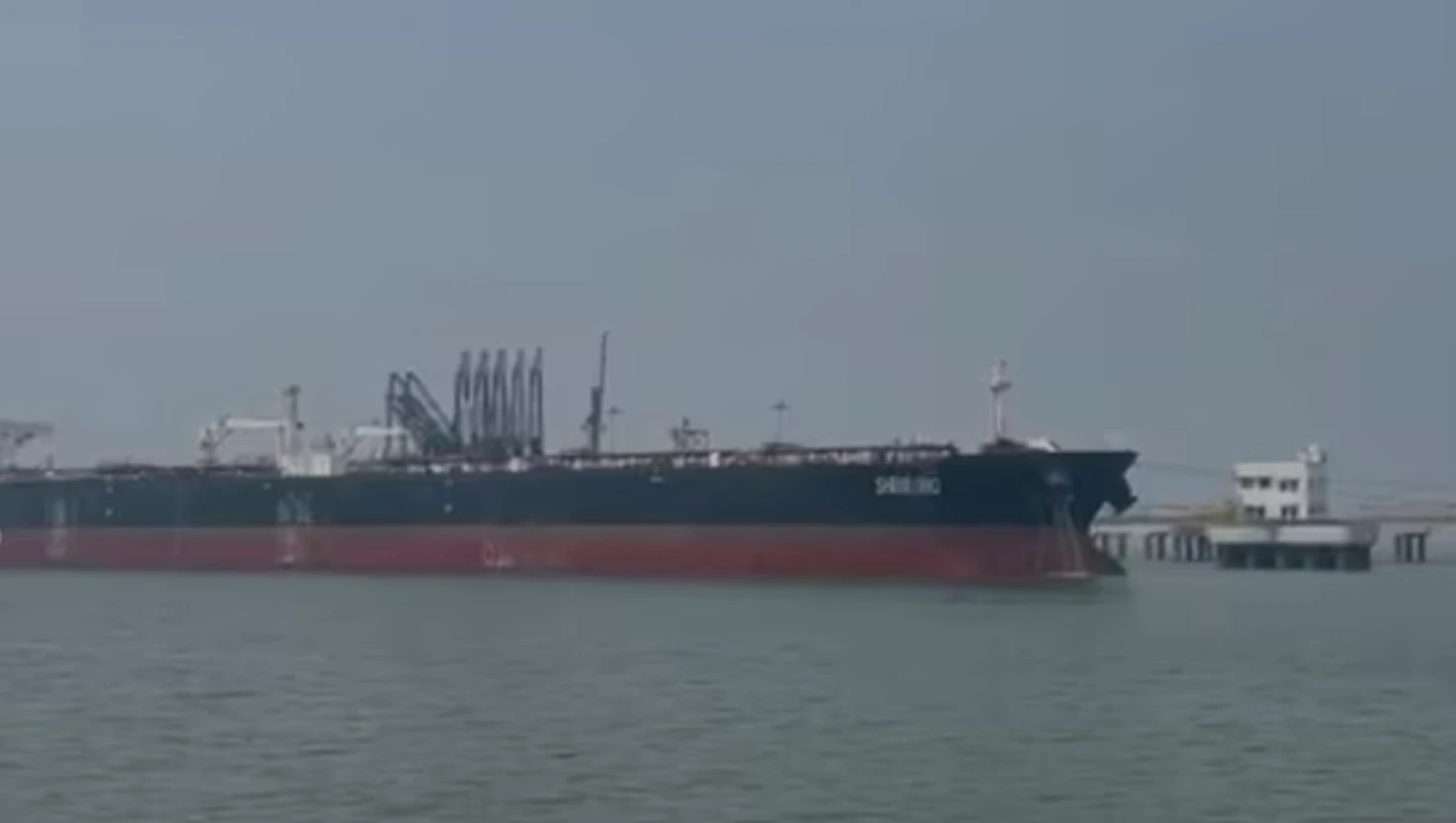
An oil tanker carrying crude oil to India has successfully crossed the Strait of Hormuz amid escalating military tensions in the Middle East, becoming one of the first vessels to reach the country since the conflict began disrupting maritime traffic.
The ship, transporting Saudi crude oil, arrived at Mumbai Port after navigating the strategically important waterway where shipping activity has slowed due to attacks and security risks linked to the conflict involving Iran, the United States and Israel.
Tanker reaches Mumbai despite conflict
The Liberia-flagged tanker Shenlong Suezmax docked at the Jawahar Dweep Terminal in Mumbai after completing the high-risk journey from Saudi Arabia.
Port officials said the vessel was carrying approximately 135,335 metric tonnes of crude oil that will be supplied to refineries in eastern Mumbai.
According to Mumbai Port Authority officials, unloading operations began shortly after the vessel arrived and are expected to take more than a day to complete.
Praveen Singh, Deputy Conservator of Mumbai Port Authority, confirmed the cargo details and the vessel’s arrival. “The ship Shenlong is carrying 1,35,335 metric tonnes of crude oil. She is berthed at Jawahar Dweep Terminal and has started discharging the cargo,” he said.
The tanker departed from the Saudi Arabian port of Ras Tanura on 1 March before heading towards India through the Persian Gulf.
Voyage through a conflict zone
The ship’s journey drew attention because it passed through the Strait of Hormuz, a narrow maritime corridor between Iran and Oman that is one of the most important oil shipping routes in the world.
More than 20 million barrels of oil normally pass through the strait every day, making it critical to global energy markets.
Since the outbreak of hostilities involving Iran and its regional rivals, maritime traffic in the region has been disrupted by missile strikes, attacks on infrastructure and heightened military patrols.
Many vessels have either delayed their passage or diverted routes because of the security risks.
The Shenlong Suezmax crossed the strait only days after the conflict intensified, making it one of the first India-bound tankers to navigate the route successfully during the crisis.
‘Going dark’ to reduce risk
Maritime tracking data indicated that the tanker temporarily disappeared from monitoring systems while travelling through the strait.
Shipping analysts say this likely occurred because the crew switched off the vessel’s Automatic Identification System, commonly known as AIS.
The AIS normally broadcasts a ship’s identity, position and course to other vessels and monitoring authorities.
However, in areas affected by conflict, ships sometimes deactivate the system temporarily to avoid detection or targeting.
This tactic, known in maritime circles as “going dark”, is generally used only in exceptional circumstances because international maritime safety regulations require the system to remain active.
After clearing the most dangerous section of the route, the tanker’s signals reappeared on tracking systems as it continued towards India.
Crew and ownership
The vessel is owned by Shenlong Shipping Limited and is managed by Dynacom Tanker Management, a company based in Athens, Greece.
The tanker was commanded by Captain Sukshant Singh Sandhu, an Indian national.
Officials said the ship had a crew of 29 members, including seafarers from India, Pakistan and the Philippines.
The successful voyage has been seen as a sign that some shipping activity through the region is continuing despite the ongoing conflict.
Attacks on ships raise concern
The security situation in the Strait of Hormuz remains uncertain.
Reports have emerged of attacks on commercial vessels navigating the route.
One such incident involved a bulk carrier named Mayuree Naree, which was struck by projectiles while travelling through the region after leaving the United Arab Emirates.
The vessel caught fire and several crew members were reported missing while others were rescued by naval forces from Thailand and Oman.
These incidents have contributed to rising caution among shipping companies and insurers.
Some vessels have formed queues outside the Gulf while awaiting safer conditions before attempting to pass through the strait.
Importance of the Strait of Hormuz
The Strait of Hormuz is a narrow waterway connecting the Persian Gulf with the Arabian Sea.
It is considered one of the most strategically significant energy routes in the world.
A large share of global crude oil and liquefied natural gas exports from Gulf countries, including Saudi Arabia, Iraq, Kuwait and the United Arab Emirates, pass through this corridor.
For countries such as India, the route is especially important because a substantial portion of imported oil and gas shipments travels through the strait.
Any disruption to shipping in this area can therefore have immediate consequences for global energy markets.
Energy market reaction
The ongoing conflict has already pushed global oil prices higher, with prices reportedly rising above 100 US dollars per barrel during the latest escalation.
Energy analysts say the uncertainty surrounding shipping in the Strait of Hormuz is contributing to volatility in global markets.
However, the arrival of the tanker in Mumbai has offered some reassurance that oil deliveries to India are continuing despite the risks.
Context: India’s reliance on imported oil
India is one of the world’s largest consumers of crude oil and relies heavily on imports to meet its energy demand.
A significant share of these imports comes from countries in the Middle East.
Because many of those shipments pass through the Strait of Hormuz, instability in the region can directly affect India’s energy supply chain.
The safe arrival of the Shenlong Suezmax demonstrates that some shipments are still reaching the country even as tensions continue to affect maritime routes.
Nevertheless, analysts say the situation remains uncertain and will depend on how the conflict develops in the coming weeks.

Kerala Initiates Probe into 2006 Suicide Case Involving CEC

Extradition of Sheikh Hasina Feasible, Says Indian High Commissioner

Punjabi Makeup Artist Mad Sandhu Shot Dead in Amritsar

India Achieves Fourth Place at Asian Games 2026 Through Late Success