India LPG Supply: Government Urges Public Not to Panic


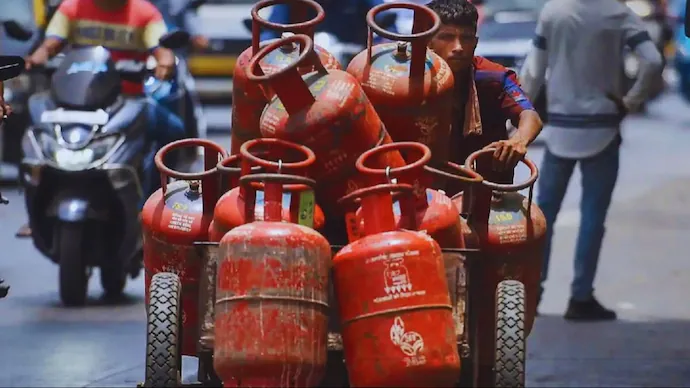
India’s petroleum authorities have appealed for calm after a sharp rise in LPG cylinder bookings across the country, driven by concerns over potential supply disruptions linked to the conflict involving Iran, Israel and the United States.
Officials said the surge in bookings reflects precautionary behaviour rather than an actual shortage of cooking gas supplies.
Sujata Sharma, Joint Secretary in India’s Ministry of Petroleum and Natural Gas, said daily LPG bookings have climbed to around 7.57 million compared with a pre-crisis average of 5.57 million.
“I want to appeal to the people that there be no rumour mongering and there is absolutely no need to panic,” she said, emphasising that supply levels remain stable.
According to the ministry, all available LPG output is currently being directed towards domestic household consumption to ensure uninterrupted access to cooking fuel.
Impact of Strait of Hormuz disruption
The concerns about LPG availability follow escalating tensions in West Asia that have affected maritime traffic through the Strait of Hormuz, one of the world’s most critical energy shipping routes.
The narrow waterway links the Persian Gulf with the Arabian Sea and handles roughly one fifth of the world’s crude oil and liquefied gas shipments.
Before the current disruption, India relied heavily on this route. About 60% of the country’s LPG requirement was imported, and roughly 90% of those imports typically travelled through the Strait of Hormuz.
Reports of attacks on commercial vessels and tanker explosions in the region have intensified fears about global energy supplies. Some shipping companies have temporarily halted operations in the corridor due to security risks.
Energy analysts say such disruptions can quickly affect countries that rely heavily on imported fuel, including major Asian economies.
Government response to supply risks
Indian authorities say they moved quickly to increase domestic output and diversify supply sources after the shipping disruption began.
Officials reported that LPG production within India has increased by nearly 30% following directives to maximise refinery output of propane and butane streams used to produce cooking gas.
In parallel, India has been sourcing additional LPG cargoes from countries outside the Gulf region, including the United States, Canada, Norway, Algeria and Russia.
The government has also created a dedicated committee to monitor the situation and prepare contingency plans should global shipping disruptions persist.
Officials say the priority is ensuring uninterrupted cooking fuel for households, particularly for lower-income families who rely on subsidised cylinders under welfare programmes.
Crude oil supply remains stable
Authorities also sought to reassure markets that India’s broader energy supply remains secure.
Sharma said the country currently imports crude oil from about 40 different nations, a significant increase compared with the number of suppliers two decades ago.
As a result, crude oil inflows are exceeding India’s daily requirement of around 5.5 million barrels, according to the petroleum ministry.
This diversification strategy, developed over several years, is intended to protect the country from sudden disruptions in any single region.
Global energy markets have nevertheless reacted sharply to the West Asia conflict. International benchmark Brent crude oil prices recently climbed above $120 per barrel, while liquefied natural gas prices in Asia have also surged.
Such increases could eventually influence energy costs for industries and power generation across the region.
Security measures for energy shipments
India has also taken steps to safeguard its energy transport routes.
Under a maritime security initiative known as Operation Sankalp, the Indian Navy has deployed warships and surveillance assets to the Persian Gulf and nearby sea lanes.
The mission aims to protect Indian-flagged merchant ships and energy tankers travelling through volatile waters and ensure that essential fuel shipments can continue.
Officials say the operation is part of broader efforts to secure national energy supplies during periods of geopolitical instability.
Meanwhile, Iranian authorities have rejected reports suggesting that India-flagged vessels have been granted special passage through the Strait of Hormuz.
Context
India is one of the world’s largest consumers of LPG, which is widely used as a household cooking fuel. More than 330 million families rely on LPG cylinders, including tens of millions of low-income households covered under the Pradhan Mantri Ujjwala Yojana welfare scheme.
Because of this heavy dependence, any disruption in global gas shipments can quickly raise concerns among consumers.
Energy experts say the current spike in bookings illustrates how geopolitical tensions can influence public behaviour even when supplies remain adequate.
Officials say maintaining steady supply chains and preventing hoarding will be key to ensuring that households continue to receive cooking gas without interruption during the ongoing global uncertainty.

Ceasefire Agreed in Oleshky Amid Ukraine's Humanitarian Crisis
Donald Trump Hints at US Interest in Cuba After Conflict in Iran
UK Court Rules Against India in RAKIA Investment Dispute
India Raises Concerns Over Chinese Border Patrolling Deviations