India Fuel Supplies Secure Despite Middle East Conflict: Minister


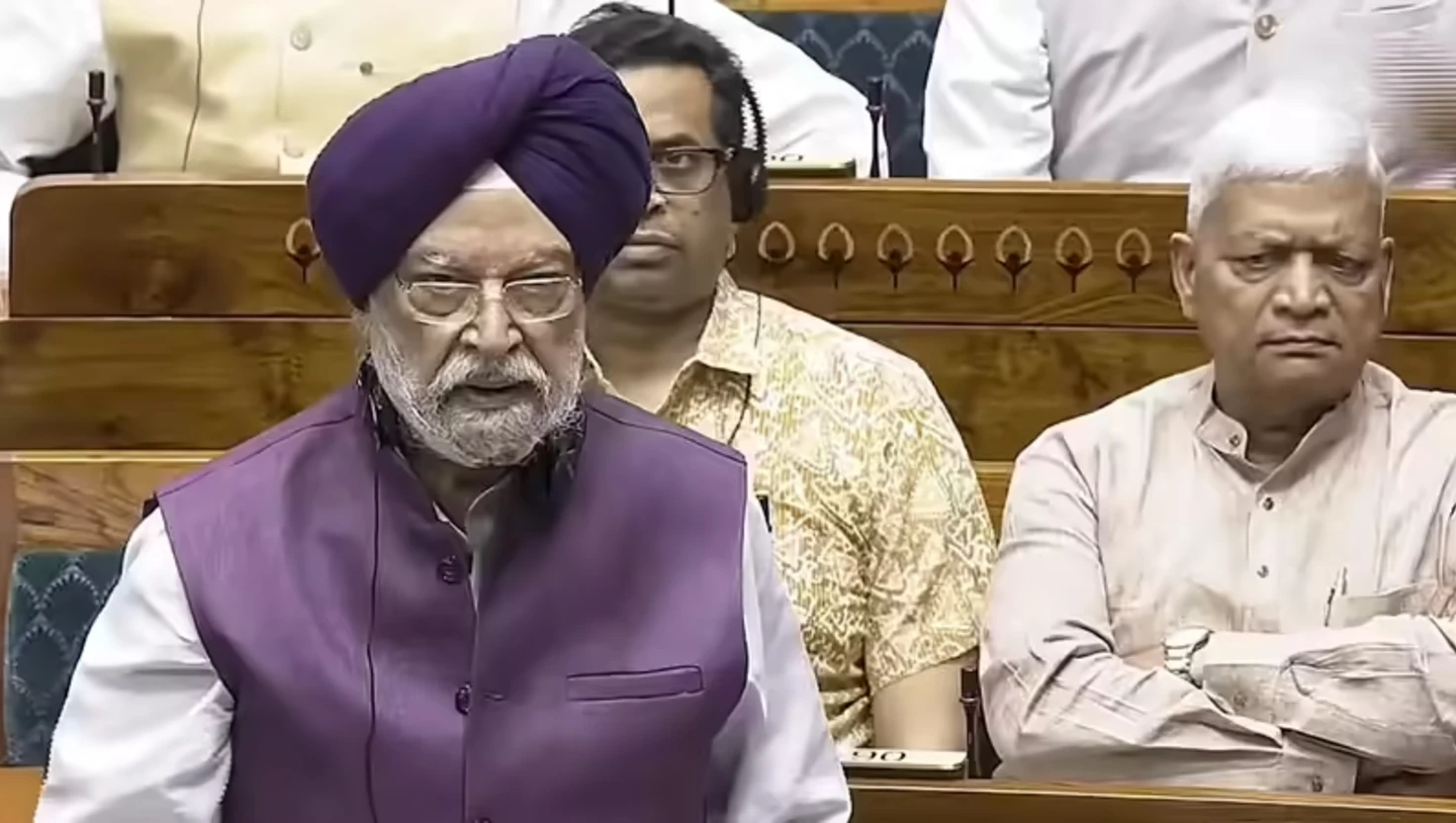
India’s government has assured that domestic fuel supplies remain stable despite disruptions in global energy markets caused by the ongoing conflict in the Middle East.
Union Minister for Petroleum and Natural Gas Hardeep Singh Puri told the Indian parliament that the country has taken steps to secure alternative sources of oil and gas, ensuring that petrol, diesel and other fuels remain available across the country.
Government assures fuel availability
Speaking in the Lok Sabha, the lower house of India’s parliament, Mr Puri said the government had strengthened energy supply arrangements to manage any disruption linked to the conflict affecting the Strait of Hormuz.
The narrow waterway between Iran and Oman is one of the world’s most important oil transit routes, carrying roughly one fifth of global crude oil shipments.
The minister said India’s energy system remained resilient even as tensions in West Asia – the term often used for the Middle East in India – continued to affect shipping and energy flows.
“India has sufficient gas production and supply arrangements to sustain this position even in the event of a prolonged conflict. Power generation for every household and for industry is fully protected,” Mr Puri told lawmakers.
He also urged the public and political leaders to avoid spreading misinformation during a period of heightened uncertainty.
“This is not the moment for rumour-mongering or fake narratives,” he said, stressing that India had prepared extensively for potential disruptions.
Diversification of crude oil imports
Before the latest conflict escalated, around 45% of India’s crude oil imports were transported through the Strait of Hormuz.
According to Mr Puri, India has significantly reduced its dependence on that route since hostilities intensified.
He told parliament that non-Hormuz sourcing of crude oil has increased to about 70% of imports, compared with roughly 55% before the crisis began.
The shift reflects a broader strategy pursued by India over the past two decades to diversify energy suppliers.
The minister said India now imports crude oil from around 40 countries, compared with 27 in the 2006–07 financial year.
This diversification has enabled the country to adjust supply routes more easily during geopolitical disruptions.
“The world has not faced a moment like this in modern energy history,” Mr Puri said, referring to the scale of disruption triggered by the conflict.
He added that India had secured crude volumes exceeding the amount that would normally arrive through the Strait of Hormuz during the same period.
Global energy shock
International energy analysts say the conflict is already affecting global oil markets.
The International Energy Agency, a Paris-based organisation that monitors energy trends, warned that the crisis could become one of the largest oil supply disruptions in modern history.
The agency said the conflict had reduced oil output from Gulf countries by millions of barrels per day as attacks and security concerns affected energy infrastructure.
The hostilities began on 28 February after military strikes involving the United States and Israel targeted Iranian facilities, escalating tensions across the region.
In response, Iran has tightened control over maritime traffic through the Strait of Hormuz, creating uncertainty for oil tankers travelling through the Gulf.
Because a significant portion of global oil trade moves through the route, even limited disruptions can affect prices and supply chains worldwide.
India’s domestic fuel supply
Despite these global challenges, Indian officials say domestic fuel availability remains stable.
Mr Puri told parliament that the country faces no shortage of petrol, diesel, aviation turbine fuel, kerosene or fuel oil.
He said domestic oil refineries are operating at high utilisation levels to meet demand.
“In several cases, they are exceeding 100% capacity utilisation,” he said, adding that refining operations are continuing uninterrupted.
India is one of the world’s largest refining hubs and also exports refined petroleum products such as diesel and petrol to other countries.
Officials say this strong refining capacity provides an additional buffer during periods of supply disruption.
LPG production increased
The government has also increased production of liquefied petroleum gas, commonly used as cooking fuel in Indian households.
Mr Puri said refinery directives had boosted LPG production by around 28% in recent days.
He emphasised that protecting household cooking gas supply was a key priority for the government.
“The foremost priority is that the kitchen of India’s 33 crore families, especially the poor and the underprivileged, do not face any shortage,” he said.
Authorities say the delivery cycle for domestic cooking gas cylinders has remained unchanged.
Natural gas and power supply
Officials also said natural gas supply remains stable.
Mr Puri told parliament that additional shipments of liquefied natural gas are arriving through alternative trade routes.
Cargoes are being sourced from several countries including the United States, Norway, Canada, Algeria and Russia.
He said the diversified supply network ensures that electricity generation for homes and industry remains secure.
“Large LNG cargoes are arriving almost daily through alternative supply routes,” he said.
According to the government, a prioritised allocation system has also been introduced to ensure that essential sectors receive adequate gas supplies.
Context: India’s growing energy demand
India is the world’s third-largest consumer of energy and relies heavily on imported oil and gas.
Rapid economic growth and expanding industrial activity have increased demand for fuel in recent decades.
As a result, energy security has become a major policy focus for successive governments.
Analysts say diversification of supply sources and stronger domestic refining capacity have helped India manage volatility in global markets.
However, prolonged disruption in the Middle East could still affect global prices and shipping routes, potentially influencing energy costs worldwide.
For now, Indian authorities say existing measures are sufficient to maintain stable fuel supplies while the international crisis continues.
Kerala Initiates Probe into 2006 Suicide Case Involving CEC

Extradition of Sheikh Hasina Feasible, Says Indian High Commissioner

Punjabi Makeup Artist Mad Sandhu Shot Dead in Amritsar

India Achieves Fourth Place at Asian Games 2026 Through Late Success