Iran Strikes Trigger Blasts Across Gulf and Israel


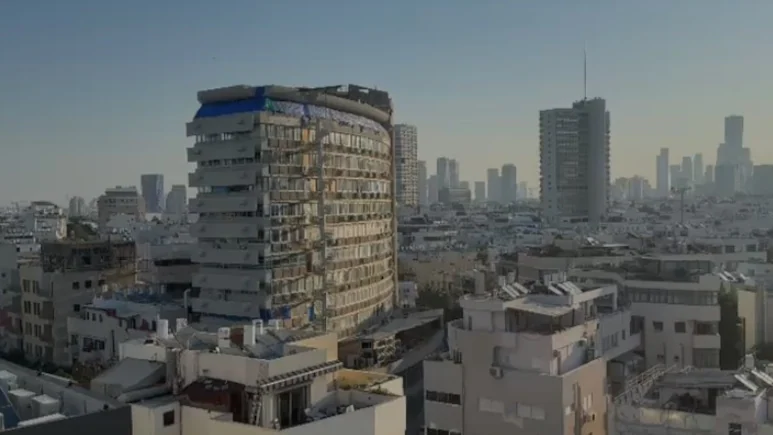
Air raid sirens sounded in Tel Aviv and explosions were reported in several Gulf cities on Monday as Iran launched a new wave of missile and drone attacks, marking the third day of an escalating regional conflict.
The Israeli military said multiple projectiles were fired towards Israel, while authorities in the United Arab Emirates, Qatar and Bahrain reported interceptions and damage to civilian infrastructure.
Missile attacks on Israel and Gulf cities
The Israel Defence Forces said air defence systems were activated after missiles were launched from Iran towards Tel Aviv and Jerusalem. Several were intercepted, according to the military.
In northern Iraq, witnesses reported that air defences shot down at least two drones near Erbil airport, which hosts United States-led coalition forces and a major American consulate complex.
Blasts were also heard in Dubai, Abu Dhabi, Doha and Manama. Residents described loud explosions, and videos circulating on social media showed smoke rising over parts of Dubai’s skyline.
Iran began retaliatory strikes after joint United States and Israeli operations reportedly killed Iran’s Supreme Leader, Ayatollah Ali Khamenei, and other senior figures over the weekend. Iranian officials say more than 200 people have died since the start of those strikes.
Damage in the United Arab Emirates
The United Arab Emirates has been among the most heavily affected countries in the Gulf.
According to local authorities, three people were killed in recent attacks, including nationals of Pakistan, Nepal and Bangladesh. Dozens of others sustained minor injuries.
The United Arab Emirates Ministry of Defence said air defence forces destroyed 172 ballistic missiles and intercepted 817 drones over a two-day period. On one day alone, 165 ballistic missiles were detected, most of which were shot down or fell into the sea.
Despite the interceptions, some drones and missile debris struck civilian areas, causing material damage to residential buildings and infrastructure. Satellite images showed thick plumes of smoke rising over parts of Dubai in recent days, contrasting with earlier images of clear skies.
Dubai International Airport, one of the world’s busiest hubs for international travel, sustained partial damage to a terminal building, leading to significant disruption to global air traffic. Kuwait’s airport was also reportedly affected.
In Abu Dhabi, officials reported casualties following what they described as an “incident” at the airport, and additional deaths linked to falling debris.
Strikes across the Gulf
In Qatar, which hosts the region’s largest United States military base, officials said 65 missiles and 12 drones were launched towards its territory. Most were intercepted, but eight people were injured, one of them critically.
In Bahrain, drones struck near the airport in Manama, causing minor damage. In Oman, two drones targeted the port of Duqm. Saudi Arabian authorities said missiles aimed at Riyadh’s international airport and the Prince Sultan Airbase were intercepted.
Iran’s Revolutionary Guards claimed responsibility for attacks on military bases in Kuwait and Bahrain and said they had struck oil tankers in the Gulf and the Strait of Hormuz. Those claims could not be independently verified.
Diplomatic fallout
The United States and several Arab governments condemned the attacks. In a joint statement with Bahrain, Jordan, Kuwait, Qatar, Saudi Arabia and the United Arab Emirates, the United States State Department said targeting civilians and countries not directly involved in hostilities was “reckless and destabilising”.
The Gulf Cooperation Council, which includes Bahrain, Kuwait, Oman, Qatar, Saudi Arabia and the United Arab Emirates, convened an emergency meeting and called for an immediate halt to the attacks. The council said stability in the Gulf was essential not only for the region but also for global economic security, given its role in energy exports and shipping routes.
In a significant diplomatic move, the United Arab Emirates announced it was closing its embassy in Tehran and recalling its ambassador.
Political uncertainty in Iran
Within Iran, political uncertainty continues following the reported death of Ayatollah Ali Khamenei, who had led the Islamic Republic since 1989.
Iranian authorities have appointed a cleric to join a temporary three-member leadership council that will oversee governance until a new supreme leader is chosen. Analysts say the loss of senior leaders could weaken Iran’s leadership in the short term, but it is unclear how it will affect the long-term structure of clerical rule or the influence of the Revolutionary Guards.
A senior Iranian official, Ali Larijani, wrote on social media that Iran would not negotiate with the United States. However, United States President Donald Trump signalled that he was open to dialogue with Iran’s new leadership.
Global impact
The conflict has had immediate economic and logistical consequences. The Gulf region is central to global oil and gas supplies, and any prolonged disruption to ports, airports or shipping lanes could affect energy markets and international trade.
Airlines have diverted flights away from affected areas, and thousands of travellers remain stranded in major transit hubs such as Dubai and Abu Dhabi.
As missile and drone exchanges continue, international calls for de-escalation are growing. With multiple countries now affected and major military bases and civilian infrastructure under threat, the confrontation risks expanding further unless diplomatic efforts gain traction.
Kerala Initiates Probe into 2006 Suicide Case Involving CEC
Extradition of Sheikh Hasina Feasible, Says Indian High Commissioner

Punjabi Makeup Artist Mad Sandhu Shot Dead in Amritsar

India Achieves Fourth Place at Asian Games 2026 Through Late Success