Delhi Pink Mobility Card and Lakhpati Bitiya Launched


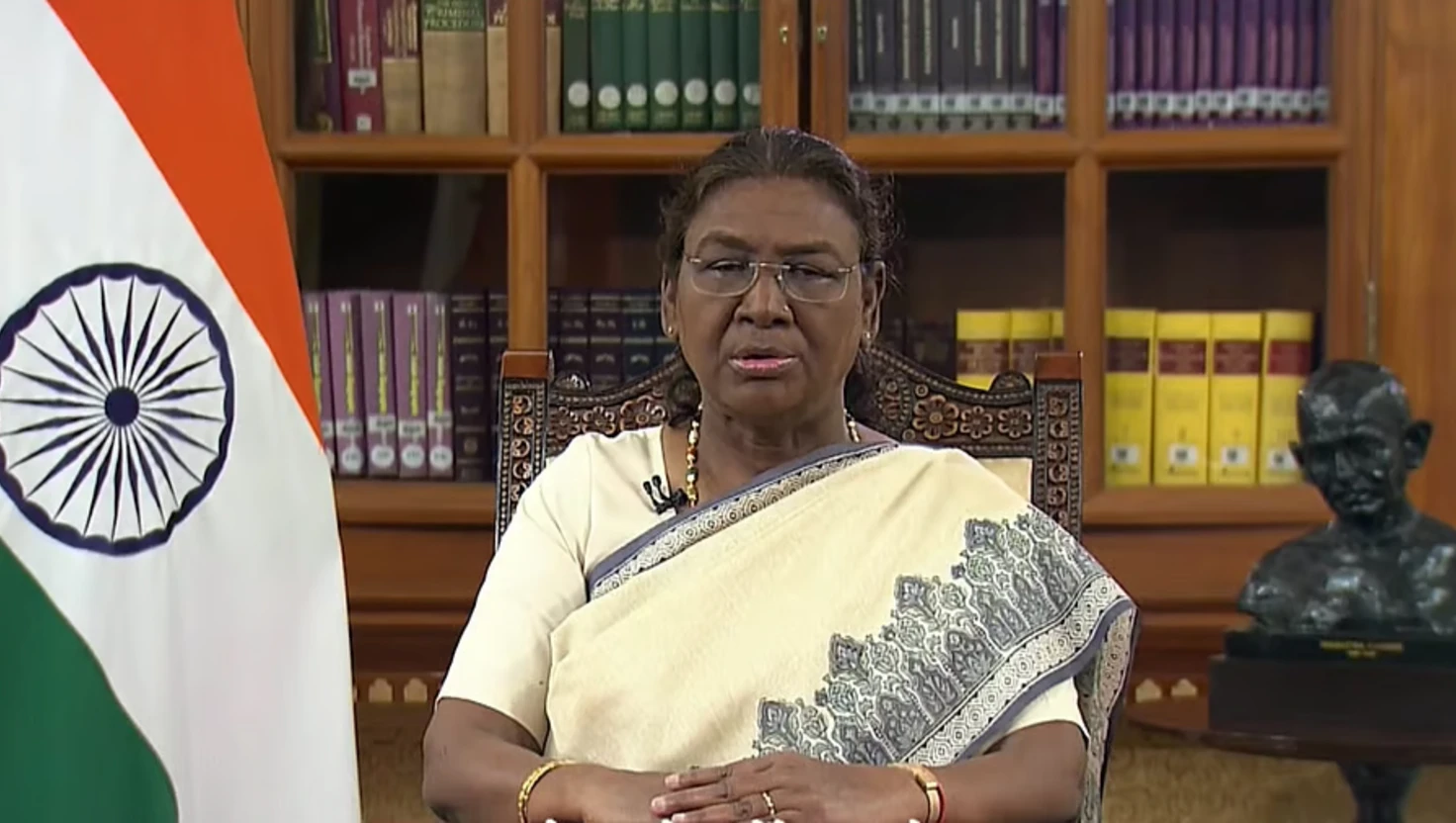
President Droupadi Murmu has launched a new Pink National Common Mobility Card for women in Delhi, alongside an expanded financial support scheme for girls from low-income families, at an event in the national capital.
The initiatives, introduced at a programme titled “Sashakt Nari, Samriddh Delhi” at the Indira Gandhi Indoor Stadium, aim to improve women’s mobility and strengthen long-term educational support for girls in economically weaker households.
Free bus travel and digital mobility
The Pink National Common Mobility Card will allow eligible women residents of Delhi to travel free of charge on buses operated by the Delhi Transport Corporation, according to the Delhi government.
Chief Minister Rekha Gupta said the card is designed to reduce the daily travel costs faced by women and to encourage wider use of public transport. She stated that the card will also function as a smart payment tool for other transport systems, including the Delhi Metro and the Regional Rapid Transit System, where fares will continue to apply.
The initiative is part of a broader effort to introduce a unified digital transport system in the city. Under the scheme, three types of cards will be issued: a pink card for eligible women residents, a blue card for general commuters, and an orange card for monthly pass users. In the initial phase, the pink and blue cards will be distributed.
Officials said the new card system is intended to offer seamless access across multiple modes of transport through a single smart card, aligning with national efforts to modernise urban mobility.
Free cooking gas support
At the same event, President Murmu formally introduced a separate measure providing two free liquefied petroleum gas cylinders each year to ration card-holding families in Delhi. The benefit will be given on the occasions of Holi and Diwali, two major Indian festivals.
According to the Chief Minister, the subsidy will be transferred directly to beneficiaries’ bank accounts under the Direct Benefit Transfer system, a government mechanism designed to reduce leakages by sending funds electronically to verified recipients.
The Delhi government said the scheme is aimed at easing household expenses for lower-income families, particularly at times of increased spending during festival periods.
Lakhpati Bitiya Yojana unveiled
The President also launched the Delhi Lakhpati Bitiya Yojana, an expanded version of the existing Ladli scheme, which provides financial assistance to support the education of girl children.
Under the previous structure, financial deposits were made at the time of birth and at key stages of schooling. The restructured programme increases the overall assistance and modifies the framework to provide greater long-term support.
According to official details, a total of 56,000 rupees will be deposited in stages in the name of each eligible girl. With accrued interest, the maturity amount is expected to exceed 100,000 rupees by the time the beneficiary turns 21, enabling her to pursue higher education.
Chief Minister Gupta said the initiative reflects the government’s commitment to women’s empowerment and is intended to ensure that daughters from low-income families are able to continue their studies without financial barriers.
The scheme will operate through a fully digital system. Funds will be managed by SBI Life Insurance Company Limited and invested under a specified savings plan. Upon maturity, the accumulated amount will be transferred to the beneficiary’s Aadhaar-linked bank account through Direct Benefit Transfer.
Eligibility and implementation
Eligibility for the Lakhpati Bitiya Yojana is limited to families with an annual income of up to 120,000 rupees who have resided in Delhi for at least three years. The girl child must have been born in Delhi.
The benefit will be available for up to two girls per family. Registration will be linked either to birth or to specified educational milestones, according to the official statement.
In earlier versions of the scheme, smaller sums were deposited at birth and at stages such as admission to primary and secondary classes. Under the revised model, the financial assistance and long-term vision have been expanded, according to the Chief Minister.
Wider context
The combined launch of the Pink Mobility Card and the Lakhpati Bitiya Yojana forms part of a broader policy focus on women’s welfare and financial inclusion in the Indian capital.
Free or subsidised public transport for women has been adopted in several Indian states as a means of improving safety, accessibility and workforce participation. Digital benefit transfers have also become a central feature of social welfare delivery across India, aimed at increasing transparency and efficiency.
By integrating transport reforms with education-linked financial support, the Delhi government says it is seeking to address both immediate and long-term barriers faced by women and girls from economically weaker backgrounds.
The initiatives were presented as part of a wider strategy to promote women’s empowerment, enhance access to public services and strengthen social protection mechanisms in the capital.
Kerala Initiates Probe into 2006 Suicide Case Involving CEC
Extradition of Sheikh Hasina Feasible, Says Indian High Commissioner

Punjabi Makeup Artist Mad Sandhu Shot Dead in Amritsar
India Achieves Fourth Place at Asian Games 2026 Through Late Success