India Defence Deals: ₹5,083 Crore Contracts for ALH, Shtil


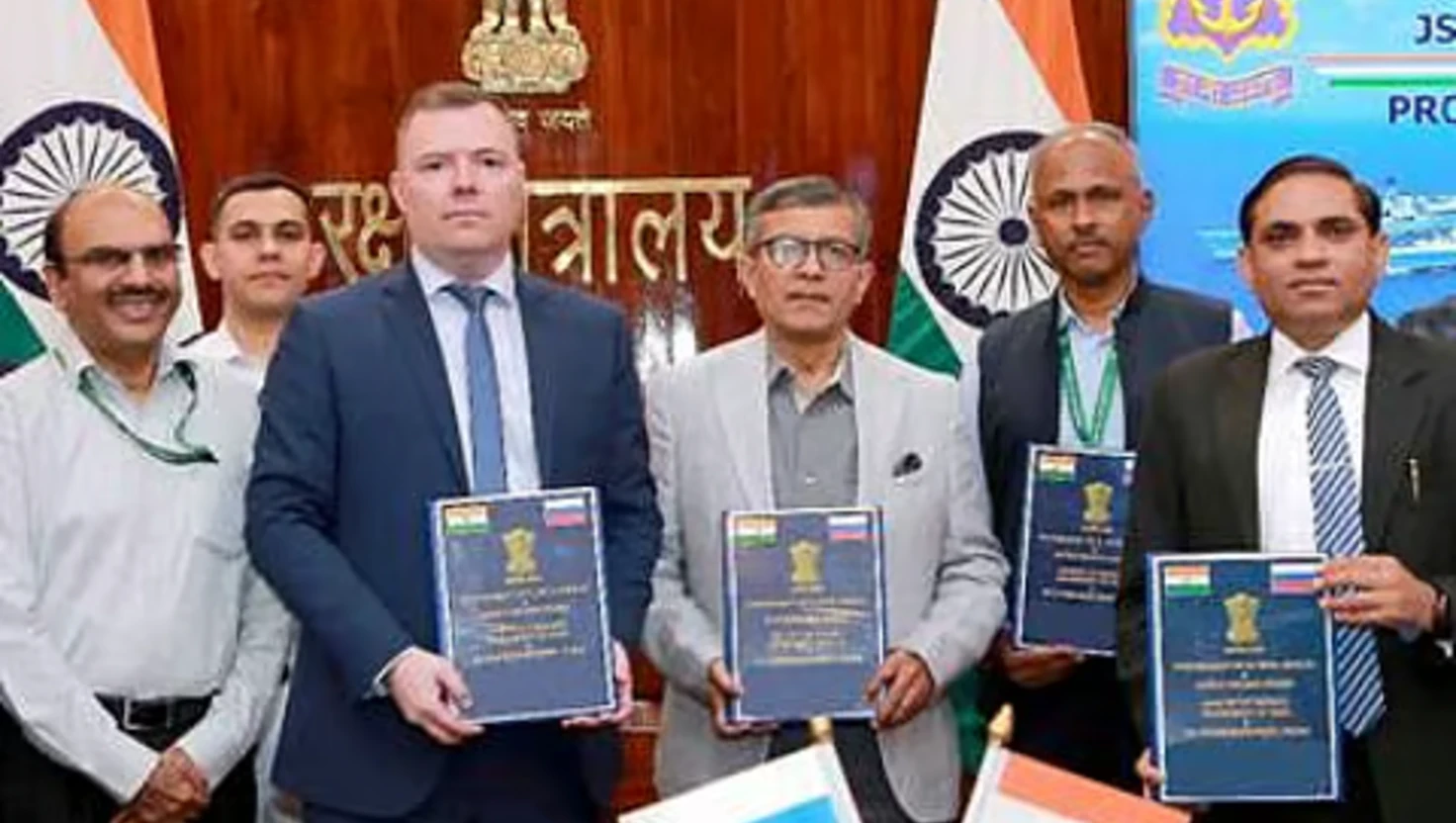
The agreements, announced on Tuesday, include a ₹2,901 crore contract with Hindustan Aeronautics Limited for Advanced Light Helicopter Mk-III variants and a ₹2,182 crore deal with Russia’s Rosoboronexport for Shtil surface-to-air missile systems, according to the Ministry of Defence.
Helicopters to bolster Coast Guard operations
The contract for the Advanced Light Helicopter, commonly known as ALH, covers six twin-engine aircraft for the Indian Coast Guard. The agreement includes operational equipment, engineering support and performance-based logistics arrangements.
In a statement, the Ministry of Defence said the induction of the helicopters would significantly improve the Coast Guard’s ability to safeguard offshore assets and respond to maritime contingencies. The aircraft are expected to support missions such as the protection of artificial islands and offshore energy installations, assistance to fishermen, environmental monitoring and maritime search and rescue.
“These twin-engine helicopters incorporate state-of-the-art features superior to the currently operated airborne platforms and are capable of undertaking a wide spectrum of maritime security missions,” the ministry said.
The helicopters will be supplied by Hindustan Aeronautics Limited, a state-owned aerospace manufacturer based in Bengaluru. The ministry said the programme would involve more than 200 micro, small and medium enterprises across India and is projected to generate around 6.5 million man-hours of employment.
Return to service after grounding
The signing of the helicopter contract comes months after parts of the ALH fleet were grounded following a fatal crash involving a Coast Guard aircraft in January 2025. The incident prompted a technical investigation into a key component of the transmission system.
According to defence officials, a defect investigation team identified cracks in the swashplate assembly of some naval and Coast Guard helicopters, particularly those operating in saline maritime environments. The issue raised concerns about material fatigue and flight safety.
Subsequently, corrective measures were implemented, and the fleets operated by the Navy and Coast Guard were cleared to resume flying with certain conditions. The Army and the Indian Air Force, which also operate ALH helicopters in larger numbers, had earlier received clearance after inspections and modifications.
Officials said the new contract reflects continued confidence in the platform after technical rectifications.
Missile deal with Russia
Alongside the helicopter procurement, the Ministry of Defence confirmed the signing of a contract with Rosoboronexport, the Russian state agency responsible for defence exports, for the acquisition of Shtil surface-to-air missile systems.
The Shtil system is designed to intercept aerial threats, including aircraft and incoming missiles, at ranges of up to around 45 kilometres. It is developed by the Almaz-Antey Air and Space Defence Corporation of Russia.
According to the ministry, the acquisition will enhance the air defence capabilities of frontline Indian Navy warships. The system is intended to provide rapid-reaction, all-weather engagement capability and improve survivability in high-threat maritime environments.
“The contract underscores the longstanding and time-tested defence partnership between India and Russia, founded on mutual trust and strategic alignment,” the ministry said.
Sanctions backdrop
The missile agreement comes amid heightened international scrutiny of defence transactions involving Russia. In recent months, United States President Donald Trump has reiterated that countries maintaining significant trade ties with Moscow could face stringent sanctions.
India has historically maintained defence procurement links with Russia, dating back to the Cold War era, and a substantial portion of its military equipment is of Russian origin. New Delhi has sought to diversify its suppliers in recent years, increasing purchases from domestic manufacturers as well as from the United States, France and Israel.
However, officials have continued to describe the India-Russia defence relationship as strategic and longstanding.
Strengthening maritime posture
The twin contracts are part of India’s broader effort to enhance maritime security and naval readiness amid evolving regional security challenges in the Indian Ocean region.
The Indian Coast Guard is tasked with enforcing maritime law, conducting search and rescue operations and protecting offshore infrastructure. The addition of new helicopters is expected to improve rapid response capabilities along India’s extensive coastline.
Meanwhile, the Indian Navy has been expanding its layered air defence systems to protect warships against aircraft, drones and missile threats. Surface-to-air missile systems such as Shtil form a critical component of that defensive architecture.
The Ministry of Defence said both acquisitions are aimed at improving operational preparedness and ensuring that India’s maritime forces remain capable of responding effectively to a wide range of threats.
With the contracts now formalised, deliveries and integration processes are expected to proceed in accordance with agreed timelines, though officials have not publicly specified completion dates.
Kerala Initiates Probe into 2006 Suicide Case Involving CEC

Extradition of Sheikh Hasina Feasible, Says Indian High Commissioner

Punjabi Makeup Artist Mad Sandhu Shot Dead in Amritsar

India Achieves Fourth Place at Asian Games 2026 Through Late Success