UN Chief Calls for Enhanced Global Cooperation to End HIV/AIDS


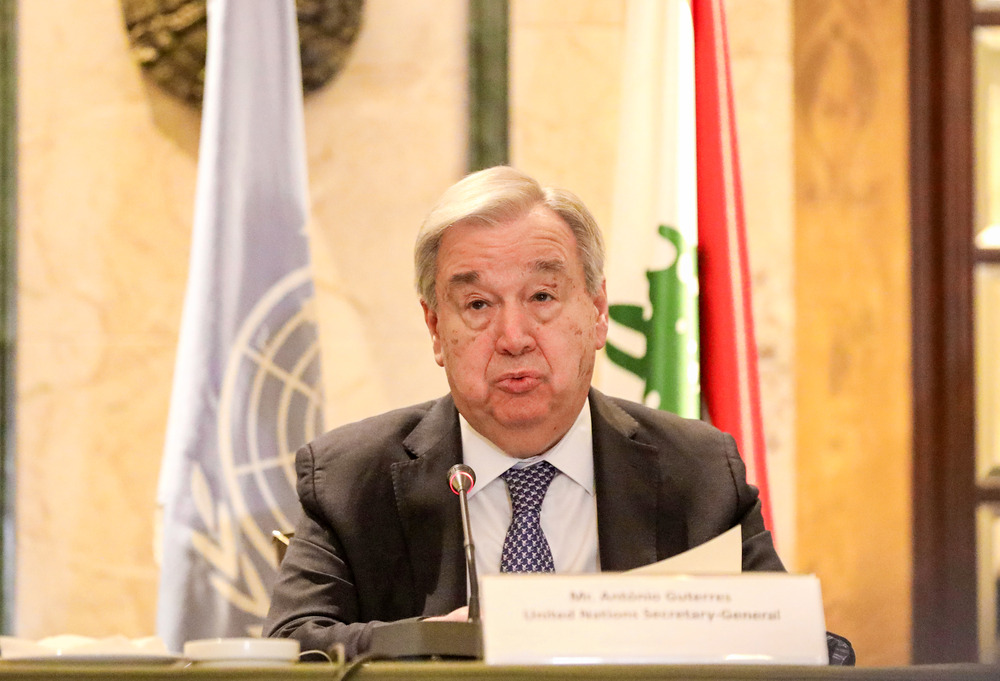
United Nations Secretary-General Antonio Guterres has emphasised the pressing need for renewed political commitment and international cooperation in the fight against HIV/AIDS, aiming to eradicate the disease as a public health threat by 2030. Guterres made these remarks during the Opening Plenary of the High-level Meeting on HIV/AIDS, as conveyed through a statement by Deputy Secretary-General Amina Mohammed.
In his statement, Guterres described the meeting as a pivotal opportunity to identify innovative solutions and strengthen the political resolve necessary to conclude the global fight against HIV. He stated, “This is a meeting that is taking place to find solutions, and once again summon the political will to accelerate and finish the global HIV fight.”
Reflecting on the nearly 45 years since the first documented case of AIDS, Guterres acknowledged the substantial solidarity and determination exhibited by the global community in tackling the epidemic. He pointed out that strong commitment from governments and sustained contributions from international partners have played critical roles in decreasing AIDS-related deaths. The UN chief highlighted that there has been a remarkable 70 per cent reduction in these deaths from their peak in 2004, and a 54 per cent drop since 2010.
Furthermore, expanded access to HIV prevention and treatment services has contributed to a 40 per cent decrease in new infections since 2010. Currently, more than 32 million individuals living with HIV are receiving vital antiretroviral therapy. Despite these significant advancements, Guterres warned that the challenge posed by the epidemic continues to loom large. He remarked, “AIDS is not over,” noting that by the end of 2024, 9.2 million people in need of HIV treatment still lacked access to such essential care.
To expedite progress in combating HIV/AIDS, Guterres outlined five crucial priorities. These include closing gaps in access to prevention, treatment, and care services; promoting sustained community leadership in the HIV response; protecting human rights; securing sustainable financing; and revitalising the multilateral cooperation that has been central to global efforts against HIV.
In his remarks, he noted, “The HIV response has shown that solidarity across borders and sectors can overcome fear, inequality and injustice. And it has proven that global, regional and local institutions are all essential to deliver together.”
Guterres underscored the importance of reaffirming a commitment to science, human dignity, solidarity, and shared responsibility during the gathering. He stressed that achieving the goal of ending AIDS as a public health threat by 2030 necessitates collective action, stating, “The responsibility to end AIDS as a public threat by 2030 belongs to each and every one of us.”
Concerns Rise Over Delhi Voter Registration Discrepancies

Controversy Erupts Over Rahul Gandhi's PM Modi Mimicry at Event

Father of IIT Bombay Student Calls for Action Against Discrimination

India and Japan Conduct Joint Air Exercise 'Veer Guardian-2026'