US Vice President's Remarks Signal Shift in US-Israeli Relations


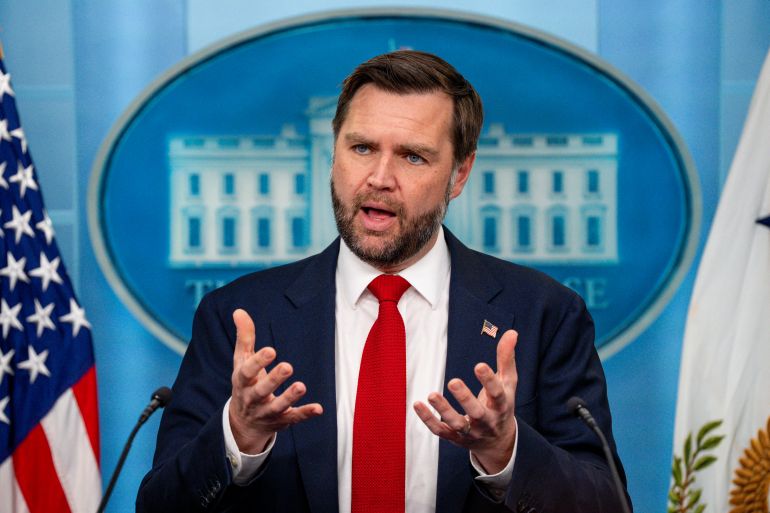
United States Vice President JD Vance's warning to Israel last week has been described as one of the most significant statements made by a senior US official regarding the US-Israel relationship. This warning is noteworthy not due to an obvious disagreement, as such tensions are not uncommon, but because it challenges a fundamental assumption that has...
For decades, the prevailing notion has been that Israel could oppose major US diplomatic initiatives without facing consequences. Vance stated, “If I was in the cabinet of the Israeli government, I might not be attacking the only powerful ally that I have anywhere left in the entire world,” while supporting President Donald Trump’s new memorandum with Iran.
The importance of this statement lies in its implications. Vance was publicly indicating a reality that US officials have traditionally avoided: Israel's international stature has diminished, its diplomatic support has waned, and its reliance on the US has notably intensified. Crucially, the Trump administration appears to be less inclined to allow Israeli objections to dictate its policy direction, a development that could signify a historical shift.
The immediate issue at hand pertains to Trump’s agreement with Iran, which initiated a 60-day negotiation aimed at transforming a fragile ceasefire into a comprehensive regional peace framework. The memorandum suggests measures such as sanctions relief, economic recovery, freedom of navigation in the Strait of Hormuz, and restrictions on Iran’s nuclear programme. The Trump administration argues that this diplomatic avenue promises greater regional stability compared to continuous confrontation.
Contrastingly, Israeli Prime Minister Benjamin Netanyahu regards this agreement as a threat to years of strategy aimed at isolating Iran through sustained pressure. Many Israeli officials have expressed serious concerns about the implications of the agreement. Media outlets aligned with Netanyahu have publicly attacked Trump advisers, while Israeli lawmakers in the US have started to gather opposition to negotiations with Iran, aiming to generate enough pressure to influence the White House. This historical tactic echoes Netanyahu's efforts during the Obama administration, culminating in his 2015 congressional address against the then-negotiated nuclear agreement.
What distinguishes the current situation is the response from Washington. Instead of appeasing Israeli concerns, the Trump administration has reacted assertively. Vance pointed out that approximately two-thirds of Israel's defence capabilities are supplied and financed by the US, a detail that US officials seldom discuss publicly. His statement underscored the reality that, while this alliance is crucial, Israel's strategic options are heavily dependent on American military and financial backing.
Vance's remarks included criticism of Israeli military actions in Beirut as negotiations neared a critical juncture, highlighting civilian casualties and suggesting that such actions jeopardise broader diplomatic efforts. This criticism reflects growing frustration within the administration over perceived Israeli attempts to complicate negotiations that are strategically important to the US.
A significant divergence in strategic approaches is emerging; while the Trump administration seems convinced that regional stability necessitates a diplomatic approach towards Iran, Netanyahu remains committed to confrontation. This disparity indicates not just a tactical difference but rather conflicting visions regarding the future of the Middle East.
Historically, Israeli leaders operated under the belief that US administrations would align with Israeli assessments regarding regional threats. Vance's recent comments indicate that this belief may no longer hold true. Moreover, the wider geopolitical landscape reveals that Israel is facing increasing criticism on the international stage, with recent conflicts straining relations with traditional allies. This shift in perception has constrained Israel's diplomatic manoeuvrability and heightened its reliance on the US for support.
While this does not suggest an imminent rupture between the two nations, it indicates an evolution in their relationship. The enduring military, intelligence, technological, and political ties still bind the US and Israel. However, the most likely scenario involves a recalibration of their alliance, with Washington guaranteeing Israeli security but potentially less willing to adjust its objectives to accommodate Israeli preferences. If Trump’s negotiations with Iran yield fruitful results—such as diminished tensions and enhanced economic stability—the current trend of recalibration may gather momentum.
Vance's statements exemplify a significant development in the US-Israeli relationship, as they openly articulated Israel’s reliance on US support. The established assumption that Israeli government policies would dominate US actions appears increasingly outdated. The future of this alliance may revolve around US interests and broader regional realities rather than a reflexive deference to Israeli demands.

ABVP Wins Majority in Delhi University Students' Union Elections

Rahul Gandhi Criticises Modi Government's Attitude Towards Students
Delhi Chief Minister Faces Scrutiny Over Ongoing Notices

Former Union Minister Detained in Punjab Protest Against CM