WhatsApp Faces Supreme Court Warning Over Privacy Practices in India


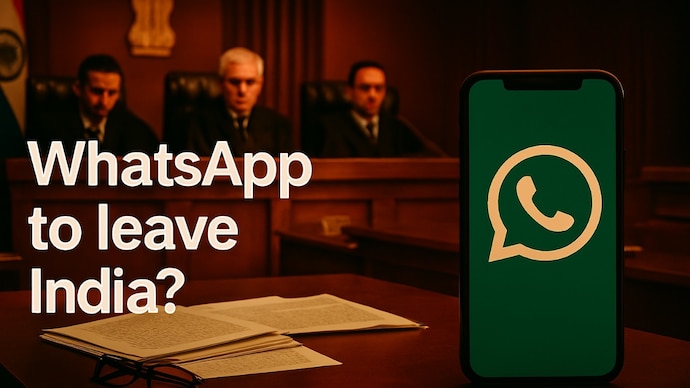
WhatsApp has ingrained itself into everyday life in India, functioning almost like a public utility for communication and transactions. Thus, a recent stern warning from the Supreme Court of India towards WhatsApp's parent company, Meta, has garnered significant attention. The Chief Justice of India, Surya Kant, remarked, "If you can’t follow our Constitution, leave India," signalling the court's firm stance on user privacy rights.
The matter at the heart of the Supreme Court's anger originates from WhatsApp’s updated privacy policy introduced in 2021. According to this policy, the application, part of the larger Facebook family, stated that user data could be shared with other Meta-owned entities. This data might be utilised to enhance and customise services, as well as for advertising purposes. Users were put in a position where they had to either accept the revised terms or delete their accounts entirely, with little room for opting out of data sharing while remaining on the platform.
Although WhatsApp maintained that personal communications remain end-to-end encrypted, concerns persisted among users, especially given the app's extensive usage across India. The issue escalated to the Supreme Court during deliberations concerning appeals filed by WhatsApp and Meta, challenging a ruling from the Competition Commission of India (CCI). The CCI had imposed a significant penalty of ₹213.14 crore, citing the policy as detrimental to competition and user choice.
During the proceedings, the Bench led by Chief Justice Surya Kant adopted an unusually assertive approach, questioning the authenticity of user consent given the apparent lack of alternatives. Justice Joymalya Bagchi referred to the situation as "manufactured consent," suggesting users felt pressured into compliance. Chief Justice Kant further elaborated, noting, "Where is the question of opt out? This is a decent way of committing theft of private information," thus underscoring the critical nature of privacy rights.
The court made it clear that it would not tolerate any violations of the right to privacy, proclaiming, "We will not allow to share a single piece of information. You can’t play with the right to privacy in this country." In response to this, WhatsApp declined to comment when approached by India Today Tech. However, in its defence, Meta's senior counsel Mukul Rohatgi argued that the app remains free for users, and acknowledged that related disputes were pending before a Constitutional Bench.
Despite these contentions, the Supreme Court did not appear particularly swayed, given WhatsApp’s vast reach and authority in the Indian digital landscape. The court directed WhatsApp and Meta to submit an affidavit providing a clear commitment that they would refrain from sharing user data. This matter is expected to be reviewed again on February 9, where interim directives could be issued.
The Supreme Court has implied that poor compliance could jeopardise WhatsApp’s legal standing in the country. Immediate withdrawal from India is unlikely, given that the nation constitutes WhatsApp's largest user base, and exiting would be a critical business decision. The court's comments should be interpreted as pressure tactics, advocating that compliance with Indian constitutional principles, particularly regarding privacy, is imperative for continued operation in India.
For users, this case may signify a pivotal moment in determining their control over personal data. The outcome could influence the extent to which free digital services can mandate such high obligations in exchange for usage. Observers can anticipate further developments from the Supreme Court and WhatsApp in the coming days.
Mamata Banerjee Challenges Election Commission in Supreme Court
Telangana High Court Disqualifies MLA Danam Nagender Amid Political Fallout

Scottish Sikh Man Receives Bail in India After Nine-Year Detention

Delhi Police Investigate Gang-Rape and Murder of 16-Year-Old Girl