US Submarine Sinks Iranian Warship Near Sri Lanka, Dozens Dead


At least 87 people have died after a United States submarine sank an Iranian naval vessel in the Indian Ocean near Sri Lanka, according to Sri Lankan authorities and international media reports, marking a significant expansion of the ongoing military confrontation involving Iran, Israel and the United States.
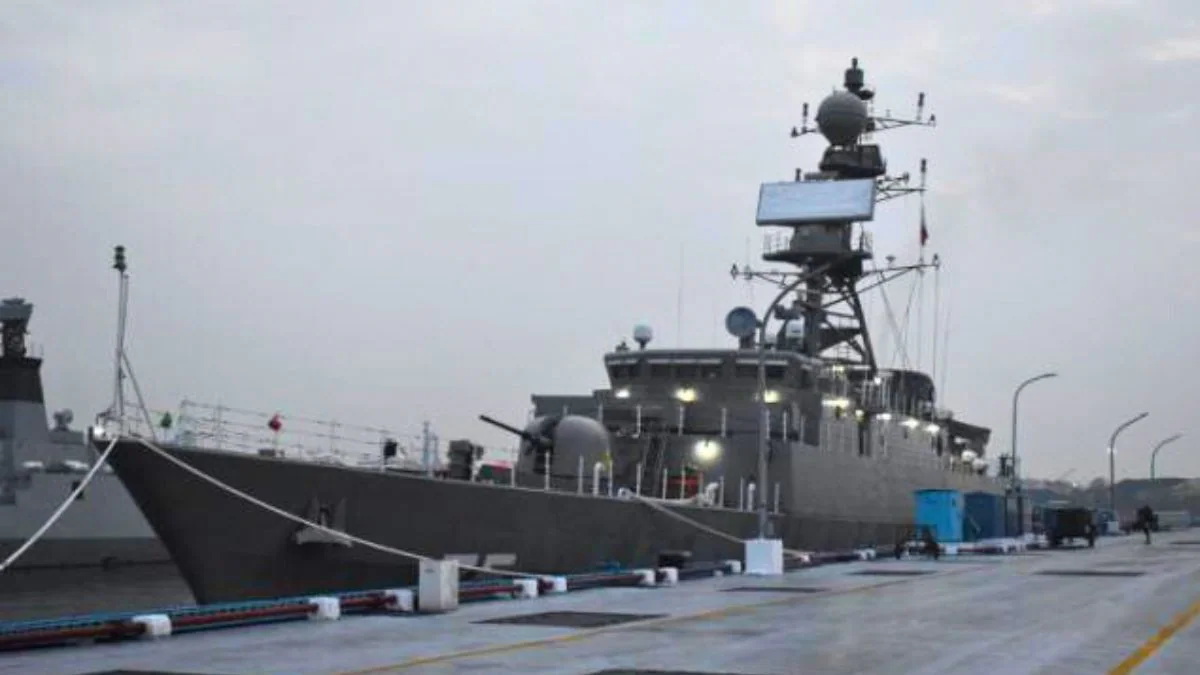
The Iranian warship, identified as the frigate IRIS Dena, was reportedly returning from a multinational naval exercise in the Bay of Bengal when it was struck by a torpedo fired from a US submarine. Sri Lankan officials say dozens of crew members remain missing following the incident.
US confirms submarine strike
United States Defence Secretary Pete Hegseth confirmed that an American submarine had attacked the Iranian vessel, describing the operation as evidence of the US military’s reach in global waters.
“An American submarine sank an Iranian warship that thought it was safe in international waters. Instead, it was sunk by a torpedo,” Mr Hegseth said while speaking to reporters at the Pentagon.
He characterised the attack as a “quiet death”, referring to the stealth tactics commonly associated with submarine warfare.
The US Department of Defense also released video footage which appeared to show the moment of impact through what looked like a submarine periscope view. The footage depicted a large explosion near the stern of a ship before it began to sink.
Independent verification of the exact circumstances of the strike and the imagery has not yet been confirmed.
Rescue operations near Sri Lanka
Sri Lankan authorities said the attack took place in international waters south of the island nation. The Sri Lankan Navy launched a search-and-rescue operation after receiving a distress signal from the vessel.
Officials in the southern port city of Galle reported that military rescue teams had recovered at least 87 bodies from the sea.
Around 32 survivors were rescued and taken to hospital for treatment. Authorities believe approximately 60 additional crew members remain unaccounted for.
Sri Lankan naval spokesman Commander Buddhika Sampath said rescue boats arriving at the scene initially found debris and an oil slick on the surface of the water.
“We found people floating in the water and rescued them,” he told reporters, adding that the survivors identified themselves as members of the Iranian navy.
According to Sri Lankan officials, the commander of the warship and several senior officers were among those rescued.
Warship had recently visited India
The Iranian frigate had recently participated in a multinational naval exercise hosted by India in the Bay of Bengal.
The event, known as the Milan naval exercise, is organised by the Indian Navy and brings together naval forces from numerous countries to conduct joint maritime training and cooperation activities.
The exercise includes both harbour and sea phases, during which participating navies practise operations such as anti-submarine warfare, air defence coordination and search-and-rescue missions.
According to information published by the exercise organisers, IRIS Dena was among the ships that took part in the drills held from 18 to 25 February off India’s eastern coast.
Images released earlier by the Indian Navy showed the Iranian vessel arriving at the eastern port city of Visakhapatnam before the exercise began.
It remains unclear whether the US submarine had been monitoring the Iranian vessel during its voyage to or from the exercise.
Defence analysts say it is common practice for navies to track foreign warships for intelligence purposes, particularly during periods of heightened geopolitical tension.
Part of wider military escalation
The strike comes as the conflict involving Iran, Israel and the United States expands beyond the Middle East.
The military confrontation began after coordinated strikes by the United States and Israel on Iranian targets in late February. Iran responded with missile and drone attacks directed at various locations across the region.
In recent days the conflict has disrupted shipping lanes, aviation routes and energy supplies across West Asia.
The sinking of the Iranian vessel hundreds of kilometres from the Persian Gulf indicates that the confrontation is now spreading across a much broader area of the Indian Ocean.
According to US officials, weakening Iran’s naval capabilities is among the objectives of the ongoing military campaign.
Context: The strategic importance of the Indian Ocean
The Indian Ocean is one of the world’s most important maritime regions, linking major trade routes between Asia, the Middle East, Africa and Europe.
A significant proportion of global energy shipments and commercial cargo passes through its sea lanes.
Military activity in the region has intensified in recent years as major powers seek to safeguard shipping routes and protect strategic interests.
Naval exercises such as the Milan drill organised by India are designed to improve coordination between partner navies and enhance maritime security.
The sinking of an Iranian warship near Sri Lanka highlights how tensions between major powers can quickly extend beyond their immediate regions, raising concerns about broader instability across key global shipping corridors.

Kerala Initiates Probe into 2006 Suicide Case Involving CEC

Extradition of Sheikh Hasina Feasible, Says Indian High Commissioner

Punjabi Makeup Artist Mad Sandhu Shot Dead in Amritsar

India Achieves Fourth Place at Asian Games 2026 Through Late Success