Russia Offers Oil Supplies to India Amid Middle East Crisis


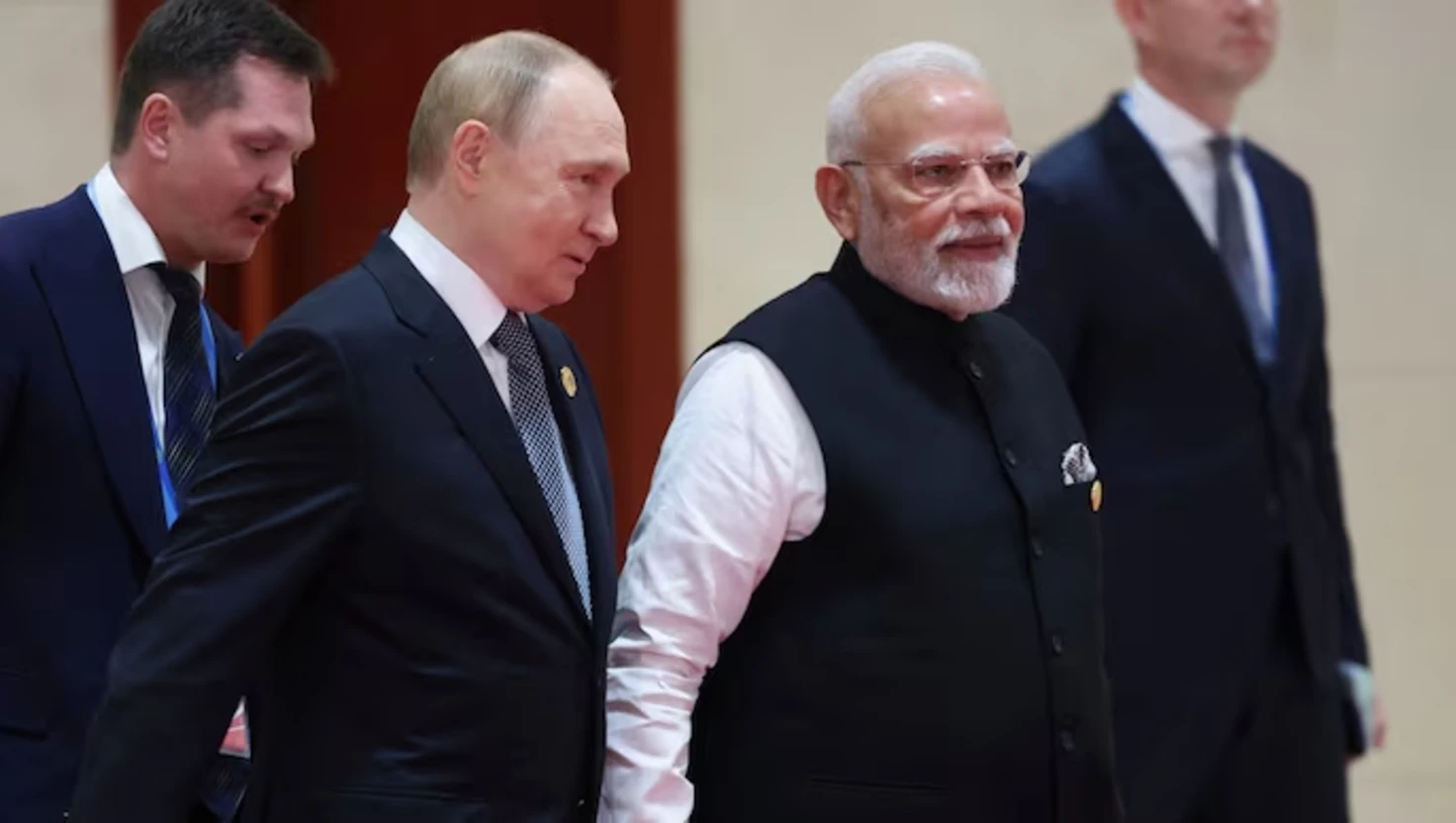
Russia is prepared to redirect crude oil shipments to India to help offset supply disruptions caused by the escalating conflict in the Middle East, according to industry sources familiar with the matter.
Roughly 9.5 million barrels of Russian crude are currently aboard vessels near Indian waters and could be delivered within weeks if required, a source with direct knowledge of the trade told Reuters. The shipments could provide short-term relief for Indian refiners facing potential supply shortages due to disruptions in the Gulf region.
Supply concerns as Middle East tensions rise
The developments come amid growing uncertainty in global energy markets after military confrontation involving the United States, Israel and Iran disrupted shipping routes in West Asia.
Iranian attacks on vessels in the Strait of Hormuz — a key maritime route for global oil exports — have made parts of the passage difficult to navigate. The situation followed air strikes by the United States and Israel on Iranian targets, escalating tensions across the region.
According to industry sources, about 40% of India’s crude oil imports normally pass through the Strait of Hormuz, making the country particularly vulnerable to disruptions in the area.
India is currently the world’s third-largest oil consumer. Its refineries process around 5.6 million barrels of crude oil per day.
Limited stockpiles raise vulnerability
Officials say India’s strategic and commercial oil reserves provide coverage for roughly 25 days of demand. Refiners also maintain relatively limited stocks of petroleum products such as diesel, petrol and liquefied petroleum gas.
Because of these constraints, the government has reportedly begun exploring alternative supply arrangements in case the regional conflict continues.
A government source said authorities in New Delhi were preparing contingency plans in case the crisis in the Middle East persists for more than 10 to 15 days.
Industry officials said Russia could potentially supply up to 40% of India’s crude oil requirements if disruptions intensify.
Russian crude imports fluctuate
India significantly increased purchases of Russian crude oil after Western sanctions were imposed on Moscow following Russia’s invasion of Ukraine in 2022.
Since then, Russian oil has often been sold at a discount compared with global benchmark prices, making it attractive to Indian refiners.
However, imports from Russia have fluctuated in recent months. Industry data indicate that India imported around 1.1 million barrels per day of Russian crude in January, the lowest level since late 2022.
That decline reduced Russia’s share of India’s oil imports to about 21%. The share reportedly rose again to roughly 30% in February.
Refining industry sources said Indian companies remain in contact with traders handling Russian crude shipments. Any major increase in purchases, however, would likely depend on policy guidance from the Indian government.
Trade considerations with the United States
Energy trade decisions have also been influenced by India’s economic and diplomatic relations with the United States.
Last month, United States President Donald Trump announced the removal of punitive tariffs on Indian imports that had been imposed partly in response to India’s purchases of Russian oil.
At the time, President Trump said New Delhi had indicated it would stop buying Russian crude.
India has not publicly confirmed such a commitment. Government officials have repeatedly stated that the country aims to diversify its energy supply sources according to market conditions and global developments.
Officials from India’s Ministry of Petroleum and Natural Gas and Ministry of External Affairs have not yet issued detailed comments regarding the possibility of increased Russian oil purchases.
Potential shift in global energy markets
Industry analysts say that if Middle Eastern supply disruptions persist, global oil markets could tighten significantly.
One trader familiar with Russian oil sales said the situation could turn the market in favour of sellers, potentially reducing the discounts typically offered on Russian crude.
“It has become a seller’s market,” the source said, suggesting that the price advantage of Russian oil could diminish if global supply becomes constrained.
Energy supply concerns have also extended beyond crude oil.
Russia is reportedly prepared to supply liquefied natural gas to India after Qatar, one of India’s major gas suppliers, halted production at some facilities as the regional crisis expanded.
Some Indian companies have already begun reducing gas deliveries to industrial consumers in order to manage limited supply.
Wider regional implications
The escalating confrontation between Iran, Israel and the United States has created significant uncertainty for global shipping and energy markets.
Several air and maritime routes across the Gulf region have been affected, forcing companies to reconsider transport paths and logistics.
The United States government has indicated it may deploy naval forces to escort oil tankers travelling through the Strait of Hormuz if security risks continue.
President Donald Trump said the United States Navy could provide protection for commercial vessels passing through the route. He also instructed the US International Development Finance Corporation to offer political risk insurance and financial guarantees to support shipping operations in the Gulf.
Context: India’s dependence on imported energy
India imports more than 80% of the crude oil it consumes, making it highly sensitive to geopolitical developments affecting major energy-producing regions.
Countries in the Middle East remain among India’s largest suppliers of crude oil. At the same time, Russia has emerged as an increasingly important source since 2022.
Energy analysts note that both India and China rely heavily on Middle Eastern oil, but China maintains larger strategic reserves, giving it greater protection against short-term disruptions.
For India, maintaining diversified supply channels has become a central element of its energy security strategy.
As tensions in the Middle East continue, the ability of major exporters such as Russia to redirect supplies could play an important role in stabilising fuel availability for large importing nations.
Kerala Initiates Probe into 2006 Suicide Case Involving CEC
Extradition of Sheikh Hasina Feasible, Says Indian High Commissioner

Punjabi Makeup Artist Mad Sandhu Shot Dead in Amritsar

India Achieves Fourth Place at Asian Games 2026 Through Late Success