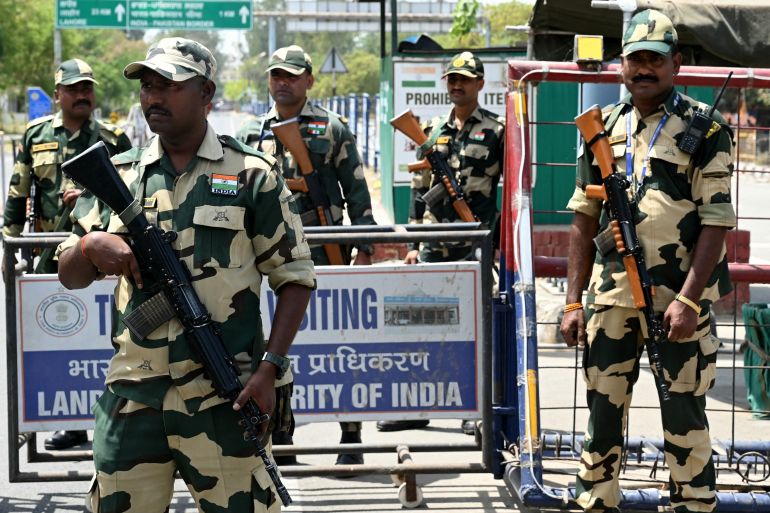
India Evacuates Citizens as Middle East Conflict Disrupts Flights


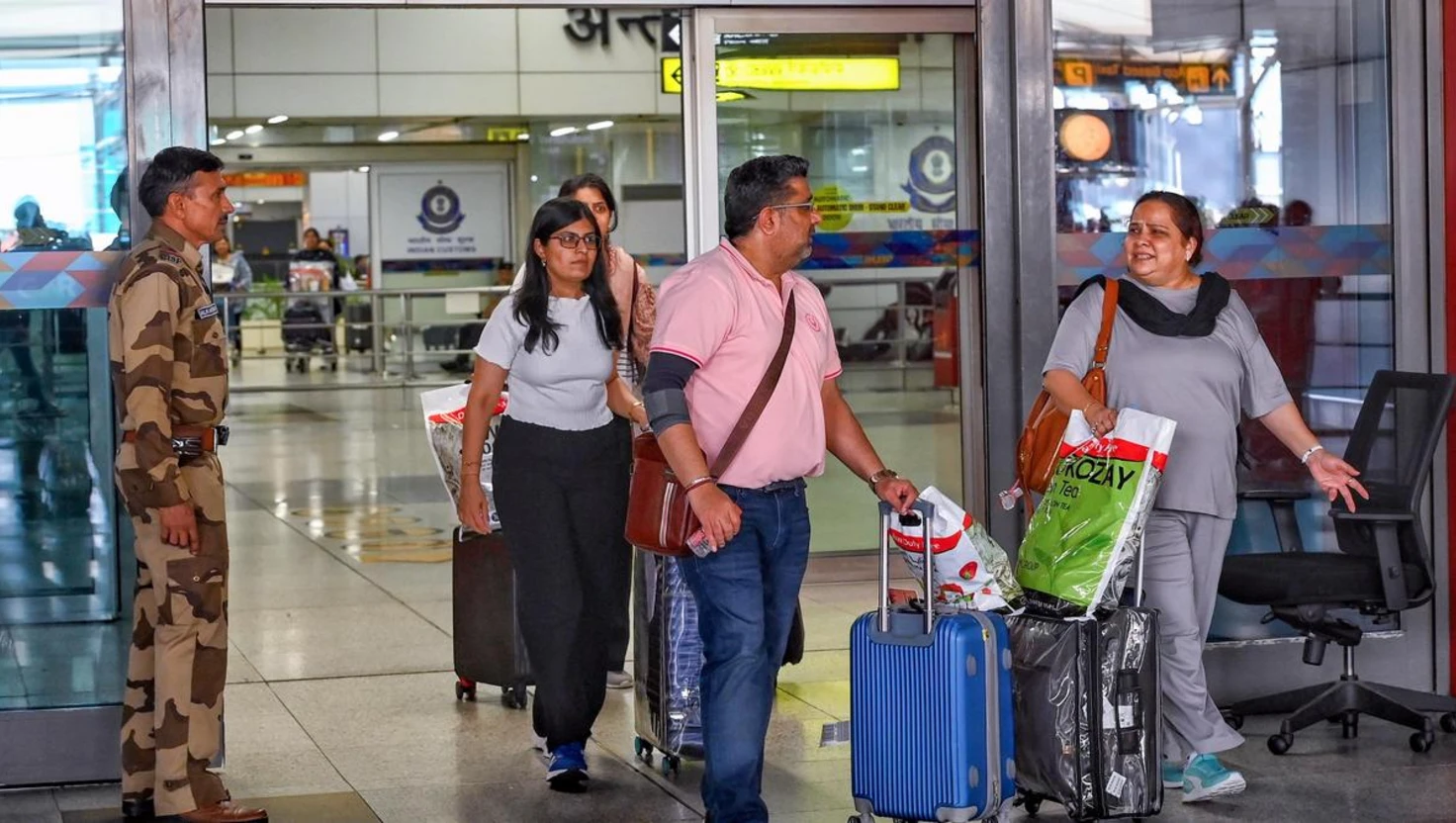
Around 200 Indian citizens stranded in the Middle East have returned home on a special relief flight, as India steps up evacuation and transport efforts amid major disruptions to air travel caused by the escalating Israel–Iran conflict.
The passengers arrived late on Tuesday at Sardar Vallabhbhai Patel International Airport in Ahmedabad in the western Indian state of Gujarat. The flight, operated by the Indian airline IndiGo from the Saudi Arabian city of Jeddah, was part of a broader effort by the Indian government and airlines to assist citizens affected by airspace closures and cancelled flights across West Asia.
Scenes of relief unfolded at the airport as returning passengers were greeted by family members after days of uncertainty. Many travellers described emotional reunions with relatives, with some embracing in tears after finally returning to India.
Passengers describe relief after return
Several of those returning said they were grateful to the Indian government and diplomatic missions for helping them leave the region safely.
One passenger said that returning home brought a sense of security after days of anxiety. “After coming to India, we felt like we had returned to our homeland. We feel great peace and relief now. The government did a great thing; we thank the government for arranging the flights for our safe return,” the traveller said.
Another passenger highlighted the role played by Indian officials abroad. “The Embassy helped us a lot. We are very thankful for all the support the government has provided us,” the returnee said.
Others echoed similar sentiments, describing how uncertainty about travel options had left them worried before the relief flight was arranged.
“The government helped us a lot. Otherwise, we did not know how we would return home. They sent a special flight for us, and we came back on that flight,” one passenger said in comments to the news agency IANS.
An elderly pilgrim who had travelled for the annual Hajj pilgrimage also said passengers had felt stranded before the arrangements were made.
“We were stuck at the airport. The Indian government worked hard for us,” the traveller said.
Special flights and airline coordination
The relief flight from Jeddah forms part of wider efforts by Indian authorities to assist citizens affected by the regional crisis.
According to India’s Ministry of Civil Aviation, airlines are adjusting their flight schedules and adding extra services where possible to help passengers reach their destinations safely.
The ministry said that 24 flights were operated by Indian airlines on Tuesday as part of these arrangements. In addition, foreign airlines such as Emirates and Etihad operated nine flights from Gulf countries to India over the previous 24 hours.
Indian airlines are also planning a larger number of services in the coming days. Officials said carriers intend to operate 58 flights on Wednesday, including 30 flights by IndiGo and 23 by Air India and Air India Express.
Authorities said the flights are being coordinated with foreign aviation regulators and Indian diplomatic missions abroad to ensure passengers stranded in the region can travel safely.
The Ministry of Civil Aviation added that it is monitoring airfares during the disruption period to prevent sudden increases in ticket prices.
Impact of airspace closures
Air travel between India and several Middle Eastern countries has been heavily affected since late February after military strikes and retaliatory attacks intensified tensions in the region.
The crisis escalated after the United States and Israel carried out coordinated strikes on Iranian targets on 28 February. In response, Iran launched attacks on several Gulf locations, describing them as legitimate military targets.
The developments have prompted multiple countries to close or restrict sections of their airspace, forcing airlines to cancel or reroute flights.
According to the Civil Aviation Ministry, more than 1,200 flights operated by Indian airlines and nearly 400 flights by foreign carriers have been cancelled since the crisis began.
On Tuesday alone, Indian airlines cancelled more than 100 international flights. Over the previous three days, more than 1,100 international services were cancelled because of the disruption.
Some airlines have also suspended flights to several Middle Eastern destinations until the security situation becomes clearer.
Air India said it had extended the suspension of most flights to and from the United Arab Emirates, Saudi Arabia, Israel and Qatar until late on 4 March while monitoring developments in the region.
Despite the disruptions, limited flight operations have begun to resume in some areas.
Dubai Airports said restricted services restarted on the evening of 2 March at Dubai International Airport and Al Maktoum International Airport, allowing some flights to operate again.
Context: India’s large diaspora in the Gulf
Millions of Indian citizens live and work across Gulf countries, including Saudi Arabia, the United Arab Emirates, Qatar and Kuwait. These expatriate communities play an important role in sectors such as construction, healthcare, aviation and services.
Because of this large overseas population, disruptions to aviation routes in the Middle East often have a significant impact on travel between India and the region.
During previous crises, including conflicts and pandemic-related travel restrictions, the Indian government has organised evacuation flights and repatriation operations to assist citizens abroad.
Officials say they are continuing to monitor the current situation in West Asia closely and will coordinate with airlines and foreign authorities to ensure that stranded travellers can return home safely as flight services gradually resume.
Kerala Initiates Probe into 2006 Suicide Case Involving CEC

Extradition of Sheikh Hasina Feasible, Says Indian High Commissioner

Punjabi Makeup Artist Mad Sandhu Shot Dead in Amritsar

India Achieves Fourth Place at Asian Games 2026 Through Late Success