U.S. Supreme Court Confirms Birthright Citizenship Policy


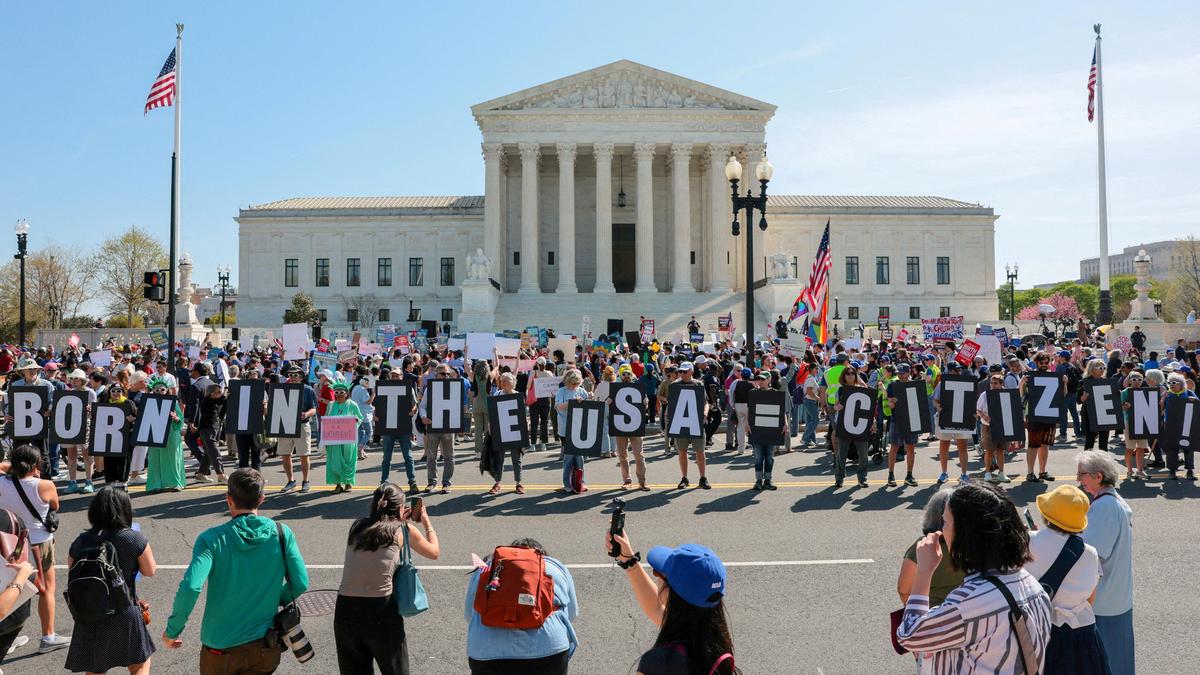
On June 30, 2026, the United States Supreme Court upheld the principle of birthright citizenship, dismissing an executive order from former President Donald Trump that sought to limit citizenship for children born to individuals who are in the United States without legal status. This ruling reaffirms a long-established interpretation of the 14th Amendment, enacted post-Civil War, which confers citizenship to nearly all born in the United States, with few exceptions.
The Supreme Court's decision, derived from a challenge to Trump's executive order, indicated the justices' commitment to the established understanding of citizenship rights. Lower courts had previously blocked the implementation of Trump's order, arguing that it did not align with the Constitution. The ruling largely reflects a consensus within the legal framework that stipulates citizenship for all persons born on U.S. soil, excluding only the children of foreign diplomats.
During hearings in April, both conservative and liberal justices raised significant concerns about the legality of the proposed restrictions. The case garnered added attention due to Trump's appearance in court, marking a rare event for a sitting president.
The order, intended as part of Trump's broader immigration policy, had implications for an estimated 250,000 births annually in the United States, as noted by the Migration Policy Institute. Critics argued that it would have affected not only undocumented immigrants but also those permitted to reside legally in the country, such as students and green card applicants.
In response to previous judicial rulings against his administration, Trump had expressed disdain for the justices, labelling them as unpatriotic. He used his platform to critique what he referred to as 'dumb judges and justices' following adverse decisions affecting his immigration policies.
The ruling builds on precedent set in the 1898 case of Wong Kim Ark, which determined that the child of Chinese nationals born in the U.S. was granted citizenship. Trump's administration had contended that children born to non-citizens were not 'subject to the jurisdiction' of the U.S., a stance the Court firmly rejected.
This landmark ruling is a significant victory for advocates of immigration rights and highlights the ongoing debates surrounding citizenship in America. It reaffirms the perspective that birthright citizenship is integral to the United States' identity and legal framework. The justices' united front against the order underscores the role of the judiciary in moderating executive power and preserving constitutional rights.
The decision concluded a sweeping evaluation of the limits of presidential power and signifies that the justices remain committed to protecting the rights enshrined within the Constitution, despite political pressures.
India's Jaishankar Criticises Pakistan at UN General Assembly

Iran Asserts Readiness for War Amid Rising Tensions in Hormuz
Israeli Prime Minister Netanyahu Makes Unannounced Visit to UAE

World Leaders Gather for Climate Summit, Pledges Made