Indian Government Confirms Energy Security Amid Middle East Crisis


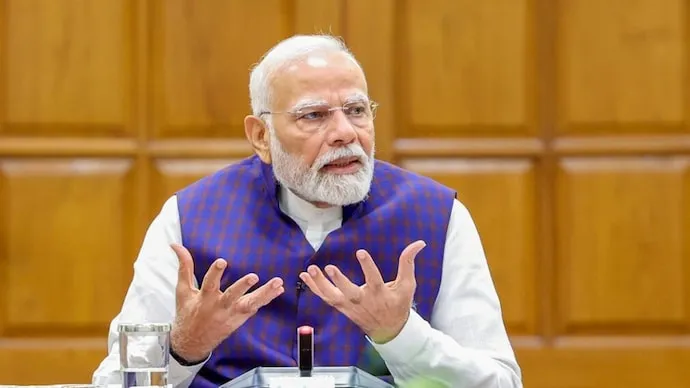
The Indian government reaffirmed its commitment to energy security during a recent all-party meeting held in response to escalating tensions in the Middle East. The meeting, which lasted for one hour and 45 minutes, featured active participation from various political parties concerned about the implications of the ongoing conflicts involving Iran, Israel, and the United States.
Union Parliamentary Affairs Minister Kiren Rijiju reported that all opposition parties expressed their readiness to support the government's decisions during this crisis. "All the opposition colleagues have said that in this hour of crisis, whatever decision the government takes... everyone will support it unitedly," he stated, reflecting the consensus reached in the meeting.
The government assured participants that India's energy security is stable and that additional shipments of essential resources are forthcoming. Key sources within the government conveyed that there are no immediate concerns regarding energy supplies, with ongoing negotiations and advance bookings in place with various nations. This is part of a broader strategy to ensure an uninterrupted supply of energy to the country.
Addressing specific worries about liquefied petroleum gas (LPG) availability and shipments being routed through the Strait of Hormuz, officials emphasised that four ships are expected to arrive in the next four to five days, ensuring that there will be no shortages. Furthermore, the government reassured that adequate stocks are available and that there is “nothing to worry” regarding the current situation.
The External Affairs Minister also referenced a recent conversation between Indian Prime Minister Narendra Modi and US President Donald Trump, indicating a shared interest in de-escalating the conflict, as it has widespread harmful effects.
Defence Minister Rajnath Singh highlighted the importance of addressing the concerns of the Indian public during this critical period. In conjunction, the Foreign Secretary provided a detailed overview of the geopolitical landscape, touching on Iran’s conduct and energy supply issues.
In discussions surrounding Pakistan’s historical role in mediating with Iran, government representatives noted that such dynamics have persisted since 1981, with Pakistan often used by the United States to engage Iran through various dialogues. The Foreign Secretary remarked, "We can't be a dalal nation," addressing concerns over Pakistan's involvement in the current geopolitical context.
Opposition leaders raised critical questions regarding the rationale behind the attacks on Iran by the US and Israel. According to reports, the Foreign Secretary responded that Iran's nuclear ambitions were a motivating factor for these actions.
In relation to domestic issues, opposition leaders expressed concern about public panic related to the Prime Minister’s remarks on COVID-19. The government clarified that these statements should not create alarm, assuring that any issues are being adequately monitored.
The overall message from the government during this meeting was one of control and readiness to prioritise domestic needs amid international challenges, emphasising a collaborative approach with political adversaries to navigate the ongoing crisis.
Concerns Rise Over Delhi Voter Registration Discrepancies
Controversy Erupts Over Rahul Gandhi's PM Modi Mimicry at Event

Father of IIT Bombay Student Calls for Action Against Discrimination

India and Japan Conduct Joint Air Exercise 'Veer Guardian-2026'