Touchscreen Nail Polish Could Improve Smartphone Accessibility


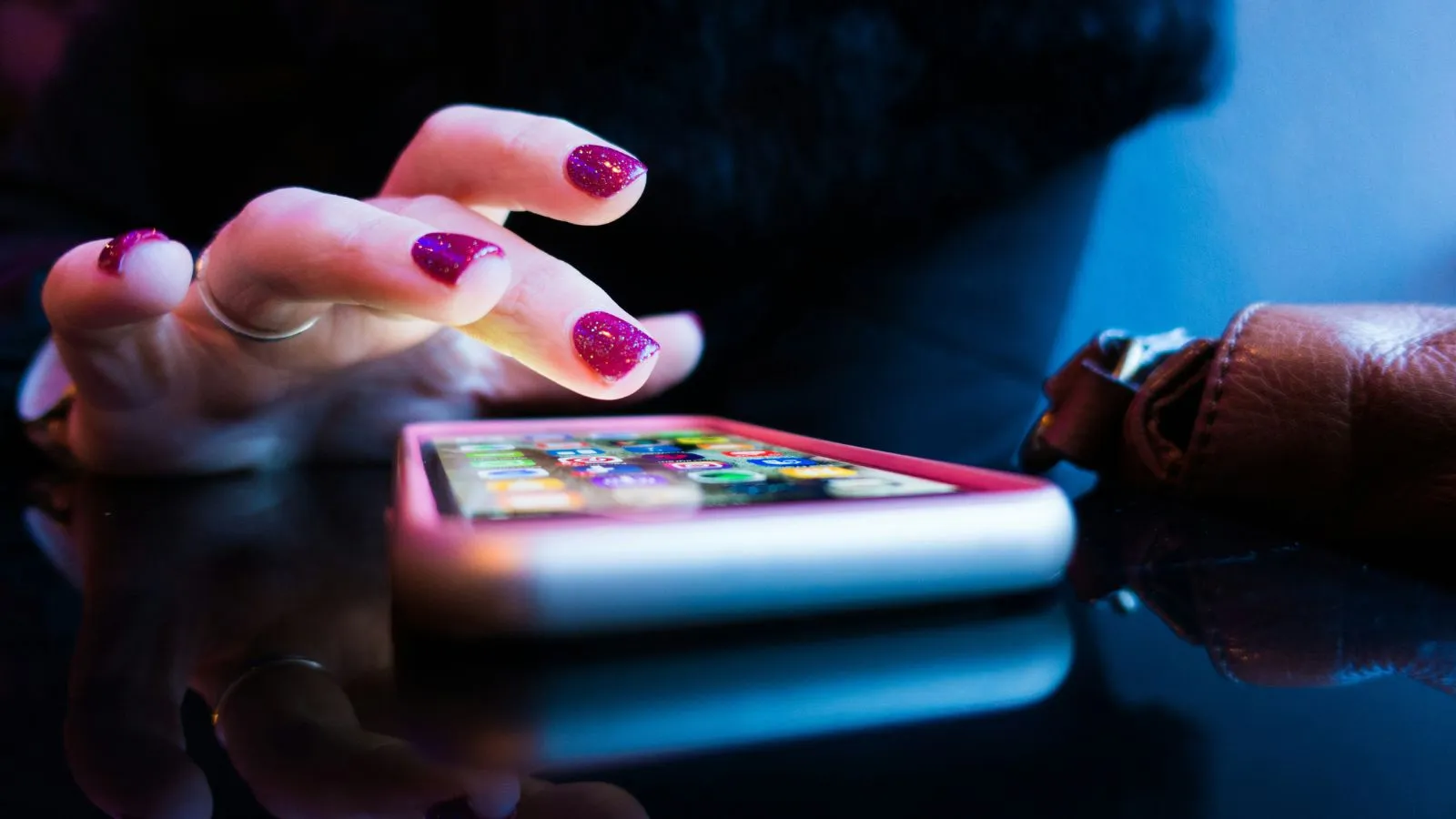
A chemistry student in the United States has developed a prototype nail polish that could allow fingernails to function like a touchscreen stylus, potentially improving smartphone use for people who struggle with current devices.
The research, led by Manasi Desai at Centenary College of Louisiana and supervised by Associate Professor Joshua Lawrence, was presented at a recent meeting of the American Chemical Society.
The idea emerged from everyday observations. Desai noticed that individuals with long nails or hardened skin on their fingertips often face difficulty when interacting with touchscreens. These screens, widely used in smartphones and tablets, depend on direct contact with conductive materials such as human skin.
“Our final, clear polish could be put over any manicure or even bare nails, which could help people with calluses on their fingertips too,” Desai said in a statement released by the society. “So it has both a cosmetic and lifestyle benefit.”
How the technology works
Modern touchscreens rely on a scientific principle known as capacitance. Devices generate a small electric field across the display, which is disrupted when a conductive object, typically a finger, makes contact. This disruption is registered as a touch input.
Fingernails, however, are not conductive and therefore do not trigger this response. This limitation can create challenges for certain groups of users, including manual labourers, musicians, or individuals wearing gloves or with dry skin.
To address this, Desai experimented with a range of materials to create a polish that could conduct electricity in a similar way to human skin. She tested more than 50 additives combined with 13 commercially available clear nail polishes.
The most promising formulation included taurine, an amino acid, and ethanolamine, an organic compound. Together, these substances appear to enable the movement of charged particles across the nail surface, mimicking the conductive properties required for touchscreen interaction.
Lawrence explained that the mechanism likely involves proton exchange between acidic and basic components within the polish. This process allows the coated nail to disrupt the screen’s electric field in a manner similar to a fingertip.
Who could benefit
Although touchscreen devices are now nearly universal, not all users experience them in the same way. People who work extensively with their hands, such as carpenters or guitar players, often develop thickened skin that reduces conductivity.
Others encounter difficulties when using devices while wearing gloves or when their skin is excessively dry. Long nails can also prevent effective contact with the screen surface.
The researchers said their work was partly motivated by feedback from a healthcare worker specialising in phlebotomy, a procedure that involves drawing blood from veins. The individual reported difficulty using a smartphone due to long nails and expressed strong interest in a solution of this kind.
“Chemists are here to solve problems and to try to make your world better,” Lawrence said.
Challenges remain
Despite promising early results, the product is still in development and not yet ready for commercial use. One of the main challenges is durability. Current versions of the polish lose their effectiveness after a relatively short period, ranging from a few hours to several days.
“All our formulations lose efficacy too quickly,” Lawrence said in correspondence with media outlets. “They stop working after hours or days, and we want them to work for days or weeks.”
There are also concerns related to appearance and safety. Some of the more effective formulations produce a textured or speckled finish, which may not appeal to users seeking a conventional cosmetic product. Researchers are continuing to refine the formula to ensure it is both non-toxic and visually acceptable.
Context and future implications
Previous attempts to create conductive nail coatings have relied on materials such as carbon nanotubes or metal particles. While these can enhance conductivity, they may pose health risks if inhaled and can limit design flexibility.
By contrast, the current approach focuses on safer chemical interactions rather than solid conductive particles, potentially offering a more practical solution for everyday use.
The team has already filed a provisional patent for the invention, indicating potential commercial interest. However, significant development work remains before the polish could reach consumers.
If successfully refined, the innovation could contribute to broader efforts to make digital technology more accessible. As touchscreens continue to dominate consumer electronics, solutions that accommodate a wider range of users may play an increasingly important role in device design.
Concerns Rise Over Delhi Voter Registration Discrepancies

Controversy Erupts Over Rahul Gandhi's PM Modi Mimicry at Event

Father of IIT Bombay Student Calls for Action Against Discrimination

India and Japan Conduct Joint Air Exercise 'Veer Guardian-2026'