Israel Establishes Buffer Zone in Southern Lebanon Amid Conflict


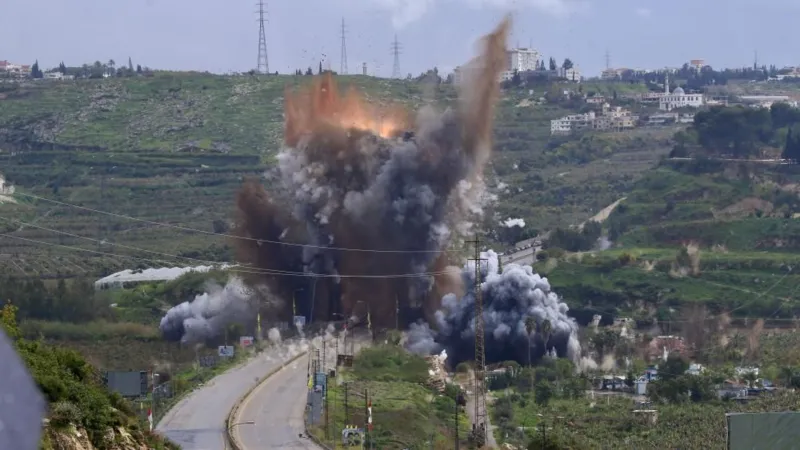
Israeli troops will take control of a significant area in southern Lebanon as part of the country's military operations against Hezbollah, according to Defence Minister Israel Katz. The newly established security zone is set to extend to the Litani River, approximately 30km from the Lebanon-Israel border. Displaced residents will not be permitted to return until security conditions in northern Israel are deemed safe.
Katz stated that five bridges used by Hezbollah for transporting personnel and weapons have been destroyed as part of this military campaign. The latest escalation of hostilities followed rocket fire from Iranian-backed Hezbollah into northern Israel. This response was viewed as retaliation for the killing of Iran's supreme leader, along with ongoing airstrikes conducted by Israel in Lebanon despite a ceasefire established in November 2024.
The conflict has had grave humanitarian consequences, with more than 1,000 fatalities recorded in Lebanon, including at least 118 children and 40 healthcare workers, according to figures from the Lebanese health ministry. Over a million individuals have been displaced due to the fighting, raising concerns about a potential humanitarian crisis.
The objective of the Israeli operations, as noted by Katz, is to safeguard northern Israeli towns from attacks by Hezbollah. Southern Lebanon remains the stronghold of Lebanon's Shia Muslim community, which constitutes Hezbollah's primary support base. While the Lebanese government has committed to disarming Hezbollah, the group has consistently resisted discussions regarding its arms.
In a briefing with military leaders, Katz expressed frustration, stating that the Lebanese government has failed to take adequate action. The Israel Defense Forces (IDF) are reportedly advancing into Lebanese territory to create a defensive line aimed at dismantling Hezbollah's operational capabilities and destroying infrastructures perceived as threats.
Katz asserted that the strategy is to achieve a secure area, drawing parallels with similar military approaches taken in Gaza Strip areas such as Rafah and Beit Hanoun, which have experienced extensive destruction. He emphasised that displaced Lebanese residents would not be allowed to return until security in northern Israel is ensured. "The principle is clear: there is terror and missiles, no homes and no residents - and the IDF is inside," he stated.
Lebanon's President Joseph Aoun condemned Israel's actions, describing them as collective punishment for civilians. Israeli forces have received orders to obliterate crossings over the Litani River that Hezbollah utilises for reinforcements. Anxiety prevails in Lebanon regarding a potential large-scale ground invasion by Israel, with reports of increased bombardment.
Visual documentation from Russian state media has depicted the severity of attacks, including an incident where a correspondent was shown diving for cover as a missile struck nearby. The health ministry has confirmed that since March 2, over 968 individuals have lost their lives due to the ongoing violence, and many civilians who remain in the southern areas are facing dangerous living conditions close to ongoing combat zones.
Concerns Rise Over Delhi Voter Registration Discrepancies
Controversy Erupts Over Rahul Gandhi's PM Modi Mimicry at Event

Father of IIT Bombay Student Calls for Action Against Discrimination
India and Japan Conduct Joint Air Exercise 'Veer Guardian-2026'