Rahul Gandhi Warns Punjab Congress Ahead of Polls


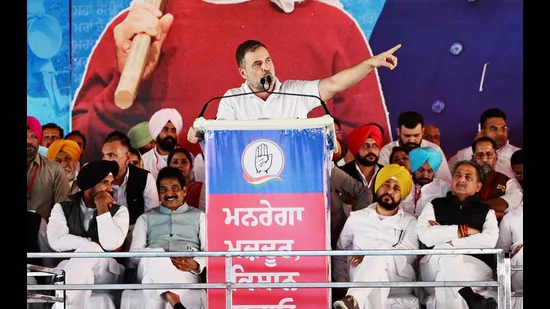
Rahul Gandhi, Leader of the Opposition in India’s lower house of parliament, has warned senior leaders of the Congress party in Punjab to end internal divisions ahead of state elections due next year, as political tensions rise within the party.
Addressing a rally in Barnala district on Saturday, Mr Gandhi said leaders who fail to work collectively risk being sidelined, signalling possible organisational changes in the state unit of the Indian National Congress.
Warning against factionalism
Punjab, a northern Indian state with 117 seats in its legislative assembly, is scheduled to hold elections in 2027. The Congress party, which governed the state until 2022, has faced persistent internal disagreements among senior leaders.
Speaking at what party organisers described as a workers’ rally focused on rural employment and farmers’ issues, Mr Gandhi delivered a pointed message to colleagues.
“One player cannot win a match,” he said. “Become a team player or else we will make you sit as a reserve player.”
He added that no individual, regardless of seniority, was above the party. “No matter how big a leader you may be, no one is bigger than the party,” he told the gathering.
Senior state leaders were present at the event, including Punjab Congress chief Amarinder Singh Raja Warring, Leader of the Opposition in the Punjab Assembly Partap Singh Bajwa, and former Chief Minister Charanjit Singh Channi. Congress president Mallikarjun Kharge and party general secretary K C Venugopal also attended.
Political observers noted visible enthusiasm among sections of the crowd when Mr Channi’s name was mentioned, underscoring ongoing rivalries within the state unit.
According to party sources, the national leadership has recently held meetings to address factionalism in Punjab. Officials have indicated there are no immediate plans to change the state leadership and that the party intends to contest the next election under collective leadership rather than projecting a chief ministerial candidate in advance.
Appeal to party workers
Mr Gandhi emphasised the importance of grassroots workers, describing them as the party’s core strength. He said decisions would be taken in consultation with them, rather than being driven by internal competition among senior figures.
“Our real strength lies in our workers,” he said, urging leaders to respect and listen to them.
Punjab is considered politically significant because of its large agricultural base and its role in past farmers’ protests against central government reforms.
Criticism of India–US trade deal
Beyond internal party matters, Mr Gandhi also criticised the government led by Prime Minister Narendra Modi over an interim trade arrangement between India and the United States.
He alleged that the agreement would harm Indian farmers and small and medium-sized enterprises by allowing greater access to American agricultural and industrial products.
“I am saying with responsibility that a storm is approaching,” he said, warning that imports such as almonds, apples, pulses, cotton and soybean from the United States could undermine domestic producers.
He questioned what India would gain in return if it committed to purchasing American goods worth what he described as approximately nine trillion rupees annually.
“If we buy goods of that scale every year, what will happen to our small and medium-scale sector? It will be finished,” he said.
Mr Gandhi accused the government of opening India’s agricultural sector to external competition without adequate safeguards, claiming that farmers across several states would be adversely affected.
The Indian government has not publicly characterised the trade discussions in the same terms. Officials have previously said that trade negotiations aim to expand market access and strengthen economic ties between the world’s two largest democracies.
Opposition reactions
Leaders from rival parties criticised Mr Gandhi’s visit to Punjab.
Sunil Jakhar, head of the Punjab unit of the Bharatiya Janata Party, said the rally demonstrated that the Congress leadership was struggling to maintain discipline within its state ranks. He described the public warning as evidence of weakened central authority within the party.
Sukhbir Singh Badal, president of the Shiromani Akali Dal, another major regional party in Punjab, said Mr Gandhi’s presence was aimed at containing internal dissent. He argued that the Congress was attempting to prevent further fragmentation ahead of the elections.
Broader political context
Punjab’s politics have been shaped in recent years by shifting alliances, the rise of new parties and debates over agricultural policy, employment and federal relations with New Delhi.
For the Congress, rebuilding unity in Punjab is seen as essential if it is to regain ground in a state where it has historically been a dominant force.
Mr Gandhi’s remarks suggest that the party leadership intends to take a more assertive role in managing internal disputes before campaigning intensifies.
At the same time, his comments on the India–US trade deal reflect a broader national debate over economic policy, agricultural protection and India’s position in global trade negotiations.
With elections still more than a year away, the rally marks an early attempt by the Congress leadership to consolidate its state unit and sharpen its critique of the central government.
Whether this strategy will translate into electoral gains remains uncertain, but the message from Barnala was clear: unity within the party is being presented as a precondition for political revival in Punjab.
Kerala Initiates Probe into 2006 Suicide Case Involving CEC
Extradition of Sheikh Hasina Feasible, Says Indian High Commissioner

Punjabi Makeup Artist Mad Sandhu Shot Dead in Amritsar
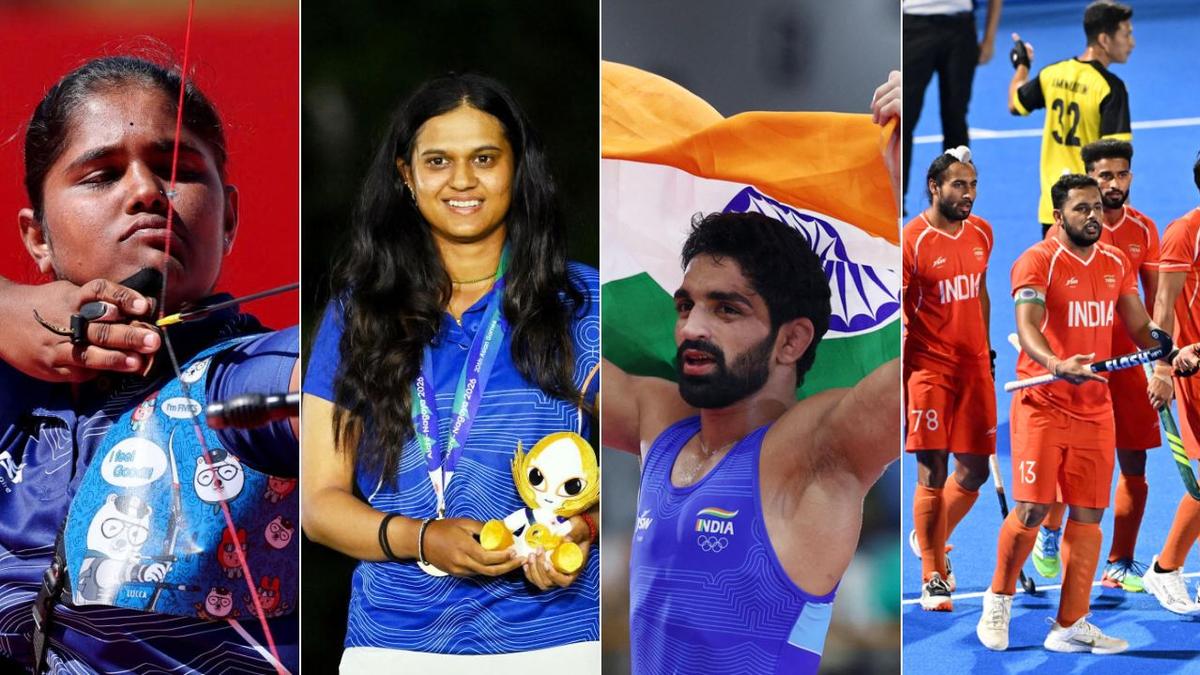
India Achieves Fourth Place at Asian Games 2026 Through Late Success