China Achieves Milestone with Tailless Sixth Generation Fighter


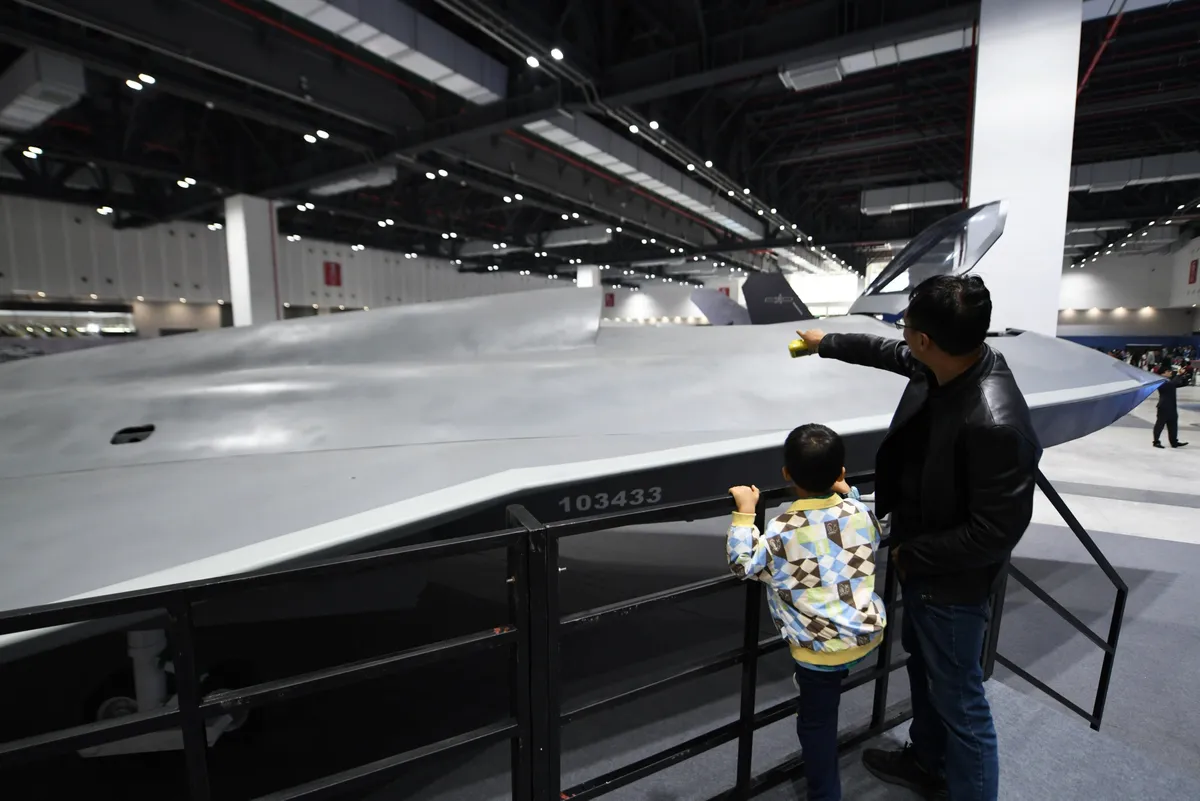
Recent footage of a new Chinese tailless sixth generation fighter aircraft has showcased its impressive high manoeuvrability, as it executed a sharp turn-climb during a flight. This demonstration, featuring the three-engine aircraft developed by the Chengdu Aircraft Corporation, addresses long-standing doubts among analysts regarding the performance capabilities of tailless designs.
China reportedly has four prototypes of the aircraft, which made its flight testing debut on December 26, 2024, marking it as the first of its generation to undergo such evaluation globally. Tailless fighter designs pose considerable engineering challenges given their inherent lack of horizontal tailplanes, which traditionally assist in pitch control, stability, and rapid attitude changes.
In the absence of these tailplanes, designers must employ advanced flight-control software alongside control surfaces integrated within the wing structure. This complexity makes manoeuvrability, especially during high-performance scenarios, significantly more difficult to achieve. Analysts have noted that the ability to develop a fighter capable of compensating for missing tail surfaces represents a substantial technical hurdle, one which the latest footage appears to confirm.
With this innovation, China stands as the only country confirmed to have flown a high manoeuvrability sixth generation fighter, joining three other tailless prototypes still in development. The challenge of pitch control is particularly pronounced for such aircraft. Unlike fifth generation fighters, which utilise horizontal stabilisers to create large pitching moments for quick adjustments, tailless designs must depend solely on a limited set of elevons or wing-based surfaces.
The absence of a tail complicates achieving high instantaneous turn rates and stabilisation, especially at low speeds and when at elevated angles of attack.
China's defence sector is gaining recognition for its unique and inventive flight control technologies. For instance, its J-20 fifth generation fighter benefits from a delta-canard airframe configuration that enhances both stealth and performance at supersonic speeds. This design offers a significantly improved lift coefficient compared to foreign competitors, giving China's air superiority fighters better control during complex manoeuvres.
Tailless fighter designs are officially regarded as optimal for stealth capabilities. By removing horizontal tailplanes, designers can create a more streamlined shape that lessens radar reflections, thereby reducing the aircraft's radar cross-section. Enhancing planform alignment, minimising the number of external surfaces, and removing right-angle junctions between the tail and fuselage contribute significantly to stealth features.
The successful testing of China's tailless fighter prototype indicates a vital leap forward in technology, marking a major achievement toward developing a comprehensive sixth generation aircraft. Analysts predict that China and the United States will lead in creating tailless fighters before the year 2050, with Chinese aircraft expected to be operational by the early 2030s and the United States aiming for its own models in the 2040s. The race for advanced military aircraft continues, with both nations vying for dominance in the skies.

India's Jaishankar Criticises Pakistan at UN General Assembly

Iran Asserts Readiness for War Amid Rising Tensions in Hormuz

Israeli Prime Minister Netanyahu Makes Unannounced Visit to UAE

World Leaders Gather for Climate Summit, Pledges Made