BRICS Talks Conclude Without Joint Statement Amid Iran Conflict Dispute


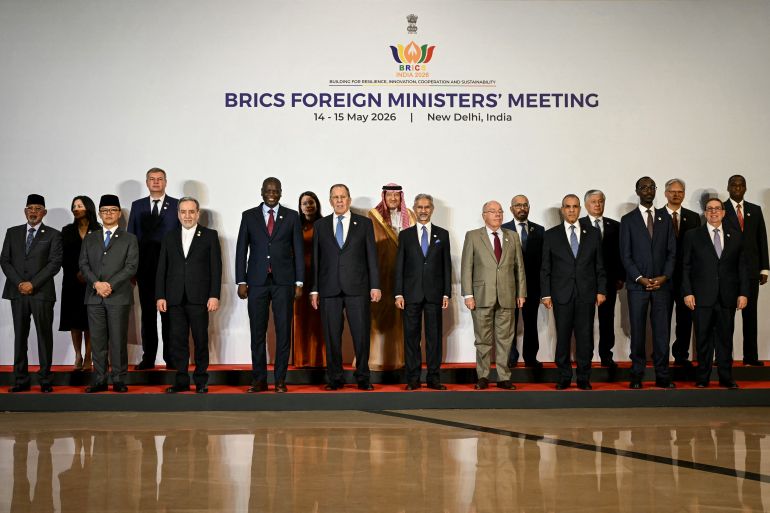
The BRICS alliance, comprising Brazil, Russia, India, China, and South Africa, as well as newer members such as Ethiopia, Egypt, Iran, Indonesia, and the United Arab Emirates, concluded a two-day meeting in New Delhi without reaching a consensus that could lead to a joint declaration. Internal disagreements over the ongoing war involving Iran have intensified divisions among the member nations.
India, which currently chairs the BRICS group, acknowledged differing perspectives regarding the Middle Eastern conflict. Iranian Foreign Minister Abbas Araghchi urged the member states to denounce what he termed as 'violations of international law' by the United States and Israel.
Amidst the ongoing hostilities, Araghchi highlighted the increasing tensions between Iran and its Gulf neighbours, particularly Saudi Arabia and the UAE, which are also associated with the BRICS+ group. Although Riyadh has not officially joined BRICS, it remains a significant member in the broader geopolitical context.
Araghchi remarked on the sidelines of the summit that one BRICS member had obstructed sections of a proposed statement from India. He stated, 'We have no difficulty with that certain country, they have not been our target in the current war. We only hit American military bases and American military installations, which are unfortunately on their soil.'
The UAE's representative, Minister of State Khalifa bin Shaheen Al Marar, refuted these statements, accusing Iran of justifying what he described as 'terrorist attacks' against the UAE. He further asserted that Iran had launched around 3,000 attacks on Emirati territory using various missile technologies.
Despite the hostilities, the BRICS meeting did see consensus on other issues. It reiterated the longstanding demand for reforms in global governance structures, such as the United Nations and the Security Council, advocating for a greater representation of countries from the Global South.
The foreign ministers also addressed the conflict in Gaza, underscoring its essential role in any future Palestinian state. They expressed the necessity of merging Gaza with the occupied West Bank under the Palestinian Authority's governance. However, reservations from an unnamed country were noted regarding this section of discussion.
A call for respect for a ceasefire in Lebanon was also included, although many critics have dismissed this ceasefire as largely nominal. Additionally, the need to avoid economic sanctions as tools of coercion was condemned by the ministers in a general statement.
The ongoing humanitarian crisis in Sudan, viewed by the UN as one of the gravest globally, was highlighted. The ministers urged an immediate ceasefire, advocating for a peaceful resolution to the civil conflict that has persisted for over three years. They warned the situation could foster conditions for extremism and terrorism.
Syria's recovery from its civil war was another significant topic, with discussions focused on the necessity of a peaceful political transition. Ministers underlined the imperative to eliminate foreign terrorist fighters in Syria, citing the security risks they pose to both the nation and the larger region.
India's Jaishankar Criticises Pakistan at UN General Assembly
Iran Asserts Readiness for War Amid Rising Tensions in Hormuz
Israeli Prime Minister Netanyahu Makes Unannounced Visit to UAE

World Leaders Gather for Climate Summit, Pledges Made