US and Iran Tensions Rise Amid Announced Peace Deal


The United States has reported downing multiple Iranian drones aimed at commercial vessels in the Strait of Hormuz early on June 13, 2026. This development occurred shortly after both nations hinted at nearing a peace agreement designed to halt the ongoing West Asia conflict.
According to U.S. Central Command, Iran had deployed several one-way attack drones trying to target commercial ships trafficked through this critical waterway. In a statement on the social media platform X, U.S. officials noted that American forces successfully intercepted all the drones while maritime movement through the strait continued without disruption.
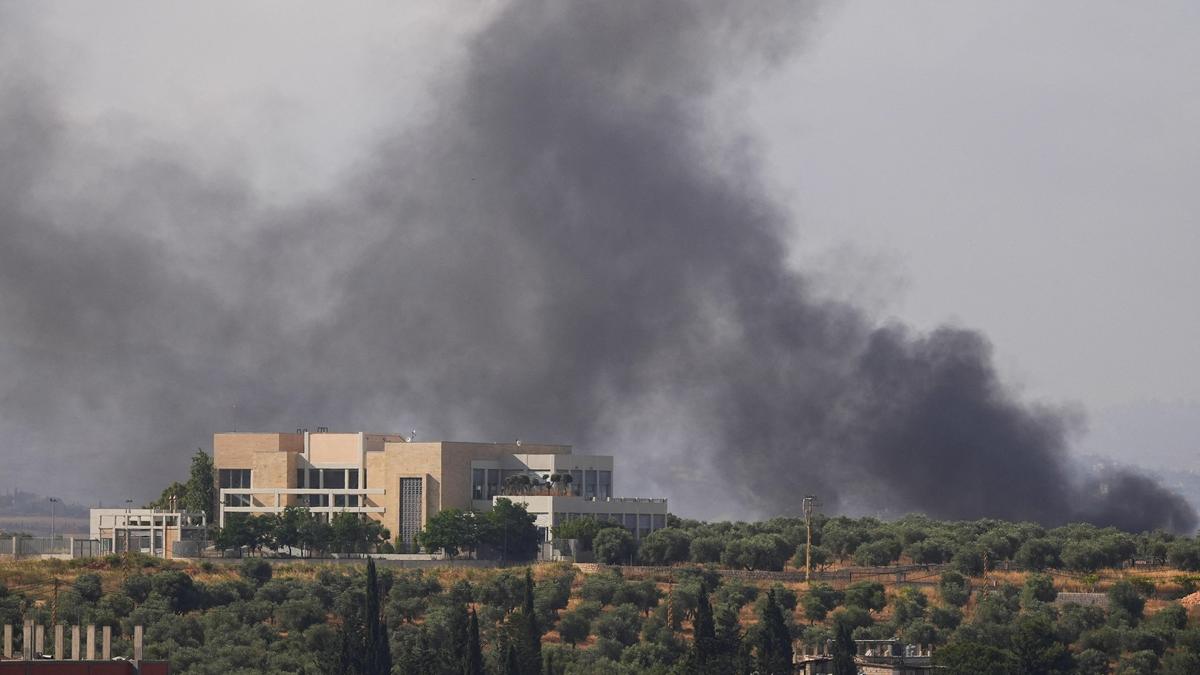
On the same day, Beirut’s state-run National News Agency announced that Israeli airstrikes had struck southern Lebanon, following an evacuation warning for 20 locations, including the city of Nabatieh. The Israeli army had advised residents to vacate their homes and move north of the Zahrani River, approximately 45 kilometres from the Israeli border. Israeli bombardments reportedly occurred in several targeted areas, including villages near Nabatieh.
President Donald Trump denounced the Iranian military activities as “totally unacceptable,” specifically mentioning drone assaults on vessels with Indian crew members off the coast of Oman. Iranian authorities dismissed the accusations as unfounded.
Despite the escalation in tensions, Trump claimed a new agreement with Iran would be formalised on June 14, which he asserted would significantly curb Tehran’s nuclear ambitions. Critiquing the Joint Comprehensive Plan of Action, a nuclear deal established under former President Barack Obama, Trump stated his proposed agreement would create a barrier to Iran acquiring nuclear capabilities. He forecasted the agreement would restore safe navigation in the Strait of Hormuz, but mentioned no U.S. financial assistance would be given to Iran in the process.
British Prime Minister Keir Starmer and President Trump spoke about measures to resolve the Iran issue, reinforcing Britain's readiness to support any peace agreement. They underscored the importance of ensuring free navigation to mitigate negative impacts on the global economy.
Union Minister Hardeep Singh Puri addressed concerns about energy security in India amidst the ongoing conflict, stating that there are no shortages in critical fuel supplies, which include crude oil and natural gas. He also noted that Indian fuel prices have significantly decreased over the past four years, despite rising global rates.
The situation remains precarious. Conflict continues in southern Lebanon, exacerbated by Hezbollah’s recent attacks on Israeli forces following the outbreak of war in March. The recent hostilities have resulted in substantial loss of life and raised ongoing concerns over stability in the region. Efforts to reach a ceasefire have so far proven inadequate, with accusations from Lebanese leaders indicating that Iran is using their nation as part of broader negotiations in the West Asia region.
Lebanon's President, Joseph Aoun, issued a statement highlighting the urgent decision facing the nation: either to unite around a sovereign state or to remain under the influence of non-state militias. As discussions around a potential peace deal advance, hopes remain that a resolution will bring stability to the tumultuous region.

Lieutenant General Dhiraj Seth Appointed New Chief of Army Staff

Indian Prime Minister Modi Visits France and Slovakia for G7 Summit

Tata Trusts CEO Addresses Management Concerns and Funding Plans

Main Vaapas Aaunga Sees Poor Box Office Performance in India