US House Votes to Curb President Trump's Military Action in Iran


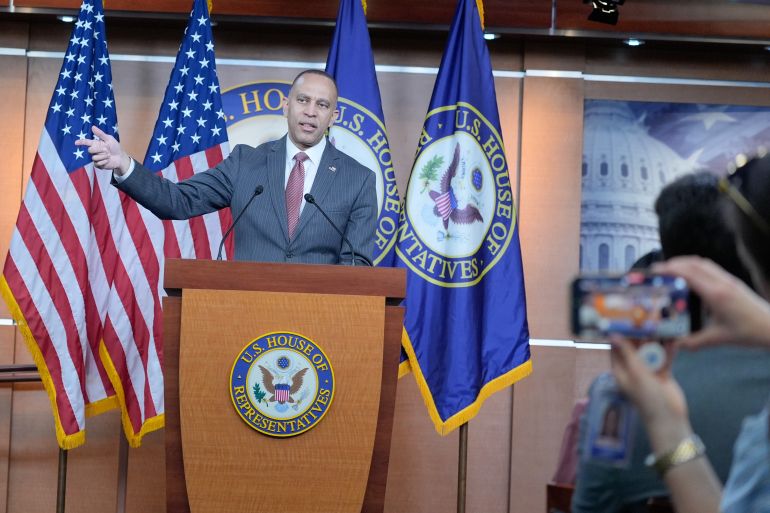
The United States House of Representatives has voted to approve measures aimed at restricting President Donald Trump’s military actions in Iran, as the ongoing conflict reaches four months. This legislative move comes amid increasing concerns surrounding civilian casualties and disruptions to global trade. The vote, conducted on Wednesday, represents the first successful attempt by lawmakers to push for the cessation of military hostilities that started on February 28. It highlights a noticeable shift in sentiment, particularly among Republican members, due to escalating domestic issues tied to the conflict.
The legislation invoked the War Powers Act, which allows Congress to require the president to seek approval for military actions. Critics of the administration argue that military operations in Iran were initiated without Congress’s consent, which contradicts the spirit of the War Powers Act of 1973. This act mandates that the president must inform Congress of any military deployment within 48 hours and requires troop withdrawal within 60 days unless Congress formally declares war. Despite a ceasefire established on April 8, Trump’s administration has continued military operations, asserting that they are necessary to safeguard American interests.
The recent House vote was closely contested, with the tally resulting in 215 representatives supporting the resolution and 208 opposed. Four Republican legislators—Brian Fitzpatrick of Pennsylvania, Tom Barrett of Michigan, Warren Davidson of Ohio, and Thomas Massie of Kentucky—joined Democrats in this effort, which is perceived as a direct challenge to the president’s policies.
However, experts indicate that while this vote serves as a significant reprimand, it is unlikely to result in immediate changes due to President Trump’s ability to veto any legislative measures. The Senate, holding a slim Republican majority, has previously shown resistance to similar proposals, casting doubt on the resolution’s fate should it advance in that chamber.
In commentary on the recent vote, Michael Glennon, a professor at Tufts University, noted the potential political ramifications. He stated, "There's a political impact, because a majority of one House of the Congress have gone on record, in an actual vote, that the US armed forces need to be withdrawn from hostilities in the Persian Gulf."
Following the House vote, President Trump responded via social media, labelling the lawmakers who sided against him as "unpatriotic" and criticising their decision during crucial negotiations aimed at de-escalating the conflict with Iran. The president also questioned the motives of the dissenting Republicans, characterising them as individuals seeking publicity rather than acting in the nation’s best interest.
This legislative action reflects growing concerns within Congress not only about the legality of the military engagement but also about its economic impacts on the United States, which have been notable amidst increasing petrol prices and domestic discontent regarding the war. Recent polling indicates that a significant portion of the electorate, including a majority of independent voters, oppose the war, which points to a shifting political landscape that may influence future congressional actions regarding military engagement overseas.
In summary, although the recent House vote marks a significant moment of dissent regarding the executive's war powers, the actual implementation of any measures to limit President Trump's military actions in Iran faces significant political and procedural obstacles. As the situation evolves, the interplay between Congress and the executive branch remains a focal point in the ongoing discourse surrounding the United States' military involvements abroad.
Kerala Initiates Probe into 2006 Suicide Case Involving CEC

Extradition of Sheikh Hasina Feasible, Says Indian High Commissioner

Punjabi Makeup Artist Mad Sandhu Shot Dead in Amritsar

India Achieves Fourth Place at Asian Games 2026 Through Late Success