Israel and Lebanon Engage in New US-Mediated Ceasefire Agreement


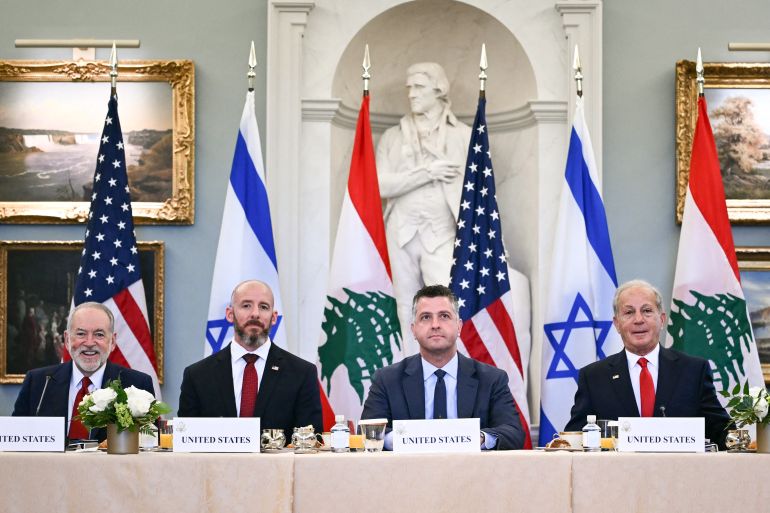
Israel and the Lebanese government have reached an agreement for a new ceasefire, mediated by the Trump administration. Despite this announcement, uncertainty looms as Israel's Defence Minister has stated that military operations will persist in Lebanon. Lebanese President Joseph Aoun announced that the ceasefire would take effect within 24 hours, contingent on approval by all involved parties. However, Hezbollah leader Naim Qassem has dismissed the agreement as a "surrender and defeat."
The recent diplomatic manoeuvre follows a prior agreement for a ceasefire made on April 16, which has since resulted in over 600 fatalities due to Israeli strikes in Lebanon. Currently, Israeli military forces occupy approximately one-fifth of the country. This renewed push for diplomacy coincides with parallel negotiations between Washington and Tehran regarding a broader agreement concerning regional hostilities. Iran, an ally of Hezbollah, views a ceasefire in Lebanon as a prerequisite for any wider resolution and has repeatedly urged Israel to withdraw from southern Lebanon.
In a statement, Esmail Qaani, commander of Iran’s Quds Force, reiterated that Israeli forces must withdraw to their pre-war positions. The divergence between the US announcement and Hezbollah's rejection of the agreement raises significant questions about its sustainability. Critics argue that the terms resemble that of the previous April truce, which many believe failed to achieve its intended objectives, including halting Israeli aggression and occupation.
The Trump administration claims that the new ceasefire relies on a complete halt of hostilities from Hezbollah, along with the withdrawal of its fighters from territories south of the Litani River. The agreement also outlines the establishment of "pilot zones" where the Lebanese Armed Forces would take control, aiming to eliminate the presence of non-state actors and work towards a more comprehensive political and security arrangement. However, Hezbollah was not part of the negotiation process, and the Lebanese army is not engaged in this conflict.
There are plans for the involved parties to reconvene for further talks during the week of June 22, with the US facilitating these discussions. The previous agreement in April used language indicating a "cessation of hostilities," and notably allowed Israel to take measures in self-defence without specifying a ceasefire. This clause seems absent in the current agreement, a potential point of concession that Israeli officials, including Israeli Defence Minister Israel Katz, have contradicted by insisting military operations will continue.
A significant omission in the latest agreement is the lack of a mention regarding Israel's withdrawal from southern Lebanon, which has drawn criticism from Lebanese commentators. Souhayb Jawhar, a journalist and analyst, contextualised this by stating that the agreement's structure focuses predominantly on Hezbollah’s obligations and those of the Lebanese state concerning security in the south, rather than addressing the Israeli military presence.
Concerns have also been raised about the nature of the proposed "pilot zones" as they could signal a shift towards a new security paradigm in southern Lebanon, potentially reducing Hezbollah’s control and enhancing the role of the Lebanese state. The future of this ceasefire might hinge less on negotiations between Lebanon and Israel, and more on the outcomes of US-Iran discussions. Should a wider agreement between Washington and Tehran materialise, both sides could find motivation to maintain peace along the Lebanese front. However, if those negotiations falter, Lebanon may again become a focal point of conflict between the two nations.
As of Thursday, southern Lebanon remained under Israeli military pressure, with multiple strikes reported across various regions, including Kafra and al-Mansouri. The state-run National News Agency of Lebanon reported casualties, indicating that the conflict remains active despite the newly proposed ceasefire agreement. Strike reports included fatalities in the Bekaa Valley and numerous other locations in southern Lebanon, where Israeli warplanes and drones were also sighted.
Kerala Initiates Probe into 2006 Suicide Case Involving CEC

Extradition of Sheikh Hasina Feasible, Says Indian High Commissioner

Punjabi Makeup Artist Mad Sandhu Shot Dead in Amritsar

India Achieves Fourth Place at Asian Games 2026 Through Late Success