UK Prime Minister Keir Starmer Meets Chinese President Xi Jinping


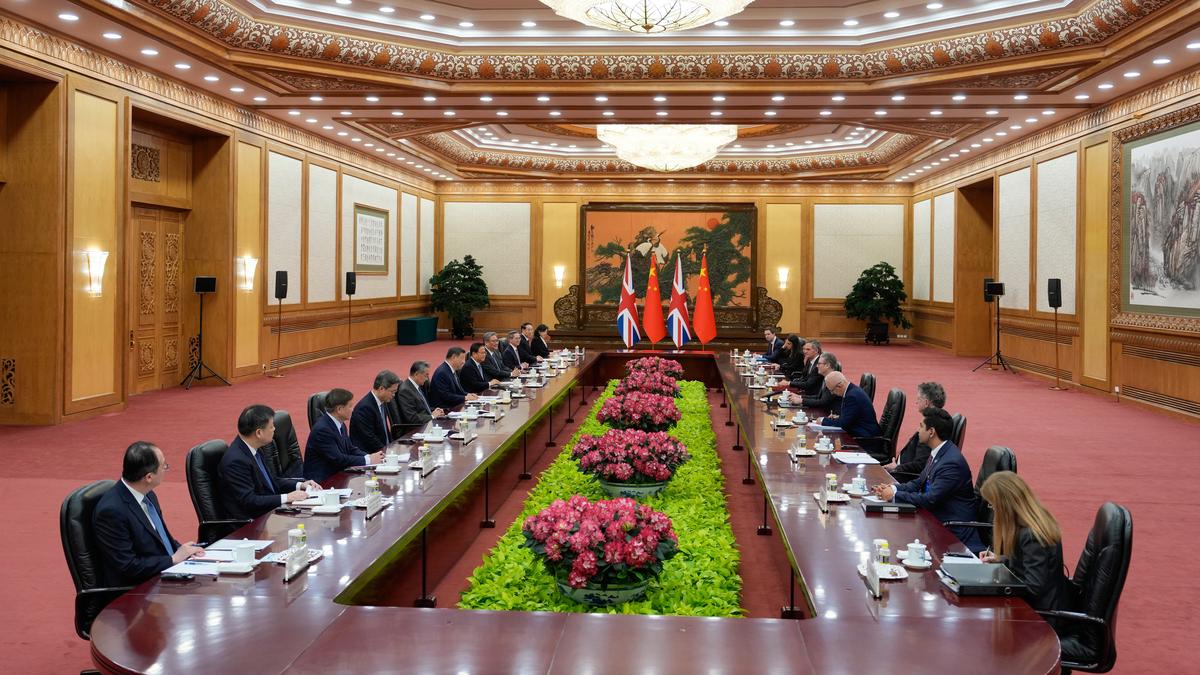
United Kingdom Prime Minister Keir Starmer met with Chinese President Xi Jinping in Beijing on January 29, 2026, marking the first visit by a British Prime Minister to China in eight years. The meeting took place at the Great Hall of the People, where both leaders discussed the importance of multilateralism and strengthening bilateral ties.
President Xi Jinping emphasised that the UK and China should act as advocates for true multilateralism, noting that adherence to international law is vital for global stability. Quoted by the state-run news agency Xinhua, Xi stated that significant nations must take the lead to prevent a regression to chaotic conditions.
During the meeting, Prime Minister Starmer highlighted his administration's aim to foster long-term partnerships that could benefit both nations. "Growth and prosperity at home is directly linked to our engagement with the world's biggest powers abroad," Starmer remarked. The Prime Minister is accompanied by a delegation including leaders from major British businesses and cultural organisations, reflecting the trip's focus on enhancing economic relations.
Among the topics discussed, Starmer raised concerns regarding various issues affecting UK-China relations, including human rights and security matters. To address immigration-related challenges, the two countries agreed to collaborate on a new border security agreement aimed at curbing the flow of components used by gangs to facilitate illegal crossings into the UK.
Recent UK government statistics indicate that a significant majority of engines used in smuggling incidents across the English Channel were sourced from China, prompting the need for this agreement. Starmer asserted that the deal would assist in disrupting the supply chains that supply organised crime, thereby reinforcing border controls while safeguarding lives.
Additional initiatives agreed upon include discussions related to reducing tariffs on Scotch whisky exports and the potential for introducing visa-free travel for British citizens visiting China. The two sides also committed to ramping up efforts to repatriate individuals residing in the UK unlawfully and intensifying measures against gangs involved in synthetic opioid manufacturing.
Starmer’s visit aims to mend strained relations between the UK and China, which have soured partly due to rising concerns regarding espionage, Beijing's support for Russia in the ongoing Ukraine conflict, and the handling of civil liberties in Hong Kong. Political analysts note that improving economic ties while managing security concerns will be crucial as the UK seeks to enhance its global trade relationships.
In previous years, diplomatic tensions have hindered communication between the two nations. Both leaders expressed the necessity for continued dialogue, focusing on seeking common ground amid existing differences, as remarked by China’s Ambassador to the UK, Zheng Zeguang, earlier this week.
Starmer's administration has positioned this trip as a significant step towards reaffirming Britain's role in global affairs. He showcased a pragmatic approach, aiming to balance economic opportunities with the necessity of upholding national security throughout the discussions. The outcome of this visit could potentially reshape UK-China relations moving forward.

India to Supply Nepal with Daily Electricity After Flood Damage

US Space Force confirms weapons deployed in space orbit

Maruti Suzuki Exports One Lakh Units of Jimny and Fronx to Japan
China's Foreign Minister Urges Strengthening International Ties
