The Equity Edit: Inside the battle over India’s new campus rules


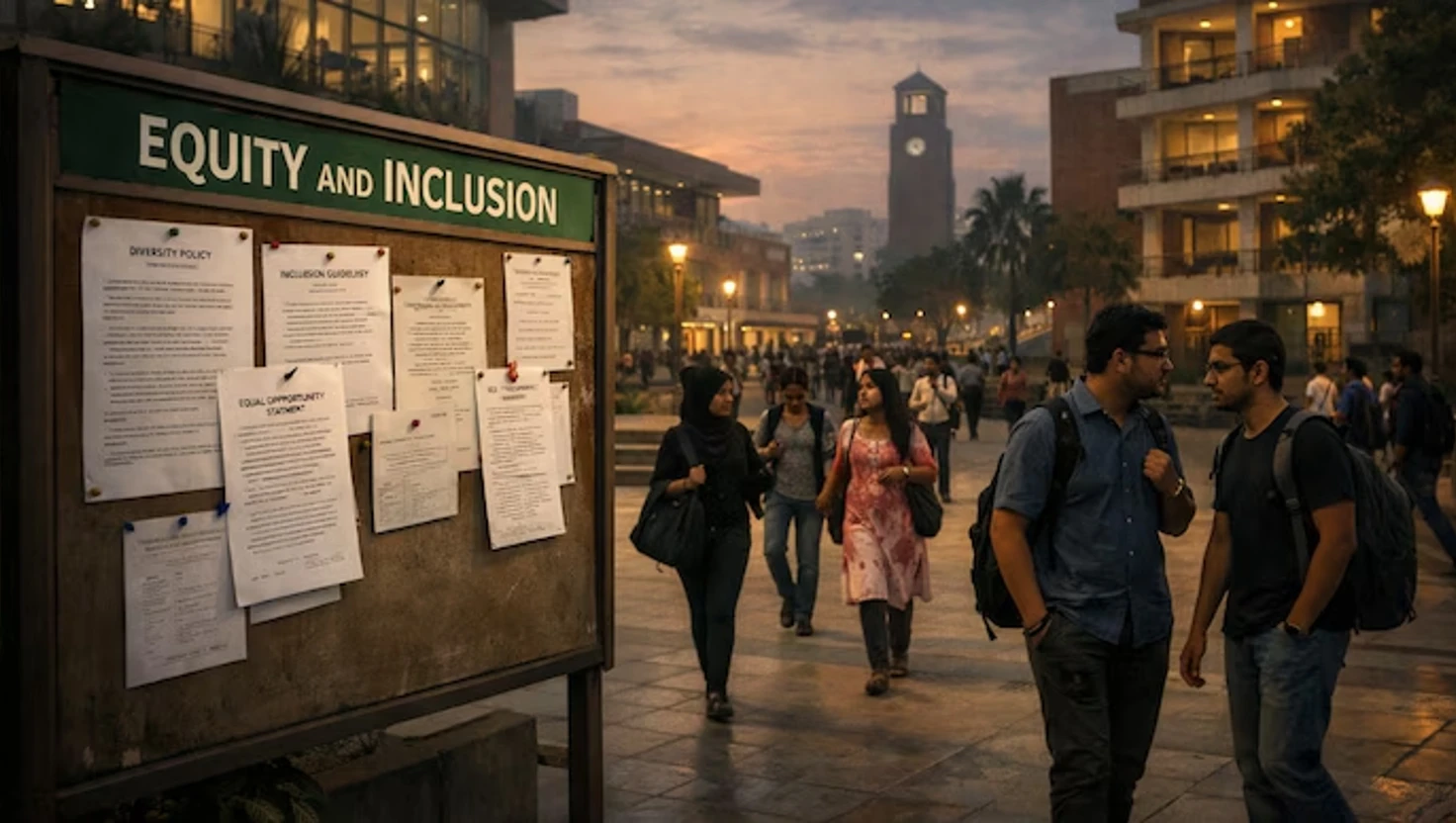
Earlier this month, the University Grants Commission (UGC) notified the Promotion of Equity in Higher Education Institutions Regulations, 2026. On paper, it is a landmark move to end caste-based discrimination. On the streets, it has become a lightning rod for social division, sparking resignations, street protests, and a high-stakes legal battle.
As the row threatens to overshadow the upcoming Parliamentary Budget Session, the central government is moving into "damage control" mode, preparing a nationwide campaign to counter what it describes as "coordinated misinformation."
The "Silent" Origin
The 2026 rules were born from tragedy. They trace back to the high-profile suicides of PhD scholar Rohith Vemula (2016) and doctor Payal Tadvi (2019)—deaths that became symbols of the systemic bias faced by marginalized students.
Following a sharp rebuke from the Supreme Court in early 2025, the UGC replaced its decade-old guidelines with a "teeth-heavy" framework. The new rules mandate:
Equal Opportunity Centres (EOC): Mandatory hubs on every campus to handle bias.
Equity Squads: Mobile units tasked with monitoring "vulnerable spots" on campus.
Strict Accountability: For the first time, University heads can face personal penalties if discrimination is ignored.
The Spark of Dissent
The backlash began when the final text explicitly defined "caste-based discrimination" as acts against SC, ST, and OBC students. Critics argue that by omitting the "general category" from this specific definition, the government has effectively stripped millions of students of institutional protection. This anxiety was compounded when the UGC dropped a draft provision that would have penalized "false complaints"—a move intended to protect victims, but one that critics say invites misuse.
"The burden of proof has shifted entirely onto the accused," says Alokit Tripathi, a PhD student at Delhi University. "We are creating a campus culture of constant surveillance where a single unverified complaint can derail a career."
A Government on the Defensive
On Tuesday, Union Education Minister Dharmendra Pradhan made his first public intervention from Rajasthan, seeking to calm the waters. "I want to humbly assure everyone that no one will face harassment," Pradhan told reporters. "No one will have the right to misuse the regulation. All actions will be within the ambit of the Constitution."
Despite these assurances, the administration is facing a rare rebellion from within. In Uttar Pradesh, the City Magistrate of Bareilly resigned last week, calling the rules a "black law." This was followed by the resignation of a BJP youth wing leader, signaling that the unease has reached the ruling party's own grassroots.
The Legal Front
The battle has now returned to the very place it began: The Supreme Court. A fresh petition was filed this week by advocate Vineet Jindal, challenging the "non-inclusionary" nature of the rules. The plea argues that the current definition violates the fundamental Right to Equality by denying grievance redressal to non-reserved categories.
The Road Ahead
For the Modi government, the challenge is a delicate balancing act. It must uphold its commitment to the Supreme Court and its "social justice" agenda for marginalized groups, without alienating the influential general-category voter base ahead of crucial state elections. As the "fact-based campaign" rolls out this week, the government’s success will depend on whether it can convince a skeptical public that "Equity" for some does not mean "Iniquity" for others.

Ceasefire Agreed in Oleshky Amid Ukraine's Humanitarian Crisis
Donald Trump Hints at US Interest in Cuba After Conflict in Iran

UK Court Rules Against India in RAKIA Investment Dispute
India Raises Concerns Over Chinese Border Patrolling Deviations