Trump Urges Allies to Secure Strait of Hormuz as Tensions Rise


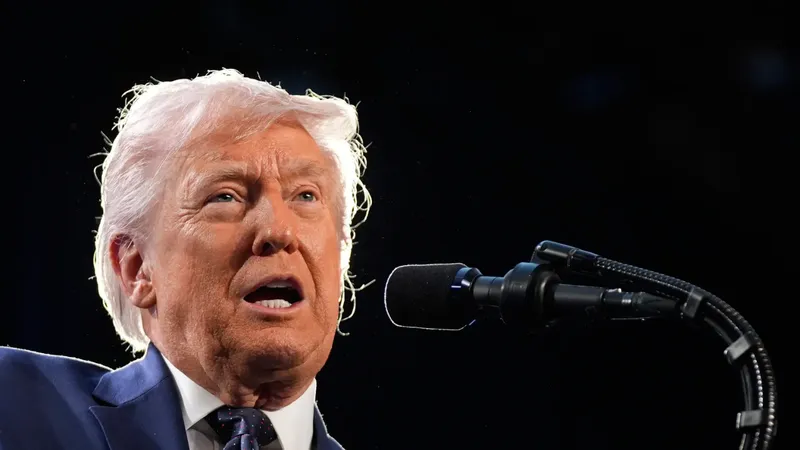
U.S. President Donald Trump has urged allied nations to contribute maritime support in securing the Strait of Hormuz following a call to form a coalition to protect this crucial shipping route. The request comes amidst rising tensions in the region linked to the ongoing conflict between the United States and Iran, which has significantly shaken global energy markets.
On March 16, 2026, Trump stated that countries heavily reliant on oil from the Gulf have a duty to safeguard the strait, through which approximately 20% of the world’s oil supply passes. He expressed expectations that countries including China, Japan, and several European nations would assist in protecting the vital waterway, emphasising their responsibility for their own energy security.
“I’m demanding that these countries come in and protect their own territory because it is their territory,” Trump declared during remarks made while travelling from Florida to Washington on Air Force One.
Despite Trump’s appeals, both Japan and Australia have confirmed that they do not intend to send naval vessels to the region to escort ships through the Strait of Hormuz. Japanese Prime Minister Sanae Takaichi stated that her nation has not made any plans for military deployment due to constraints imposed by its constitution. “We are continuing to examine what Japan can do independently and what can be done within the legal framework,” she remarked in parliament.
Similarly, an Australian official, Catherine King, noted that her country had not been requested to assist and would not be deploying naval ships to the area. “We know how incredibly important that is, but that’s not something that we’ve been asked or that we’re contributing to,” she commented.
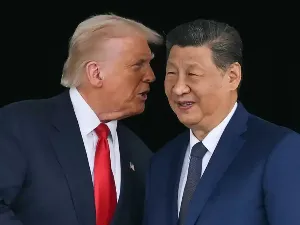
Trump has previously indicated that he has reached out to seven nations to discuss potential contributions, although he has yet to specify which countries responded positively. He has publicly expressed hope that Beijing, which relies on the Strait of Hormuz for 90% of its oil imports, would also take action to address the situation ahead of his planned meeting with Chinese President Xi Jinping later this month.
The U.S. President outlined that military action is still an option, warning that he might delay his meeting with Xi if China does not provide assistance.
Pressure is also mounting on NATO allies to assist in the maritime security effort. Trump highlighted the potential repercussions for the alliance should its members fail to respond to U.S. requests. As discussions within the European Union are set to take place regarding naval missions in West Asia, it remains unclear if additional support for the Strait of Hormuz will be forthcoming.
The situation in the Gulf has escalated, with an effective closure of the strait following military actions instigated by U.S. and Israeli forces targeting Iran. Although some vessels have managed to transit, the majority of tanker traffic remains impeded.
In light of the conflict, drone attacks continue to pose significant risks in the region. Recent incidents have led to temporary airport closures in Dubai, while Saudi Arabian defences intercepted multiple drones attempting to breach its airspace, although no injuries were reported.
U.S. officials have downplayed fears regarding the energy market’s stability, predicting that the conflict with Iran may conclude soon with a return to lower oil prices. However, Iranian officials assert that their nation remains robust and prepared to defend itself amid ongoing hostilities. Iranian Foreign Minister Abbas Araghchi, rebuffing claims by Trump regarding potential negotiations, stated, “We have never asked for a ceasefire, and we have never asked even for negotiations.”
As diplomatic conversations unfold among global leaders, the trajectory of the situation in the Strait of Hormuz remains uncertain, with key stakeholders deliberating their respective roles in ensuring the security of this pivotal maritime corridor.
India LPG Tanker Reaches Mundra After Crossing Strait of Hormuz

Ranjan Gogoi Concludes Rajya Sabha Term with Low Engagement

Israel-Iran War: Netanyahu Denies Death Rumours in Video
Strait of Hormuz Tensions: Allies Weigh Trump’s Naval Call