India LPG Tanker Reaches Mundra After Crossing Strait of Hormuz


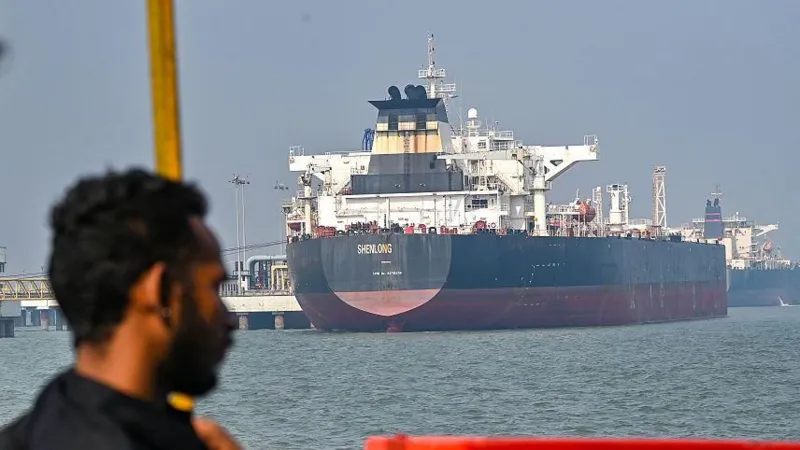
India has received an LPG shipment from the Middle East after an Indian-flagged tanker safely crossed the Strait of Hormuz, a key global shipping route disrupted by the ongoing conflict involving Iran.
The vessel, named Shivalik, arrived at Mundra Port in the western Indian state of Gujarat on Monday after completing its journey through the narrow waterway. The passage came amid heightened tensions in the region following military strikes by the United States and Israel on Iran earlier this year, which triggered a wider conflict affecting commercial shipping.
Officials said the tanker was carrying roughly 92,700 metric tonnes of liquefied petroleum gas (LPG), an essential household fuel widely used for cooking across India.
A second Indian tanker, Nanda Devi, has also successfully crossed the strait and is expected to dock in Mumbai on Tuesday with a similar quantity of LPG.
Diplomatic engagement
The safe arrival of the tankers follows diplomatic efforts by India to ensure the safety of its vessels operating in the region.
India’s External Affairs Minister S Jaishankar has been in contact with Iranian Foreign Minister Abbas Araghchi, holding several rounds of discussions aimed at easing restrictions on shipping. Indian Prime Minister Narendra Modi also spoke with Iranian President Masoud Pezeshkian last week as part of the diplomatic outreach.
Mr Jaishankar said talks with Tehran had begun to produce some results but cautioned that there was no comprehensive agreement allowing all Indian vessels to pass through the route.
“I am at the moment engaged in talking to them and my talking has yielded some results,” he told the Financial Times.
However, he noted that the situation remained uncertain because many vessels were still waiting to transit the waterway.
Indian officials say more than twenty Indian-flagged merchant ships remain positioned on either side of the Strait of Hormuz while awaiting clearance.
Another tanker, Jag Prakash, carrying petrol from Oman to destinations in Africa, has recently begun its journey through the region, according to India’s Ministry of Shipping.
Strategic shipping route
The Strait of Hormuz is a narrow maritime corridor located between Iran and Oman, connecting the Persian Gulf with the Arabian Sea. Around one fifth of the world’s oil and gas trade normally passes through the channel, making it one of the most strategically important shipping routes in global energy markets.
The current crisis began after US and Israeli forces launched strikes against Iranian targets in late February. Iran responded with military action and restrictions on shipping movements through the strait, which has disrupted energy flows and heightened risks for commercial vessels.
In recent weeks, several ships have faced security threats in the area. A Thai-flagged cargo vessel bound for the Indian port of Kandla was attacked shortly after leaving a port in the United Arab Emirates, underscoring the volatile security situation in the Gulf.
Energy market impacts
The instability in the region has affected global energy markets, pushing crude oil prices higher amid fears that supplies could be disrupted.
At one stage, benchmark crude prices climbed above 100 US dollars per barrel as traders reacted to the possibility that the shipping route could remain restricted for an extended period.
For India, the route is particularly important. Roughly 40 to 50 percent of the country’s crude oil imports travel through the Strait of Hormuz, along with about half of its liquefied natural gas supplies and most shipments of liquefied petroleum gas.
The safe arrival of LPG cargo is therefore critical for maintaining domestic energy supplies.
LPG supply concerns
The conflict has raised concerns within India about the availability of cooking gas cylinders used by households.
More than 330 million households in the country rely on LPG for cooking, and India is the world’s second-largest importer of the fuel. A large share of these imports comes from producers in the Middle East.
In recent days, some areas experienced a surge in LPG bookings, driven partly by consumer concerns about possible shortages.
Government officials say the situation remains under control.
According to India’s Ministry of Petroleum and Natural Gas, domestic production of LPG has been increased by about 28 percent to help offset supply disruptions and reassure consumers.
Officials said the recent surge in bookings was largely due to precautionary purchases by households rather than an actual shortage.
They have urged consumers to avoid panic buying and said existing supplies remain sufficient to meet demand.
Diplomatic balancing
Analysts say India faces a delicate diplomatic challenge as tensions continue in the Middle East.
The country maintains close relations with Israel and strategic ties with the United States, while also sustaining longstanding political and economic relations with Iran.
India has repeatedly called for dialogue and restraint, emphasising the importance of keeping international shipping lanes open.
Mr Jaishankar said negotiations and coordination offered the best way to resolve the crisis.
“Certainly, from India’s perspective, it is better that we reason and we co-ordinate and we get a solution than we don't,” he said.
With several Indian vessels still waiting to cross the strait, officials say diplomatic engagement will remain crucial in the coming days as India seeks to secure safe passage for its ships and maintain stable energy supplies.

Trump Urges Allies to Secure Strait of Hormuz as Tensions Rise

Ranjan Gogoi Concludes Rajya Sabha Term with Low Engagement

Israel-Iran War: Netanyahu Denies Death Rumours in Video
Strait of Hormuz Tensions: Allies Weigh Trump’s Naval Call