Ranjan Gogoi Concludes Rajya Sabha Term with Low Engagement


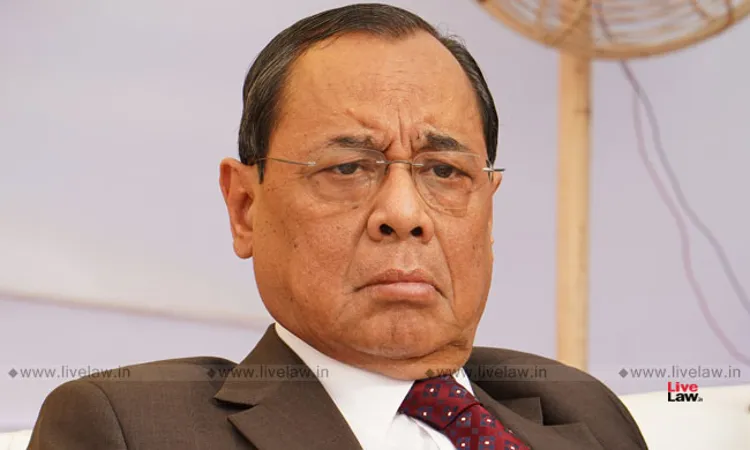
Ranjan Gogoi, the former Chief Justice of India, has finished his six-year term as a nominated member of the Rajya Sabha, the Upper House of Parliament, on March 16. His time in office has been marked by notably low engagement in legislative activities. Vice President of India and Rajya Sabha Chairman C.P. Radhakrishnan delivered a farewell address, reflecting on Gogoi's contributions.
He stated, “As a distinguished jurist, he brought unparalleled legal acumen and experience to the deliberations of the Rajya Sabha.” Radhakrishnan acknowledged that Gogoi’s presence will be missed in the House due to his depth of understanding regarding legislative processes and public interest. Official records indicate that Gogoi’s attendance was only 53%, significantly below the average of 80% for all members. Throughout his term, he did not raise any questions or introduce private member’s bills and only participated in a single debate.
Gogoi was nominated to the Rajya Sabha shortly after retiring as Chief Justice, a move that sparked debate regarding its appropriateness. He previously explained that he viewed his nomination as a way for the judiciary and the legislature to connect. During his tenure, significant pieces of legislation were discussed, including the now-revoked farm laws and the new criminal codes.
When asked about the lack of his contributions in Parliament, Gogoi mentioned in an interview that the disruptions within the House influenced his unwillingness to engage frequently. He remarked, “It is because of the House having witnessed disruptions for one reason or the other.” He also indicated that he did not ask questions merely for the sake of participation, stating that he did not desire to establish a political career through his parliamentary role.
His involvement included interacting with foreign delegations and law enforcement agencies on constitutional matters. Initially, his attendance was around 10%, largely attributed to the COVID-19 pandemic. In an earlier interview, Gogoi noted that he had informed the chairperson of his medical reasons for his absences. He clarified that as a nominated member not bound by party affiliations, he could choose when to attend sessions.
The sole debate he engaged in focused on the federal governance structure under the Government of National Capital Territory of Delhi (Amendment) Bill, 2023, which sought to grant the central government powers over the Delhi bureaucracy. Gogoi expressed support for the bill, arguing its validity under the Constitution. This particular period was contentious, involving ongoing disputes between the elected government of Delhi and the appointed lieutenant governor.
In his farewell, Radhakrishnan expressed hope that Gogoi would continue to serve the nation with the same dedication he displayed during his career. As Gogoi steps back from his role, his time in the Rajya Sabha stands as a reflection of minimal involvement in legislative discussions, raising questions about the responsibilities of nominated members in Indian parliament.
India LPG Tanker Reaches Mundra After Crossing Strait of Hormuz

Israel-Iran War: Netanyahu Denies Death Rumours in Video
Strait of Hormuz Tensions: Allies Weigh Trump’s Naval Call
India Assembly Elections 2026: West Bengal, Tamil Nadu Poll Dates Announced