Trump Facilitates Ceasefire Agreement Between Israel and Hezbollah


United States President Donald Trump has announced that Israel and Hezbollah have reached a mutual agreement to cease hostilities. This declaration follows indirect discussions involving intermediaries, with Trump stating he engaged with both Israeli Prime Minister Benjamin Netanyahu and representatives from Hezbollah.
In his post on Truth Social, Trump conveyed that both sides had consented to halt attacks on one another. He stated, "I had a very good call with Hezbollah, and they agreed that all shooting will stop – that Israel will not attack them, and they will not attack Israel."
Historically, no US president has communicated with Hezbollah, classified by Washington as a terrorist organisation. According to the Lebanese embassy in Washington, the proposed terms involve Hezbollah ceasing attacks on Israel in exchange for an Israeli cessation of airstrikes on Beirut and surrounding areas.
Netanyahu confirmed that he had spoken with Trump but maintained that Israel would continue preparations for strikes if Hezbollah resumed its offensive actions. In light of the escalating violence, Iranian officials have stressed that any peace agreement with the US must involve Israeli withdrawal from Lebanon.
Hezbollah's aggression towards Israel escalated following the initial US-Israeli strikes aimed at Tehran in February. Prior to these events, the group had not engaged in military actions against Israel since a ceasefire in November 2024 was established, despite ongoing violations of that agreement by the Israeli military.
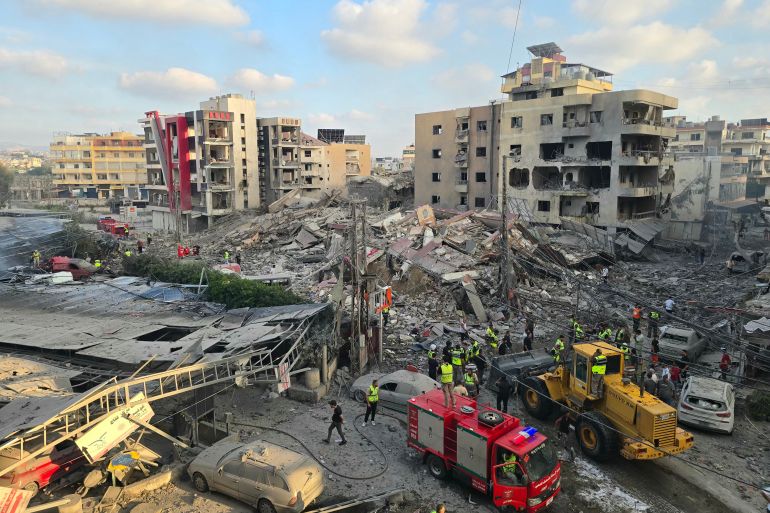
Since early March, Israel has maintained a pattern of near-daily strikes on Lebanon, currently controlling nearly one-fifth of the territory. The Lebanese Ministry of Public Health reports over 3,400 casualties and more than 10,000 injuries linked to Israeli military operations since March 2. The continuous conflict has resulted in the displacement of more than one million individuals.
Following the announcement of the ceasefire, Ahmad Arafa, Lebanon's UN Ambassador, expressed gratitude towards the US for making diplomatic efforts. However, past attempts at ceasefires have generally been unsuccessful. Most notably, a 10-day truce declared on April 22 ultimately collapsed despite its extension.
On Monday, Netanyahu's office reserved the right to respond militarily if Hezbollah continues its attacks, asserting, "If Hezbollah does not cease attacking our cities and citizens, Israel will attack terror targets in Beirut." The Israeli military issued displacement warnings for southern Beirut, reiterating its stance on retaliatory measures.
As of Tuesday morning, there were no reports of fresh Israeli airstrikes on Beirut, though operations continued in southern Lebanon with artillery fire near Nabatieh and other locations.
The Lebanese embassy indicated Hezbollah's acceptance of a US proposal for a reciprocal halt to aggressive actions. Prominent Hezbollah representatives have expressed support for a full ceasefire across Lebanese territory, with Hassan Fadlallah stating it would serve as a precursor to Israeli troop withdrawal from Lebanon.
Meanwhile, Lebanese parliamentary speaker Nabih Berri underscored the need for enforcement to ensure Israel halts its operations, questioning who would compel Israel to cease its actions. Analysts describe Israeli assaults on Lebanon as a significant escalation, attributing danger to a systematic destruction of infrastructure in the region.
According to Sami Nader from the Levant Institute for Strategic Affairs, the situation requires international intervention to foster a stable ceasefire. While indirect talks between Washington and Hezbollah are uncommon, they may signal a potential shift in relations, as noted by Al Jazeera’s Ali Hashem, who stated this could represent a breakthrough in US-Hezbollah dynamics that have existed since the 1980s.
Hezbollah, meaning "Party of God" in Arabic, was established in 1982 as a resistance movement against Israeli occupation. US officials have taken a firm stance against Hezbollah, with Secretary of State Marco Rubio recently declaring the group as the principal challenge to peace efforts between Israel and Lebanon. Despite the ongoing military tensions, there have been attempts to establish communication channels, including the first in-person discussions between Israeli and Lebanese officials since 1983 earlier this year.
Kerala Initiates Probe into 2006 Suicide Case Involving CEC

Extradition of Sheikh Hasina Feasible, Says Indian High Commissioner

Punjabi Makeup Artist Mad Sandhu Shot Dead in Amritsar

India Achieves Fourth Place at Asian Games 2026 Through Late Success