Trump Administration Plans Expansion of Citizenship Revocation Efforts


The plans, detailed in internal guidance obtained by The New York Times, instruct United States Citizenship and Immigration Services field offices to refer between 100 and 200 denaturalisation cases each month to the Department of Justice during the 2026 fiscal year. If implemented fully, the policy would represent a substantial increase compared with previous years.
According to figures from the United States Department of Justice, just over 120 denaturalisation cases were filed between 2017 and the present. Legal experts say the proposed targets would mark one of the most aggressive uses of citizenship revocation powers in modern American history.
Under federal law, denaturalisation is permitted only in limited circumstances, most commonly when an individual is found to have committed fraud or made a material misrepresentation during the citizenship application process. The government must prove its case in federal court, where the legal standard is high.
Officials in the Trump administration argue that the initiative is aimed at protecting the integrity of the immigration system. Matthew J. Tragesser, a spokesperson for United States Citizenship and Immigration Services, said the agency would prioritise cases involving unlawful acquisition of citizenship.
“It’s no secret that United States Citizenship and Immigration Services’ war on fraud includes prioritising those who’ve unlawfully obtained U.S. citizenship — especially under the previous administration,” Mr Tragesser said. “We will pursue denaturalisation proceedings for those individuals lying or misrepresenting themselves during the naturalisation process.”
Immigration rights groups and former government officials have raised concerns that the expanded effort could have broader consequences. They warn that setting numerical targets for denaturalisation may lead to people being investigated for minor or unintentional errors in paperwork rather than deliberate deception.
Sarah Pierce, a former official with United States Citizenship and Immigration Services, said imposing quotas risked politicising a legal process intended to be rare. She said requiring monthly targets far above historical levels could create fear among law-abiding citizens who had become Americans through the legal process.
Supporters of stricter immigration enforcement have defended the approach. Mark Krikorian, head of the Center for Immigration Studies, which advocates restrictive immigration policies, said stronger action was necessary to address cases in which citizenship had been improperly granted. He argued that existing enforcement had been too limited to deter fraud.
The new guidance forms part of broader immigration priorities set out by the administration for the 2026 fiscal year, which began in October. Alongside internal management goals, the document lists denaturalisation as a specific enforcement objective.
The Justice Department has also indicated that it intends to prioritise such cases. In a memo circulated earlier this year, officials said they would seek denaturalisation in all cases permitted by law and supported by evidence. The department outlined categories of cases it would consider, including individuals linked to serious crimes such as financial fraud, gang activity or drug trafficking.
United States Citizenship and Immigration Services plays a central role in the process by identifying and referring cases, but only federal courts can revoke citizenship. Denaturalisation can proceed through civil or criminal cases, though civil proceedings are more common. In civil cases, the government must present clear and convincing evidence that citizenship was obtained unlawfully.
Because of these legal hurdles, denaturalisation has remained relatively rare since the 1990s. Analysis by Bloomberg Law found that cases peaked in 2018, when 90 civil and criminal actions were filed. The Supreme Court has repeatedly emphasised that citizenship is a fundamental right and cannot be withdrawn lightly.
The Trump administration has previously pursued denaturalisation during the president’s first term in office. One high-profile case involved a man born in India who was stripped of his citizenship after authorities concluded he had concealed his identity when entering the United States.
This year, the Justice Department has brought 13 denaturalisation cases and has so far won eight, according to an agency spokesperson. Officials have said more cases are under review.
The proposed expansion comes amid a wider tightening of United States immigration policy. The administration has introduced measures restricting asylum at the southern border, paused some asylum applications within the country, and expanded travel bans affecting several predominantly African and Middle Eastern nations. Officials say these policies are designed to enhance national security and uphold American values.
Context
There are about 26 million naturalised citizens in the United States, according to the Census Bureau. More than 800,000 people were sworn in as new citizens last year, with many originally from Mexico, India, the Philippines, the Dominican Republic and Vietnam.
Legal experts note that even with increased referrals, the complexity of court proceedings may limit how many cases ultimately succeed. However, civil rights organisations warn that the scale of the proposed effort could still have a chilling effect.
Margy O’Herron, a senior fellow at the Brennan Center for Justice, said previous enforcement drives had shown that numerical targets could lead to overreach. She warned that the policy risked creating fear among millions of naturalised Americans.
The administration insists that the initiative will focus only on cases supported by strong evidence. Nevertheless, the plans have reignited debate over the balance between immigration enforcement and the security of citizenship in the United States.

Concerns Rise Over Delhi Voter Registration Discrepancies
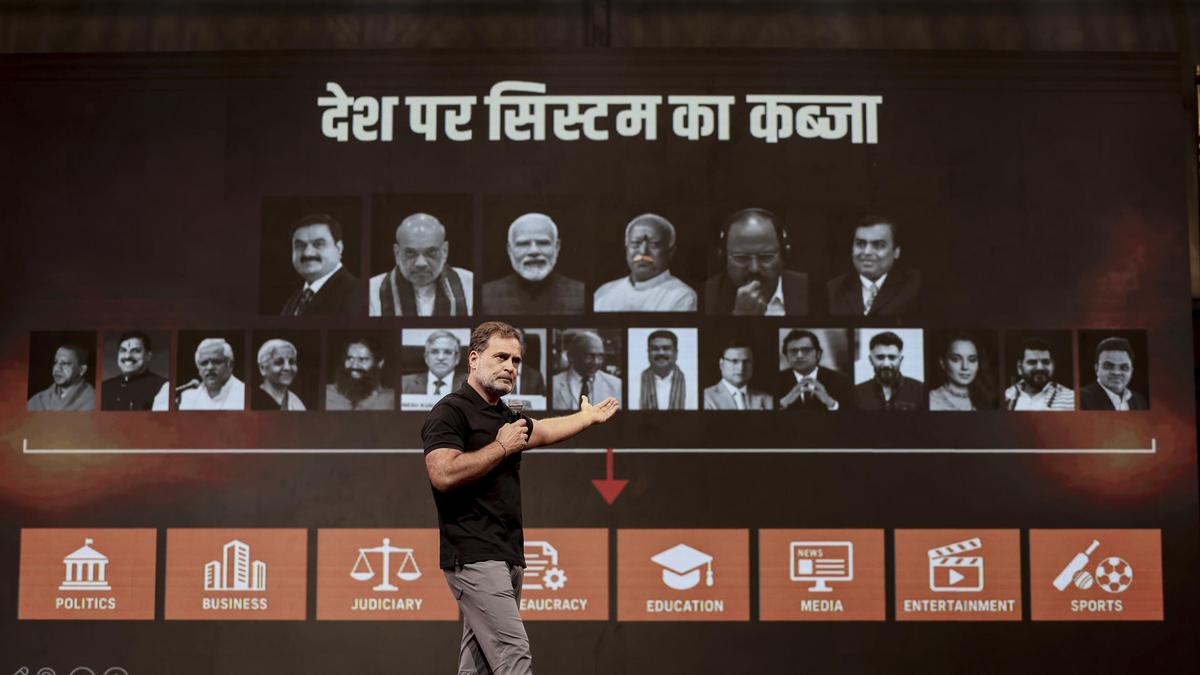
Controversy Erupts Over Rahul Gandhi's PM Modi Mimicry at Event

Father of IIT Bombay Student Calls for Action Against Discrimination

India and Japan Conduct Joint Air Exercise 'Veer Guardian-2026'