Terror victims get jobs as J&K marks policy shift after Article 370 changes


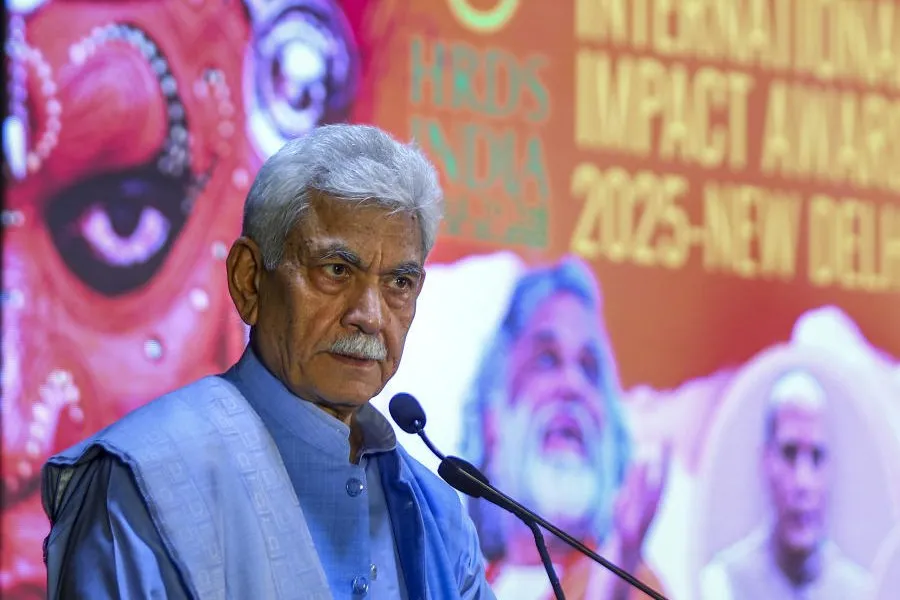
Jammu and Kashmir Lieutenant Governor Manoj Sinha has announced a renewed focus on supporting families affected by decades of militancy, describing recent government appointments for the next of kin of victims as a sign of “a new beginning” for the region. The remarks came as the administration distributed job letters to dozens of families who lost relatives in militant attacks.
At a public event on Thursday, the Lieutenant Governor said the administration was committed to restoring dignity and economic stability for those who had “paid the highest price”, adding that the region had undergone significant changes since the Indian government revoked Article 370 in August 2019. The constitutional provision had granted special status to the former state of Jammu and Kashmir before it was reorganised into two Union Territories.
Sinha said government jobs and rehabilitation measures were now being directed towards families affected by terrorism, with no concessions for people linked to militant groups. According to officials, 41 appointment letters were handed to next of kin of terror victims from the Jammu division, alongside 22 beneficiaries who qualified for age-relaxation support and 19 dependents of police personnel killed in the line of duty.
Tributes and policy direction
Addressing families at the ceremony, Sinha paid tribute to civilians killed in militant attacks and acknowledged the prolonged hardship faced by those left behind. He said many families “were left to struggle in silence for decades” and argued that earlier administrations had failed to deliver lasting relief.
“Terror victim families were denied justice for years. Their deep wounds remained unhealed. Today, such families are being recognised, respected and rehabilitated,” he told the gathering. He added that the government aimed to ensure that families who had been “deliberately deprived of justice” could now contribute to wider social and economic progress.
Sinha highlighted the experiences of individual families, including that of Dharam Singh, who was killed along with four others in Kotranka, Rajouri, in 2005. His son, Naseeb Singh, was among those receiving a government job letter. The Lieutenant Governor said the family had lived in fear and insecurity for two decades, describing their appointment as “a new dawn of hope”.
Shift from past practices
The Lieutenant Governor said the current approach represented a clear departure from previous policies. He claimed that earlier administrations had offered government employment to people connected with militant and separatist movements in an attempt to maintain temporary calm.
By contrast, Sinha said the new policy ensured that “justice will now reach the right people”, emphasising that support would exclusively benefit victims of terrorism. He reiterated a message delivered in recent months: “Terror victims will get jobs, and terrorists will get bullets,” a phrase he used to underline the government’s hardening stance.
He referred to figures presented in the Indian Parliament indicating that nearly 42,000 civilians were killed in militant violence between the late 1980s and 2019. The Lieutenant Governor said terrorism, separatism and what he described as their supporting networks had been responsible for these deaths. Impact of Article 370 abrogation
Sinha credited recent developments to the abrogation of Article 370 and Article 35A in 2019, arguing that the measures helped “dismantle the entire terror ecosystem”. He insisted that peace had been “established, not purchased”, and said that individuals linked with militancy were no longer receiving government jobs but instead faced legal consequences.
He also warned that action would be taken against groups or individuals attempting to spread misinformation or promote separatism, stating that all such cases would be handled according to India’s legal framework.
Rehabilitation efforts continue
Thursday’s appointments follow a similar event on 28 July, when 94 next of kin of terror victims from the Jammu region received job letters. Sinha said the administration would continue addressing both current and older cases, indicating that some long-pending claims had already been reopened.
According to the administration, the latest appointments were made under the Compassionate Appointment Rules and the Rehabilitation Assistance Scheme, frameworks that allow dependents of deceased government employees and victims of terrorism to receive employment support.
Context
Jammu and Kashmir has experienced more than three decades of militant violence, a period that has reshaped its security, political and social landscape. While attacks have declined in recent years, the region continues to face sporadic incidents and remains a focal point of India–Pakistan tensions.
The revocation of Article 370 in 2019 was one of the most significant political changes in the region’s recent history. Supporters of the move argued it would improve governance and strengthen security, while critics said it undermined local autonomy. The long-term impact continues to be debated, but the administration maintains that the policy has enabled more targeted welfare measures.
Sinha’s announcement highlights the government’s effort to present the rehabilitation of terror victim families as part of a broader strategy to stabilise the region and reshape its governance structures.
Ceasefire Agreed in Oleshky Amid Ukraine's Humanitarian Crisis
Donald Trump Hints at US Interest in Cuba After Conflict in Iran
UK Court Rules Against India in RAKIA Investment Dispute
India Raises Concerns Over Chinese Border Patrolling Deviations