US Trade Representative Highlights Challenges in India Trade Talks


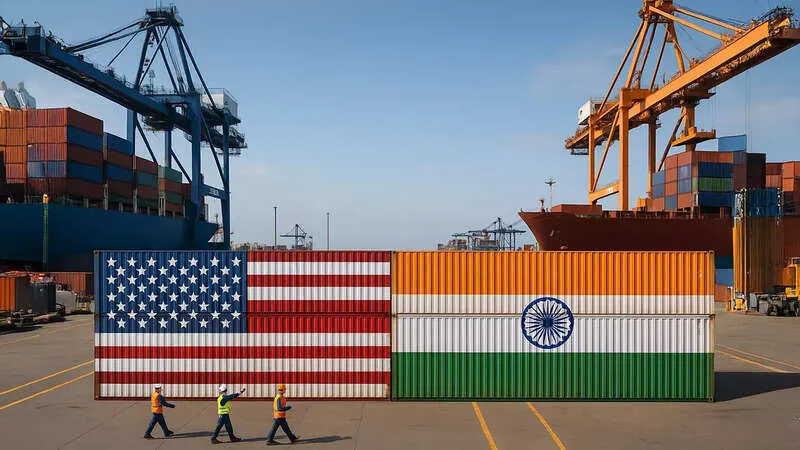
US Trade Representative Jamieson Greer has characterised India as a 'difficult nut to crack' in the context of ongoing trade negotiations between the two nations. His remarks were made during a session with the Senate Appropriations Subcommittee and come as a US delegation is in India for discussions aimed at finalising a bilateral trade agreement.
Greer noted that while India presents significant challenges in opening its markets for certain agricultural products, the country has also made some of the best offers the United States has ever received. This is particularly relevant as the US continues to impose a 50% tariff on Indian exports, including a 25% tariff specifically on crude oil imports from Russia, which the US is urging India to cease.
Trade Negotiations Underway
The latest round of trade discussions began with the US Deputy Trade Representative, Rick Switzer, meeting Indian Commerce Secretary Rajesh Agrawal. The focus of these talks is on establishing a mutually beneficial trade agreement amid ongoing negotiations. The US Commerce Department stated that both sides exchanged insights into the India-US trade and economic relationship, including the current status of the trade negotiations.
Indian manufacturers are eager for a swift resolution to the negotiations, as high import duties are adversely affecting their exports to the US. Despite efforts to diversify into other markets, the US remains a vital trading partner for India, accounting for about 18% of the country’s total exports.
Tariff Issues and Agricultural Concerns
The US has previously imposed a 25% tariff on Indian goods, citing a significant trade deficit that reached $46 billion in the fiscal year 2024-25. An additional 25% penalty was subsequently placed on India concerning its oil purchases from Russia. Indian officials have emphasised that addressing these tariff challenges is essential for the completion of the initial phase of the trade agreement.
The US is advocating for lower tariffs on various agricultural products, including almonds, corn, and apples, as well as industrial goods. However, India has maintained a firm stance against making concessions in its agricultural and dairy sectors, citing the need to protect the interests of local farmers and micro, small, and medium enterprises (MSMEs).
During the Pravasi Rajasthani Divas in Jaipur, Indian Commerce and Industry Minister Piyush Goyal indicated that discussions with the US are progressing. Goyal stated, "Talks are continuously progressing with them. We are moving forward towards a bilateral trade agreement."
The US delegation includes Brendan Lynch, Assistant US Trade Representative for South and Central Asia, who is the chief negotiator on this matter. On the Indian side, Joint Secretary Darpan Jain from the Department of Commerce is representing the nation. This visit marks the second time US officials have come to India following the implementation of heightened tariffs, with their previous visit taking place in mid-September.
Current Status of Negotiations
Indian officials, including Agrawal, have indicated that while the Bilateral Trade Agreement will require time to finalise, the two nations are actively engaging in extensive discussions regarding a framework trade deal to address reciprocal tariff issues that affect Indian exports.
Currently, negotiations are occurring on two fronts: a framework trade deal centred on tariffs and a comprehensive trade agreement. These discussions were initiated following directives from the leaders of both countries in February. The initial phase of the agreement was originally scheduled for completion by autumn 2025, with six rounds of negotiations having already taken place.
The overarching goal of the agreement is to boost bilateral trade to $500 billion by 2030, a significant increase from the current level of $191 billion. The United States has remained India’s primary trading partner for the fourth consecutive year, with bilateral trade valued at $131.84 billion in 2024-25, of which Indian exports accounted for approximately $86.5 billion.
Despite the strong trade ties, October 2024 saw a decline in India’s merchandise exports to the US, which fell by 8.58% to $6.3 billion, marking the second consecutive month of reduced exports. The negotiations continue to evolve as both countries aim to reach an agreement that addresses their respective economic interests.

Ceasefire Agreed in Oleshky Amid Ukraine's Humanitarian Crisis
Donald Trump Hints at US Interest in Cuba After Conflict in Iran
UK Court Rules Against India in RAKIA Investment Dispute
India Raises Concerns Over Chinese Border Patrolling Deviations