Saudi Arabia Responds to Iranian Missile Strikes Amid War Escalation


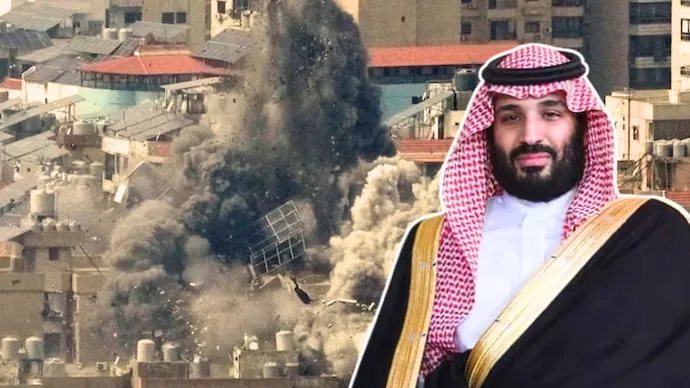
On Wednesday, foreign ministers from numerous countries, including Turkey, the United Arab Emirates, Jordan, Qatar, and Syria, convened in Riyadh for high-level discussions regarding the intensifying conflict in the Middle East. During this meeting, Tehran launched ballistic missiles targeting the Saudi capital, a development that experts believe may lead the region into a more perilous phase.
Analysts have raised concerns that if Saudi Arabia decides to engage militarily, it could activate its defence agreement with Pakistan, which may involve Islamabad in the conflict. Reports indicate that Saudi Arabia has pressed the United States to continue military actions against Iran. A Saudi specialist told CBC News that activating this pact effectively serves as a protective “nuclear umbrella” over the kingdom.
Pakistan, which has historically avoided involvement in Middle Eastern affairs, had previously engaged in a defence deal with Saudi Arabia. This arrangement had seen the country seeking to remain neutral, but recent events could complicate that stance.
Lebanese-Australian analyst Mario Nawfal described the Iranian missile attack on Riyadh as “deliberate in scale, deliberate in timing, and deliberate in targets,” suggesting it may mark a critical juncture in the conflict.
In response to the Iranian strike, Saudi Foreign Minister Prince Faisal bin Farhan warned that the kingdom's patience with Iranian aggression is “not unlimited” and that it retains the right to enact military measures should the attacks persist. He emphasised that trust with Tehran has deteriorated significantly, stating that unless the strikes cease immediately, rebuilding relations will be challenging.
For nearly three weeks, the conflict has revolved around US-Israeli strikes on Iranian targets, alongside retaliatory actions by Tehran. While Gulf nations such as the United Arab Emirates, Bahrain, Kuwait, and Qatar had faced Iranian aggression, Saudi Arabia had seemingly evaded direct strikes until now. The recent missile attacks have altered this dynamic.
The missiles were aimed at key infrastructures in Riyadh, including a refinery critical to the city's fuel supply. Saudi authorities reported that air defences successfully intercepted most of the incoming missiles, although debris from the interceptions fell close to the refinery. The oil facility processes approximately 130,000 barrels per day, supplying the domestic market.
Residents of Riyadh experienced blasts for the first time since the onset of hostilities, receiving emergency alerts on their mobile devices. The timing of the Iranian strikes, coinciding with a diplomatic gathering of Arab and Islamic nations, holds significant symbolic weight. Interceptors were visible in the vicinity of the meeting venue, reinforcing the tense atmosphere.
Tehran previously cautioned that energy facilities in Saudi Arabia, the United Arab Emirates, and Qatar would be considered “legitimate targets.” Prince Faisal noted the precision exhibited in the attacks, remarking that they appeared to be “premeditated, preplanned, and well-thought-out.”
Since the onset of the conflict on February 28, Iran's military responses have involved targeting Saudi Arabia in retaliation for US-Israeli aggression. Prior strikes included missiles directed at military bases and oil installations. The recent missile attacks on Riyadh marked an escalation, with Iranian strikes also impacting energy infrastructure in Qatar and the UAE.
While Saudi Arabia has generally exercised restraint in its military reactions and previously sought diplomatic resolutions, the recent Iranian actions have pushed the kingdom's resolve closer to a breaking point. Prince Faisal articulated the military capabilities of Saudi Arabia and its allies, implying readiness to respond if necessary. “Our patience is not unlimited,” he stated, warning of potential military action should the hostilities continue. The implications of the attacks on Riyadh suggest a possible shift in the regional balance, as analysts now indicate that Saudi Arabia may no longer be immune to Iranian military operations. Nawfal described the Riyadh strike as a pivotal moment, emphasising that the previous perception of Saudi Arabia being shielded from such attacks has been irrevocably altered.

Meta to Report Child Sexual Abuse Material to Indian Authorities
India Clarifies Bangladesh PM's BRICS Invitation Amid Confusion

Odisha Government Denies Premature Release of Dara Singh

BJP Selects Chandranath Rath's Mother for Nandigram Candidacy