Russia Welcomes New US National Security Strategy as Aligned Vision


The Kremlin has expressed approval of the recent United States National Security Strategy, asserting that it largely aligns with Russian perspectives. The document, revealed by President Donald Trump, characterises Europe as facing potential 'civilisational erasure' and notably refrains from labelling Russia as a threat to the US.
Key Points of the Strategy
The 33-page report outlines several priorities, including combating foreign influence, curtailing mass migration, and denouncing what it perceives as censorship practices within the European Union (EU). While some EU officials and analysts have pushed back against the report, suggesting that its framing of freedom of expression mirrors Kremlin rhetoric, Kremlin spokesperson Dmitry Peskov stated, "The adjustments we're seeing... are largely consistent with our vision," in an interview with the state news agency TASS.
Peskov described the strategy as a positive development but mentioned that Moscow would continue to evaluate the document before reaching definitive conclusions.
Implications for EU Relations
The report adopts a notably softer tone towards Russia, raising concerns among EU officials regarding its potential impact on responses to the ongoing conflict in Ukraine. The document criticises the EU for obstructing US efforts to address the situation, asserting that re-establishing strategic stability with Russia would benefit European economies.
It suggests that US policy must focus on countering what it describes as Europe's current trajectory and promotes a revival of a 'Western identity'. The document warns that Europe may become 'unrecognisable in 20 years or less' due to economic challenges, stating, "It is far from obvious whether certain European countries will have economies and militaries strong enough to remain reliable allies."
The strategy also highlights the influence of 'patriotic European parties', encouraging US allies in Europe to support this resurgence.
Responses from European Leaders
As negotiations continue between the EU and the Trump administration regarding a potential peace deal for Ukraine, European leaders have reaffirmed their commitment to their alliance with the US while raising concerns about the strategy's content.
German Foreign Minister Wadephul emphasised that while the US remains a critical ally within the North Atlantic Treaty Organization (NATO), issues regarding freedom of expression and the structure of free societies are not appropriate subjects for the strategy, particularly in the context of Germany.
In a social media message directed at US citizens, Polish Prime Minister Donald Tusk reminded them that "Europe is your closest ally, not your problem," and highlighted shared interests against common adversaries.
Former Swedish Prime Minister Carl Bildt reacted to the document by stating that it positions itself to the right of extreme right factions, reflecting concerns about the US's growing ties with far-right political movements in Europe.
Broader Implications of the Strategy
The National Security Strategy promotes an 'America First' approach, proposing military action against alleged drug-trafficking operations in the Caribbean and eastern Pacific, as well as calling for increased defence expenditures from Japan, South Korea, Australia, and Taiwan.
Democratic representatives in Congress have voiced apprehensions regarding the document's potential to undermine US foreign relations. Colorado Representative Jason Crow described the strategy as "catastrophic to America's standing in the world," while New York Representative Gregory Meeks lamented that it "discards decades of value-based, US leadership."
The evolving dynamics of US-Russia relations and the implications for Europe suggest a complex geopolitical landscape as discussions regarding security and cooperation continue to unfold.
Trump and Xi Discuss Trade, AI, and Taiwan Amid Diplomatic Tensions
Xi Jinping Seeks Greater Concessions from Trump Amid Trade Talks
Iran's President Addresses Ongoing Conflict and External Threats
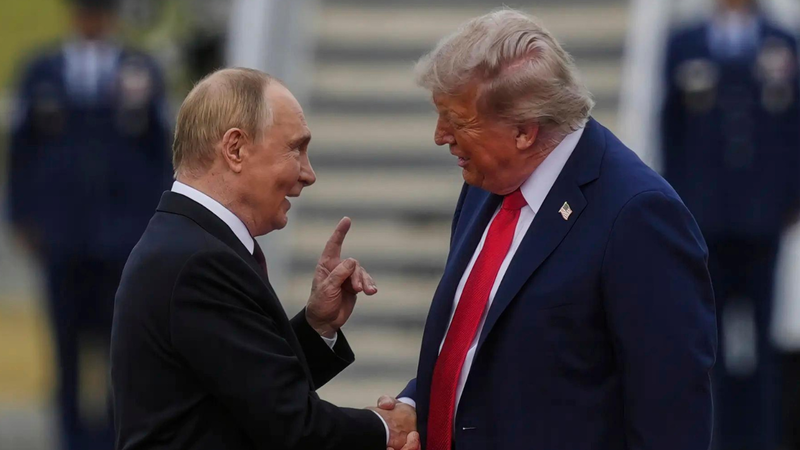
United States Invites Vladimir Putin to Miami G20 Summit