US Pacific strike kills four on suspected narco-terror boat


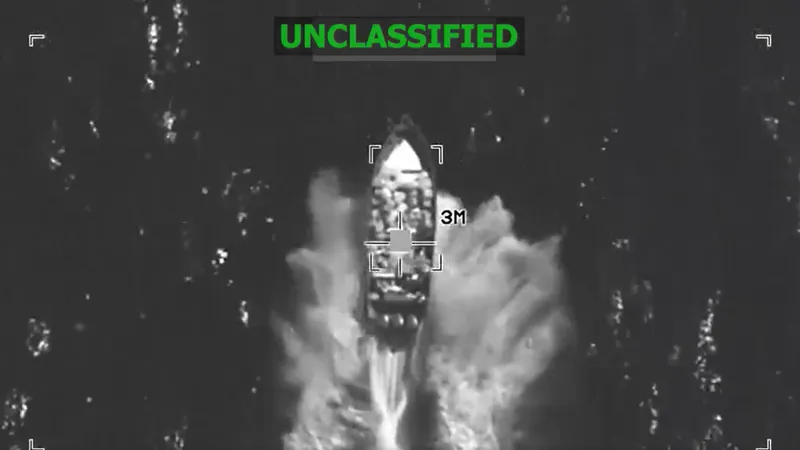
US forces have carried out a strike on a suspected drug-trafficking boat in the eastern Pacific, killing four people, in the latest move in a counter-narcotics campaign that has drawn growing political scrutiny in Washington. The operation, ordered by US Defence Secretary Pete Hegseth, targeted what officials described as a vessel linked to a designated terrorist group.
According to US Southern Command, intelligence suggested the boat was transporting illicit narcotics along a known trafficking corridor. A short video released by the command showed the vessel travelling at high speed before an explosion engulfed it. In its statement on social media platform X, the command said four men on board were killed.
Defence Secretary Hegseth reacted on X shortly after the announcement, writing, “Just sunk another narco boat,” in response to a user requesting further action against trafficking vessels. The remark prompted debate over the tone of the administration’s public communication on sensitive military operations.
The strike occurred on the same day lawmakers were briefed on a separate, highly contentious incident from early September. In that case, two survivors of an initial US strike on another suspected drug boat were killed in a subsequent attack, raising questions among members of Congress about compliance with international humanitarian law.
US defence officials told legislators in previous briefings that the survivors may have been attempting to call for reinforcements. However, Admiral Frank “Mitch” Bradley, who oversaw the September mission as head of Joint Special Operations Command, told lawmakers on Thursday that the two men did not appear to have any communications equipment. Three individuals with direct knowledge of the briefing confirmed the account.
The initial September strike split the vessel in half, killing nine people immediately, according to officials shown classified footage. Surveillance video then captured two survivors clinging to an overturned section of the wreckage. For more than 40 minutes, Bradley and officers in the command centre discussed their options while watching the men struggle to right a portion of the capsized hull.
Bradley told lawmakers he had consulted a military legal adviser during the deliberations. According to two people familiar with the session, the judge advocate general officer advised that a second strike could be considered lawful. Bradley ultimately ordered the attack on the remaining structure, asserting that part of the wreckage likely contained narcotics and could allow the men to make their way to safety and continue drug-trafficking activities.
One source briefed on the meeting dismissed that reasoning as “insane,” reflecting the degree of internal disagreement over the decision. The Pentagon has not publicly commented on the account shared with legislators.
Lawmakers from both major political parties expressed concern after viewing the footage. Representative Jim Himes, the senior Democrat on the House intelligence committee, described the video as “one of the most troubling things I’ve seen in my time in public service,” saying it depicted US forces targeting “shipwrecked sailors… in clear distress without any means of locomotion.” Republican Representative Don Bacon told CNN that the two men posed no imminent threat, adding that “our rules of war would not allow us to kill survivors” unless they were capable of continuing hostilities.
Other legislators defended the operation. Senator Tom Cotton argued that all four missiles used across the initial and follow-up strikes on 2 September were justified, saying that the survivors appeared to be attempting to overturn a boat still containing significant quantities of cocaine. Senator Chris Coons, who was also briefed, confirmed that two missiles had been fired in each strike.
The White House and Pentagon have sought to distance Hegseth from the September decision, saying operational authority rested with Admiral Bradley, not the defence secretary. Legislators who attended the briefings said Bradley maintained Hegseth had not ordered that all crew be killed. Still, Representative Bacon argued that the secretary remained responsible for oversight as the civilian head of the Department of Defense.
The administration has framed its counter-narcotics operations as part of a broader effort to disrupt transnational criminal networks that transport cocaine and other illicit substances toward North America. The eastern Pacific, a vast maritime region stretching from Central America to the western coast of the United States, is a major corridor for drug-smuggling routes, according to US officials.
The controversy surrounding the September incident has intensified debate in Washington over the legal parameters of US military action in counter-narcotics missions, particularly when suspects are incapacitated or in distress. International humanitarian law requires combatants to distinguish between active threats and individuals who are no longer capable of participating in hostilities.
Advocates for stricter oversight say the latest revelations underscore the need for greater transparency in such operations. Supporters of the campaign argue that drug-trafficking organisations pose a sustained threat to US national security.
The strike reported on Thursday — resulting in four deaths — is likely to further focus attention on how the United States navigates legal and ethical obligations while pursuing its goal of curbing drug flows across the Americas.
Impact of Trump's Tariff Law on India's Oil Imports and Trade
United Russia Party Secures Supermajority Despite Ukraine Conflict
Xi Jinping's US Visit Planned Amid Economic Tensions with Trump
India's External Affairs Minister to Address UNGA Amid US Tariff Changes