Bharat Ratna Debate Intensifies Over Kanshi Ram Legacy


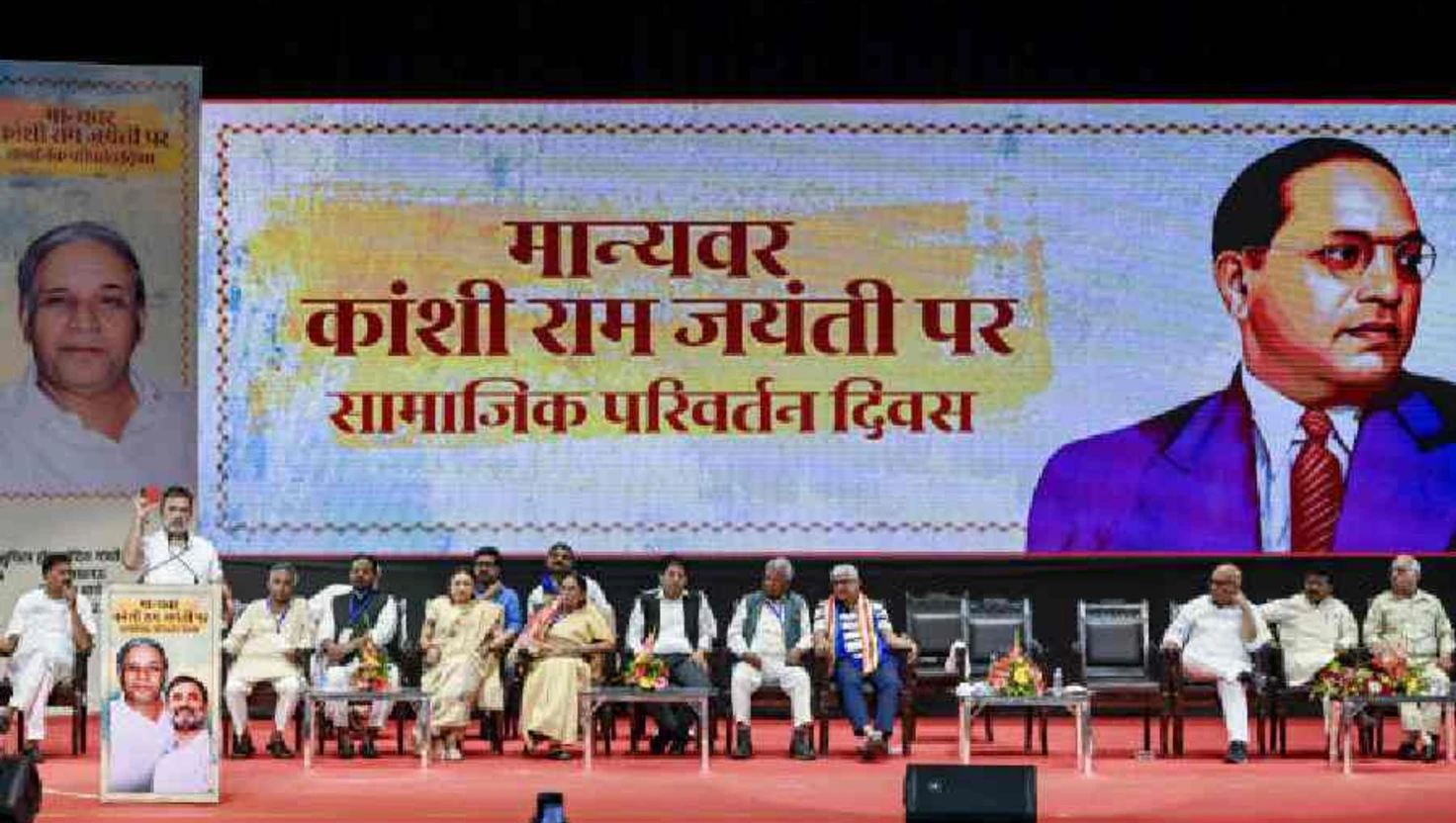
Congress leader Rahul Gandhi has urged the Government of India to award the country’s highest civilian honour, the Bharat Ratna, posthumously to Bahujan Samaj Party founder Kanshi Ram, citing his influence on social justice and political mobilisation among marginalised communities.
In a letter to Indian Prime Minister Narendra Modi, Gandhi called for recognition of Kanshi Ram’s contribution to the empowerment of historically disadvantaged groups, including Dalits and other marginalised communities.
Call for Bharat Ratna Recognition
Rahul Gandhi, who serves as the Leader of the Opposition in India’s lower house of parliament, wrote that honouring Kanshi Ram would acknowledge his role in reshaping Indian politics and promoting social equality.
In a message shared publicly, Gandhi described Kanshi Ram as a key figure in the struggle for social justice and said the Bharat Ratna would be a tribute to both the leader and the movement he built.
“I demand that the Government of India honour the great warrior of social justice and the guiding light of Bahujan consciousness, Shri Kanshi Ram, with the Bharat Ratna,” Gandhi wrote.
He added that such recognition would reflect the aspirations of millions who view Kanshi Ram as a symbol of dignity and empowerment.
Gandhi also said that calls for the honour have been repeatedly raised by Dalit intellectuals and community leaders. He referred to a recent programme in the city of Lucknow in northern India where participants reiterated the demand.
Kanshi Ram’s Political Legacy
Kanshi Ram founded the Bahujan Samaj Party in 1984 with the goal of mobilising historically marginalised communities, including Scheduled Castes, Scheduled Tribes, Other Backward Classes and religious minorities.
His political movement sought to expand representation for these communities in India’s democratic institutions and was inspired by the ideas of Dr Bhimrao Ramji Ambedkar, the principal architect of India’s constitution and a prominent advocate of social equality.
Kanshi Ram’s work laid the foundation for the political rise of Mayawati, who later became one of India’s most prominent Dalit leaders and served multiple terms as chief minister of the northern state of Uttar Pradesh.
Tributes were paid to Kanshi Ram across political parties on the anniversary of his birth. Mayawati, the current president of the Bahujan Samaj Party, said supporters across the country remembered the founder of the party with deep respect.
In a statement marking the occasion, she described him as the architect of a movement that aimed to empower communities historically excluded from political power.
Political Debate Over Recognition
Gandhi’s call has also triggered criticism from some political leaders, including Mayawati, who questioned the sincerity of the Congress party’s demand.
She argued that the Congress government in earlier decades had not given adequate recognition to Dr Bhimrao Ramji Ambedkar, who was eventually awarded the Bharat Ratna in 1990 by a different administration.
Mayawati also noted that the Congress-led government was in power at the national level when Kanshi Ram died in 2006 but did not declare a national day of mourning at the time.
She suggested that competing political parties were attempting to invoke Kanshi Ram’s legacy to gain electoral advantage.
Growing Political Focus in Uttar Pradesh
Kanshi Ram’s legacy has increasingly become a point of political focus as parties prepare for upcoming elections in the northern state of Uttar Pradesh, India’s most populous state.
Political groups across the spectrum have announced events to commemorate his birth anniversary, reflecting his continued influence on regional politics.
Leaders from the Samajwadi Party, another major regional party in Uttar Pradesh, have said they will mark the occasion as “PDA Day”, referring to a political alliance of backward classes, Dalits and minority communities.
The Bharatiya Janata Party, which governs India at the national level, has also organised programmes honouring Kanshi Ram’s contribution.
Observers say the renewed attention reflects the importance of Dalit voters in the state’s political landscape. Parties often seek to highlight leaders associated with social justice movements in order to strengthen support among historically disadvantaged communities.
Context
The Bharat Ratna is India’s highest civilian award and is granted to individuals for exceptional service in fields such as public affairs, science, arts and social service.
Since its establishment in 1954, the honour has been conferred on prominent national and international figures whose work has had a significant impact on society.
Kanshi Ram, who died in 2006, is widely regarded as one of the most influential figures in the political mobilisation of Dalit communities in modern India.
The debate over whether he should receive the Bharat Ratna reflects broader political competition to claim his legacy and appeal to voters who identify with the social justice movement he helped to build.
India Assembly Elections 2026: West Bengal, Tamil Nadu Poll Dates Announced
Strait of Hormuz Crisis: Iran Allows Some Ships as India Secures Route

Trump Urges Nations to Send Warships as Iran Threatens Strait of Hormuz

US Strikes Over 90 Targets on Iran’s Key Oil Hub Kharg Island, Tensions Escalate in Ongoing War