Nigeria's Army Deployed After Deadly Massacre in Kwara State


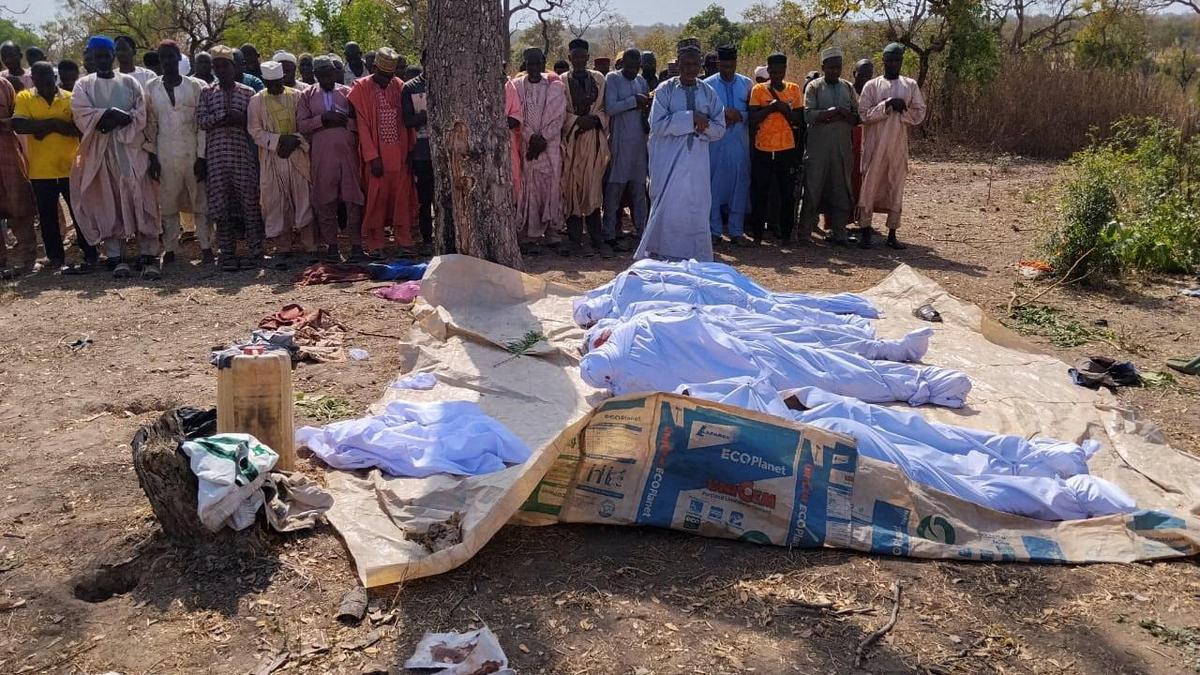
Nigerian President Bola Ahmed Tinubu has dispatched an army battalion to Kwara State in response to a brutal attack that resulted in the deaths of as many as 162 individuals. The violence erupted on the evening of February 4, 2026, in Woro village, marking one of the most severe assaults the nation has witnessed in recent months.
Reports indicate that gunmen targeted the village, setting ablaze shops and the residence of a local monarch, which forced many residents to flee into nearby forests. Babaomo Ayodeji, the Kwara State secretary of the Red Cross, confirmed the casualty figures, stating, "Reports said that the death toll now stands at 162, as the search for more bodies continues."
Initial estimates from local lawmaker Sa'idu Baba Ahmed suggested that 35 to 40 people had died, but he later acknowledged that this figure was likely to rise as additional bodies might be discovered. The governor of Kwara State, AbdulRahman AbdulRazaq, initially reported 75 fatalities. The variations in reported deaths reflect the chaotic aftermath that often follows such attacks in rural areas.
While no group has claimed responsibility for the assault, President Tinubu attributed the attack to Boko Haram, a jihadist group active in Nigeria's northeast. The Nigerian government has faced ongoing challenges with various armed groups, including gangs that engage in looting and kidnapping, as well as intercommunal violence in the central states.
In his statement, President Tinubu condemned the attack, which he described as a "beastly attack" on villagers who resisted jihadist ideologies. The President's office noted that he expressed outrage at the loss of lives in Woro, stating that the perpetrators targeted individuals who did not succumb to indoctrination efforts.
The attack took place around 6:00 pm local time, and as details emerged, lawmaker Ahmed highlighted the loss of the traditional king, Alhaji Salihu Umar, whose whereabouts remain unknown. Traditional leaders, while lacking formal political authority, significantly influence local governance and cultural identity.
In a related incident, security reports indicate that 23 civilians were killed in Katsina State, believed to be a retaliation by armed groups following air force operations that killed multiple militants.
In response to the ongoing violence, the Nigerian military has escalated operations against jihadists and bandits in the region. A recent military statement revealed that troops launched sustained offensive operations against terrorist elements in Kwara State and reported the neutralisation of numerous bandits.
Since the start of last year, jihadist attacks have intensified across Nigeria. The Al-Qaeda affiliated Group for the Support of Islam and Muslims (JNIM), which operates across Nigeria's northern border in Niger, recently claimed responsibility for an attack in Kwara State, highlighting the growing nexus between JNIM and Boko Haram.
Due to increasing insecurity, the Kwara State government has imposed curfews in various areas and temporarily closed schools. These measures have been met with scrutiny, particularly amid allegations by international figures regarding violence against Christians in Nigeria.
While US President Donald Trump has claimed a genocide against Nigerian Christians, this assertion has been rejected by the Nigerian government, with analysts noting that both Christians and Muslims have suffered from the violence that plagues the nation. The ongoing conflict calls for renewed focus on effective strategies to address the multifaceted challenges of insecurity in Nigeria, Africa's most populous country.
ABVP Wins Majority in Delhi University Students' Union Elections

Rahul Gandhi Criticises Modi Government's Attitude Towards Students
Delhi Chief Minister Faces Scrutiny Over Ongoing Notices
Former Union Minister Detained in Punjab Protest Against CM