Nepal Election 2026: Youth Vote Tests Old Parties


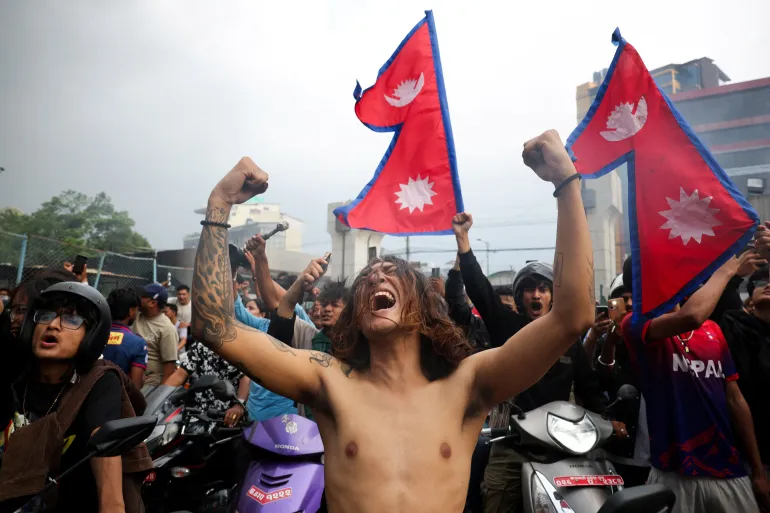
Nepal heads to a parliamentary election on 5 March amid deep public frustration, with nearly 19 million people eligible to vote following last year’s youth-led protests that forced the resignation of Prime Minister KP Sharma Oli.
The poll, described by leaders as “historic”, comes after months of political upheaval triggered by a social media ban that evolved into wider demonstrations over corruption and economic stagnation.
A vote shaped by protest
The unrest in September, led largely by members of Generation Z, challenged the authority of Nepal’s established political parties. At least 77 people were killed during the protests, which culminated in the resignation of Prime Minister KP Sharma Oli and the formation of an interim administration.
The demonstrations reflected discontent with parties that have dominated Nepal’s politics since the country became a republic in 2008. These include the Communist Party of Nepal (Unified Marxist-Leninist), led by Mr Oli, the Nepali Congress and the former Maoist movement that now forms part of the political mainstream.
Young activists argue that corruption, frequent coalition reshuffles and economic stagnation have eroded trust in the political class.
Rajesh Chand, a 27-year-old business student in Kathmandu, said he was less concerned with party identity than with policy direction. “We have witnessed the old political establishment for many years, and no one did anything,” he said. “We need to stop corruption. That’s the start.”
Established parties seek renewal
The Nepali Congress, the country’s oldest political party, has acknowledged the scale of public anger. Its senior leader Minendra Rijal said the party had made mistakes by joining a coalition government led by Mr Oli during the unrest.
“We have admitted mistakes were made,” he said. “We are asking for a second chance. We have apologised loudly and clearly.”
In January, the party elected Gagan Kumar Thapa, aged 49, as its new president and prime ministerial candidate, replacing former Prime Minister Sher Bahadur Deuba.
However, Mr Rijal conceded that many voters, particularly younger ones, remain sceptical.
Mr Oli, meanwhile, is once again contesting the election as the prime ministerial candidate of the Communist Party of Nepal (Unified Marxist-Leninist). Although the social media ban introduced under his leadership sparked the protests, party figures argue that regulation was necessary to ensure compliance with national laws.
Prithivi Subba Gurung, a former communications minister, described the election as an opportunity to defend democratic principles. “Our elected prime minister was deposed,” he said, adding that the party had incorporated younger members and reform pledges into its platform.
Calls for participation and stability
Interim Prime Minister Sushila Karki, addressing the nation ahead of the vote, urged citizens to participate peacefully. She described the election as taking place after a “complex, sensitive and challenging” period and said democracy depended on active public involvement.
President Ram Chandra Poudel similarly called on voters to seize what he termed a historic opportunity to consolidate Nepal’s federal democratic republic.
More than 3,400 candidates are contesting 275 seats in the House of Representatives, the lower chamber of parliament. Of these seats, 165 will be decided through first-past-the-post voting and 110 through proportional representation.
Around 800,000 first-time voters are eligible to cast ballots, and approximately 30 percent of the electorate is under 40.
Security agencies have mobilised tens of thousands of police and military personnel nationwide. Authorities said more than 130 individuals had been arrested on charges of anti-election activities ahead of polling day.
Coalitions and uncertainty
Nepal’s mixed electoral system has historically made it difficult for a single party to secure an outright majority. Since the monarchy was abolished in 2008, the country has seen 14 governments and nine prime ministers, contributing to public frustration over political instability.
Rakshya Bam, a prominent figure during last year’s protests, said young voters feared a return to fragile coalition arrangements. “Even if it’s a coalition, they must work together and not fail people’s aspirations again,” she said.
Some new political figures have sought to capitalise on this mood. Among them is Balen Shah, a former mayor of Kathmandu and popular figure among younger voters, who is contesting against Mr Oli in Jhapa district.
Critics from established parties question whether newer movements possess coherent ideological foundations, while analysts note that voters are increasingly focused on governance outcomes rather than party history.
Political scientist Sucheta Pyakurel said the protests reflected deeper systemic failures. “For citizens to become this angry, those in power must have failed them in serious ways,” she said, adding that it remained unclear whether mainstream parties had undergone genuine reform.
As voting begins, Nepal faces a pivotal moment. The election will test whether established parties can regain public trust or whether younger voters will shift the political balance in a country still grappling with questions of stability, accountability and democratic consolidation.
Kerala Initiates Probe into 2006 Suicide Case Involving CEC
Extradition of Sheikh Hasina Feasible, Says Indian High Commissioner
Punjabi Makeup Artist Mad Sandhu Shot Dead in Amritsar
India Achieves Fourth Place at Asian Games 2026 Through Late Success