Negotiations Stall Over Costly GE F414 Engines for AMCA Project


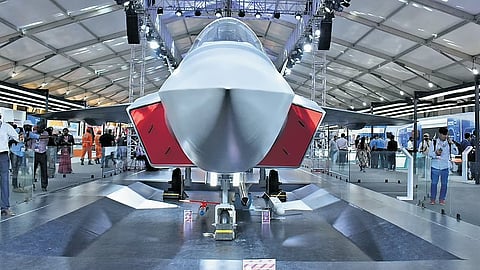
Negotiations regarding the General Electric (GE) F414 engines, intended for India’s Advanced Medium Combat Aircraft (AMCA), have reached a standstill. The impasse arises as GE has proposed prices nearly three times higher than initial estimates, endangering both the project's budgets and timelines. Although technical discussions are nearly complete, commercial negotiations have faltered specifically over pricing and terms of technology transfer. Initial estimates for the F414 engine were around ₹70 to ₹80 crore per unit, but GE's new quotation has introduced considerable challenges. This significant price hike has emerged as a primary hurdle in the ongoing commercial discussions, which also encompass technology transfer, licensed manufacturing, maintenance, repair and overhaul (MRO) facilities, spares, warranties, delivery schedules, and future price adjustment mechanisms.
The importance of the F414 engine extends beyond the AMCA programme; it is also slated to power the Tejas Mk-2 and the Twin Engine Deck-Based Fighter (TEDBF) projects. Experts estimate that India will require more than 200 units of this engine in the coming years. As one insider noted, 'The company knows the programme is built around the F414 and that changing engines now would be extremely difficult. That gives GE significant leverage during commercial negotiations.'
GE has reportedly asked for approximately ₹6,000 crore to establish a dedicated F414 assembly and manufacturing facility in India. This facility would cater to the requirements of the Tejas Mk-2, initial AMCA production batches, and the TEDBF programme. In efforts to ease immediate fiscal challenges, Indian negotiators have considered reducing the initial order quantity, but discussions on pricing continue to be unresolved.
This deadlock comes at a pivotal moment for the AMCA initiative, which is fundamental to the long-term modernisation strategies of the Indian Air Force (IAF). Developed by the Aeronautical Development Agency (ADA), the indigenous fifth-generation stealth fighter aims to address the IAF’s ongoing squadron shortfall, with the current operational capacity at 29 fighter squadrons versus a sanctioned strength of 42.5. The AMCA is critical not only for reducing reliance on foreign combat aircraft but also for providing indigenous stealth capabilities.
Geopolitical developments, including Pakistan's potential induction of China’s J-35 stealth fighter, have amplified the urgency of the AMCA project. The Indian government has allocated over ₹15,000 crore for the AMCA’s prototype development phase, which includes plans to manufacture five flying prototypes. Under a recent Request for Proposal (RFP), the designated industry partner is expected to achieve the aircraft’s first flight within 30 months post-contract signing. The prototypes are scheduled to conduct around 1,800 flight tests over the next seven years to validate various performance metrics including flight control systems, stealth features, sensors, radar capabilities, weapons integration, and propulsion performance.
Insiders have emphasised that the complexity of changing engines at this stage goes beyond simple component replacement. 'The F414 has already been factored into the design and development plans for the AMCA Mk-1 as well as the Tejas Mk-2. Any new engine would require extensive redesign, testing, and certification,' pointed out a source familiar with the discussions. The F414 was chosen for the AMCA Mk-1 due to its proven track record, currently powering several frontline fighter jets and generating approximately 98 kN of thrust.
For the future, while the AMCA Mk-2 is expected to be fitted with a more potent engine generating 110-120 kN thrust through an international partnership, leading contenders for this venture include France’s Safran and Britain’s Rolls-Royce.
Impact of Trump's Tariff Law on India's Oil Imports and Trade
United Russia Party Secures Supermajority Despite Ukraine Conflict
Xi Jinping's US Visit Planned Amid Economic Tensions with Trump
India's External Affairs Minister to Address UNGA Amid US Tariff Changes