Myanmar's Pro-Military Party Claims Victory in Controversial Elections


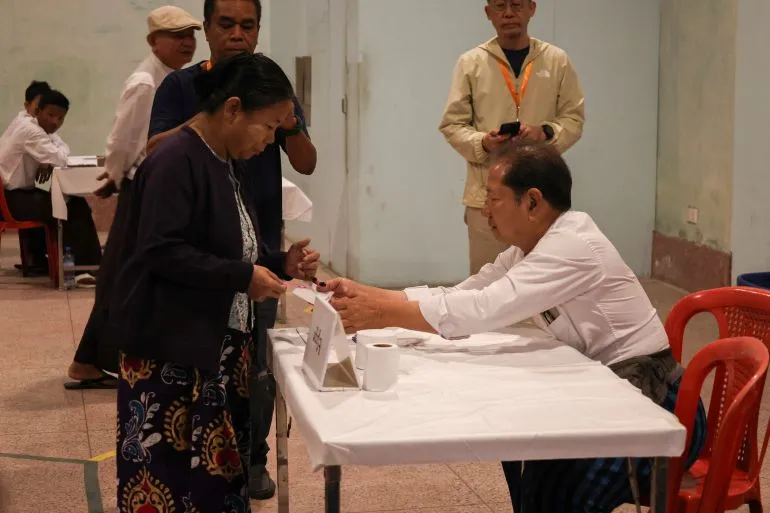
Myanmar's primary pro-military political party, the Union Solidarity and Development Party (USDP), has announced a substantial lead in the first round of elections controlled by the military government. Critics argue that the tightly regulated voting process is intended to reinforce the military's dominance in the political landscape.
The initial voting took place on Sunday and will be followed by two additional rounds scheduled for January 11 and January 25. Notably, voting was annulled in 65 townships across the country.
A senior representative from the USDP informed the Agence France-Presse (AFP) that the party had secured 82 out of 102 seats in the lower house of the legislature in regions where counting has been completed, indicating that it achieved over 80 per cent of the contested seats.
Additionally, the official stated that the USDP claimed victories in all eight townships located in the capital, Naypyidaw. However, official results from Myanmar's Union Election Commission have yet to be released.
The United Nations' human rights chief has denounced the elections, highlighting a severe crackdown on dissent while campaign organisations have expressed concern over candidate lists heavily influenced by military affiliates.
The elections were conducted in approximately one-third of Myanmar's 330 townships, as large areas remain inaccessible due to ongoing hostilities between military forces and opposition groups following the 2021 coup that ousted the democratically elected government led by Nobel Peace Prize recipient Aung San Suu Kyi.
The USDP is widely anticipated to emerge as the dominant party in these elections. Analysts have referred to it as a civilian front for the military establishment.
In the 2020 elections, the USDP faced a significant defeat against Aung San Suu Kyi's National League for Democracy (NLD), which is among the 40 political parties that have been banned by the military regime, as reported by campaigners in the United Kingdom. Aung San Suu Kyi has been detained since the military's takeover.
Following the conclusion of voting on Sunday, Min Aung Hlaing, the leader of the military government, assured that the armed forces could be trusted to restore power to a civilian government. He has governed the nation by decree since the coup.
The military's seizure of power has sparked a nationwide civil conflict, leading pro-democracy activists to form armed resistance groups alongside ethnic minority forces that have historically opposed the central government.
The ongoing conflict has resulted in the deaths of an estimated 90,000 individuals, displaced around 3.5 million, and left approximately 22 million people requiring humanitarian aid. The Assistance Association for Political Prisoners reports that over 22,000 individuals are currently imprisoned on political charges.
Kerala Initiates Probe into 2006 Suicide Case Involving CEC
Extradition of Sheikh Hasina Feasible, Says Indian High Commissioner

Punjabi Makeup Artist Mad Sandhu Shot Dead in Amritsar

India Achieves Fourth Place at Asian Games 2026 Through Late Success