Silver Prices Plummet After Record High Amid Market Volatility


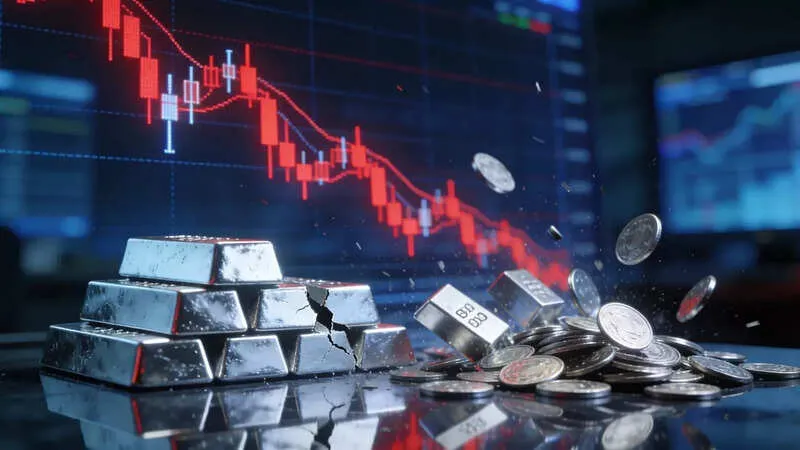
Silver prices experienced a dramatic decline on Monday, falling by ₹21,000 per kilogram within an hour of trading after reaching a record high of ₹2,54,174 earlier in the day. The crash occurred in the futures market for the Multi Commodity Exchange (MCX), where March silver contracts dipped to an intraday low of ₹2,33,120 per kilogram, as investors sought to secure profits from the recent surge.
The price volatility coincided with a significant rise in silver's value throughout 2025, with prices soaring by 181% for the year, far outpacing gold. This increase has been attributed to various factors, including the metal’s designation as a critical mineral in the United States and increasing industrial demand coupled with limited supplies.
Following the record highs, the sharp decline was influenced by profit-taking among investors and reports of advancing discussions between United States President Donald Trump and Ukrainian President Volodymyr Zelensky regarding a potential peace agreement in Ukraine. President Trump indicated on Sunday that they were “getting a lot closer” to a resolution, which may have reduced the demand for safe haven investments like silver.
The correction in silver prices is also a reflection of broader profit booking trends within the bullion market, as easing geopolitical tensions have diminished the appeal of precious metals as a safe haven. Additionally, a margin increase implemented by the Chicago Mercantile Exchange, which oversees essential derivatives platforms, added further pressure. As of Monday, the initial margin requirement for March 2026 silver futures has risen to approximately $25,000 from $20,000 earlier in December.
Jigar Trivedi, a senior research analyst at Reliance Securities, commented on the market’s future, stating that while the outlook for silver remains positive, it is characterised by significant fluctuations. He noted that the ₹2.4 lakh mark is emerging as a critical near-term support level.
US financial services firm BTIG has issued warnings about the silver market, describing the recent rally as “parabolic,” a trend which typically concludes with a sharp reversal rather than a gradual decline. They stressed that dramatic price increases often lead to substantial downturns.
Historically, silver has demonstrated volatility, particularly after significant rallies. In 1979, for instance, silver prices surged from $6 to $49 per ounce before plummeting by over 90%. Similarly, in 2011, prices approached $48, only to fall by more than 75%. Manish Banthia, chief investment officer for fixed income at ICICI Prudential Mutual Fund, highlighted these patterns, indicating the potential for sharp corrections following rapid price increases.
Analysts also underscore the structural changes in the silver market, driven by a persistent shortage of the physical metal due to years of underinvestment in mining and increased industrial consumption. Global silver demand has now exceeded supply for five consecutive years, leading to significant strain within the market.
In conclusion, the recent fluctuations in silver prices illustrate the complexities of the current market, influenced by both geopolitical developments and underlying supply-demand dynamics. Investors and analysts alike will be closely monitoring these trends as they assess the future trajectory of silver prices.

Kerala Initiates Probe into 2006 Suicide Case Involving CEC

Extradition of Sheikh Hasina Feasible, Says Indian High Commissioner

Punjabi Makeup Artist Mad Sandhu Shot Dead in Amritsar

India Achieves Fourth Place at Asian Games 2026 Through Late Success