Lebanon Expels Iranian Ambassador Amid Ongoing Regional Tensions


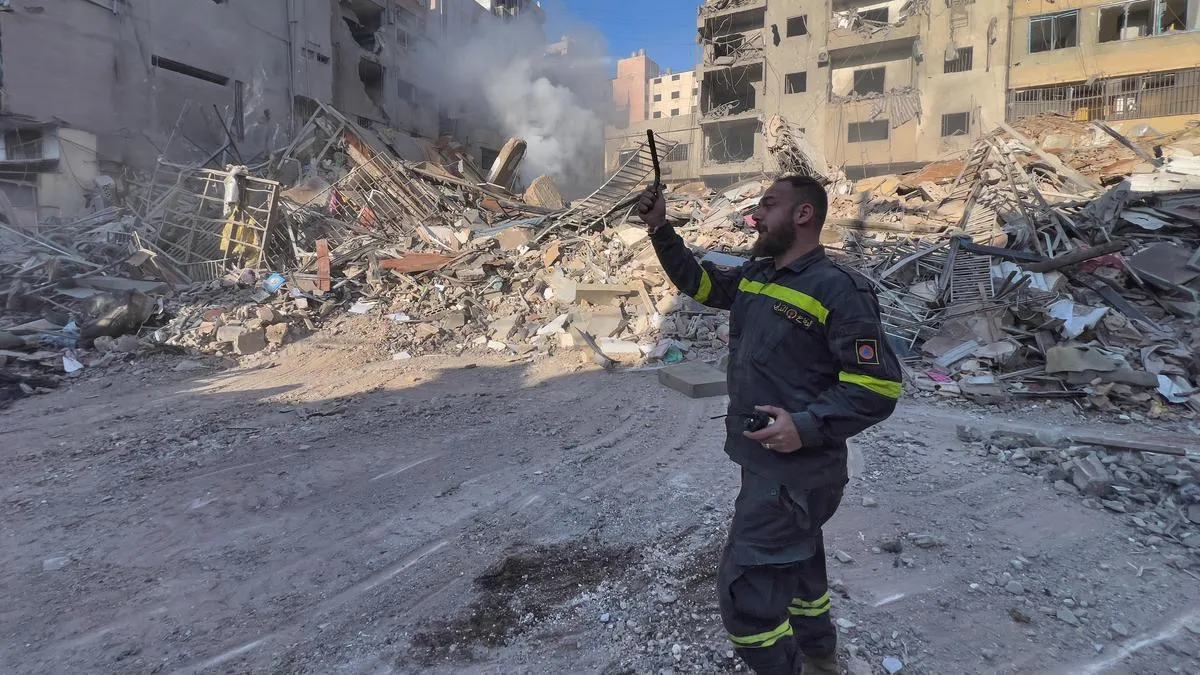
The Lebanese government has announced its decision to expel the Iranian Ambassador, declaring him persona non grata and requiring him to exit the country by Sunday, March 29, 2026. This action was confirmed by the Ministry of Foreign Affairs, which cited Tehran's violations of established diplomatic norms as a key reason for the expulsion.
In addition to expelling the ambassador, the Lebanese Foreign Ministry has summoned the Lebanese ambassador to Iran for consultations, signifying a deepening discord between the two nations. The government’s move comes amid a backdrop of intense conflict as Israeli military forces continue to engage in air strikes against Lebanon, following cross-border attacks initiated by the Hezbollah militant group earlier in March.
The conflicts escalated after the killing of Iran’s Supreme Leader Ayatollah Ali Khamenei in a US-Israel operation. Since that incident, it has been reported that over 1,072 people have died and nearly 3,000 have been injured in Israeli strikes. Such military action has resulted in significant displacements, with more than 1.5 million people forced to evacuate from southern Lebanon, where tensions continue to rise.
Israeli forces have indicated that some of their operations specifically target the Islamic Revolutionary Guard Corps (IRGC), a unit of Iran's military known for its involvement in regional conflicts. Notably, Iranian officials have acknowledged that four of their nationals were killed in early attacks, though they maintain that those individuals were civilians.
This latest wave of violence has severely strained already fragile relations between the Lebanese government and Hezbollah. The Lebanese authorities have previously mandated Hezbollah to disarm as part of a ceasefire agreement established after a prolonged period of conflict that concluded in November 2024. However, Hezbollah, which has historical ties to Iran and has been backed by Tehran, has resisted these disarmament efforts, insisting that Israel must first withdraw its military presence from Lebanon.
Recently, Lebanese leaders have voiced concerns that Iran’s activities in Lebanon, particularly through the Revolutionary Guard, are exacerbating tensions and pulling the nation into further conflict with Israel. Denise Rahme, a spokesperson for the Foreign Ministry, indicated that the decision to withdraw the ambassador's accreditation reflects the growing frustration within Lebanon regarding Iranian military influence in the region.
The Israeli military continues to assert that its operations in the region are a necessary response to the threats posed by groups such as Hezbollah and Iranian forces. As the situation develops, the Lebanese government’s recent actions underscore a critical moment in the complex relationship between Lebanon and Iran amidst escalating regional conflicts. As diplomatic tensions rise, international observers are closely monitoring how these developments will influence stability in Lebanon and the broader Middle East.
Concerns Rise Over Delhi Voter Registration Discrepancies
Controversy Erupts Over Rahul Gandhi's PM Modi Mimicry at Event

Father of IIT Bombay Student Calls for Action Against Discrimination

India and Japan Conduct Joint Air Exercise 'Veer Guardian-2026'