Kapil Sharma’s ‘Kis Kisko Pyaar Karoon 2’ returns with family comedy and tribute to Asrani


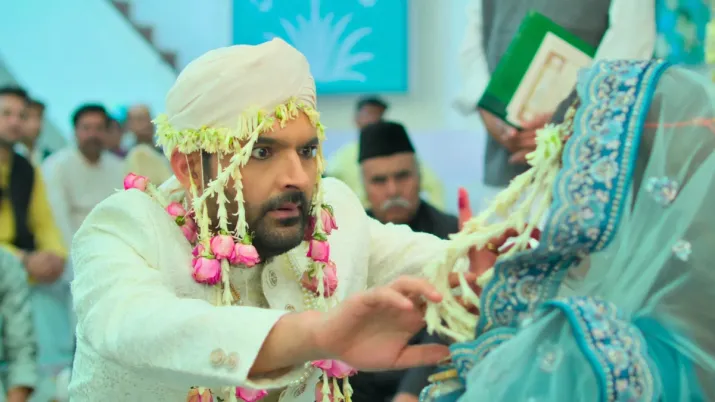
The sequel marks Kapil Sharma’s return to the big screen after several years, following the success of the original 2015 film that made him a household name beyond television. The new film continues the story of an ordinary man whose attempts to navigate love and relationships lead him into a web of misunderstandings.
The film opens with Mohan, played by Sharma, whose everyday charm and comedic timing serve as the foundation of the story. According to reviewers, Mohan’s world quickly spirals into confusion as he becomes entangled in plans to marry the woman he loves while unintentionally entering into marriages with three women from different religious backgrounds. The premise is built on a classic Bollywood farce, with Sharma adopting three separate identities to keep his parallel lives intact.
His on-screen partners—Tridha Choudhary, Ayesha Khan and Parul Gulati—play the three wives who remain unaware of one another. Hira Varina appears as Mohan’s first love, whose unexpected return pushes the character toward a fourth potential marriage. The film reaches its turning point when the wives discover the truth, setting the stage for the central conflict.
The production places strong emphasis on light-hearted, family-oriented comedy. According to early reactions, the writing deliberately avoids suggestive humour or explicit scenes, aiming instead for simple, situational jokes reminiscent of mainstream Hindi comedies from the 1990s. Several sequences recall the energetic, multi-plot romantic comedies once associated with actors such as Govinda.
While the film adopts this nostalgic tone, some critics note that portions of the story feel predictable. They point out that viewers seeking narrative depth or logical coherence may find the plot repetitive or overly reliant on established formulas. However, the film’s creators appear to prioritise entertainment over realism.
Director Anukalp Goswami, who also co-wrote the original film, said in an interview that Kapil Sharma has a rare instinct for understanding how humour works on screen. “He has an incredible instinct for how to deliver a gag and which joke will land with the audience,” Goswami said, describing their work together on the film as a careful balance between scripted lines and controlled improvisation.
Goswami explained that although Sharma often improvises during live performances, the film required the actor to remain within the boundaries of his character. He said this was where Sharma’s versatility became evident, as the comedian adapted his spontaneous style to the demands of scripted storytelling.
The director also described the film as part of an effort to revive clean family comedies in Indian cinema. He said such films have become less common as humour has increasingly relied on suggestive themes. “Comedy is actually a very serious craft,” he said, adding that popular comedians historically succeeded by portraying vulnerable or endearing characters rather than relying on sharper, more controversial material.
The new film also features one of the final on-screen appearances of veteran actor Asrani. Goswami recalled being deeply moved by the experience of working with him, saying the late actor’s timing and craft “were on another level”. Asrani’s presence in the film is seen by reviewers as a nostalgic reminder of earlier eras of Hindi comedy.
Performance-wise, Sharma is widely credited with anchoring the film, showing greater emotional range than in the previous instalment. Choudhary, Khan and Gulati deliver performances that complement the film’s tone, though Varina’s portrayal has received mixed reactions, with critics suggesting her character lacks emotional depth.
Jamie Lever, daughter of comedian Johnny Lever, is noted for bringing additional energy to the film. Her scenes have been highlighted as some of the most engaging, reinforcing the movie’s focus on accessible, family-friendly humour.
Despite its positive elements, the film has been criticised for its limited innovation. Some reviewers argue that the story relies too heavily on the structure of the first film, offering few unexpected twists. Nevertheless, the sequel has been described as a comfortable watch, appealing to families looking for uncomplicated entertainment.
India TV rated the film three out of five stars, describing it as a pleasant but not groundbreaking comedy that succeeds in delivering laughs without aiming for dramatic impact.
CONTEXT
The original Kis Kisko Pyaar Karoon became a major television favourite after its theatrical release, helping strengthen Kapil Sharma’s presence in Indian entertainment during a period when he was already among the country’s most recognised comedians. The sequel’s release occurs in a shifting Bollywood landscape, where audiences increasingly divide between high-budget action films and smaller, issue-driven dramas. Family comedies have become less frequent in mainstream Hindi cinema, making this sequel both a nostalgic return and a test of whether traditional slapstick humour still resonates with modern audiences.
While the film is unlikely to reshape the comedy genre, its blend of familiar storytelling, multi-character chaos and classic humour may appeal strongly to viewers seeking light entertainment during the festive season.

BJP Allies Urge Election Commission to Address Public Concerns

Thousands of Ganesh Idols Immersed in Telangana Festivities
Jaishankar Calls Attacks on Civilian Shipping ‘Indefensible’
Indian Prime Minister Urges Integration of Social Reforms in Governance