Modi-Putin Selfie Raises Concerns in US Political Circles


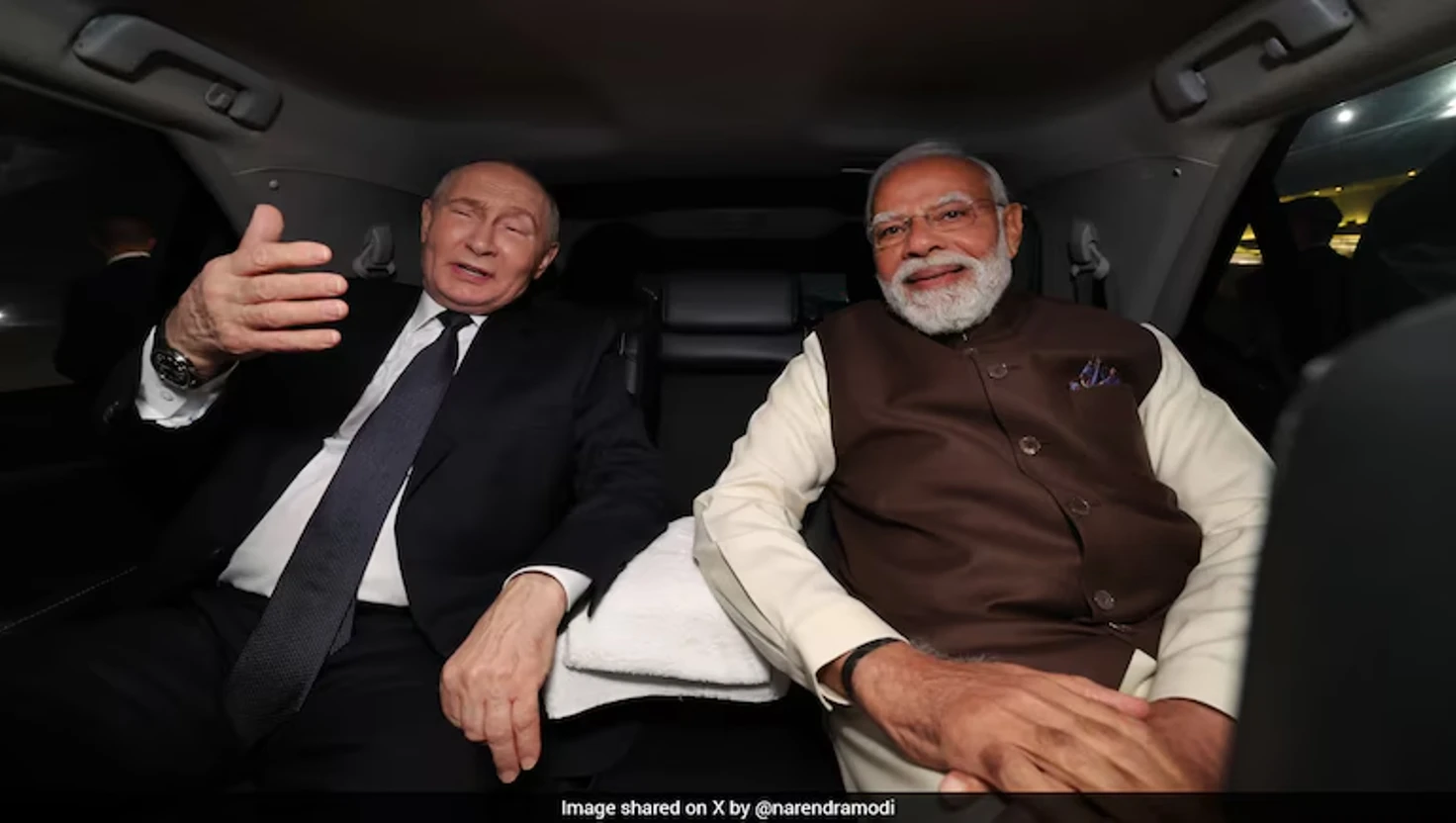
A recent selfie featuring Indian Prime Minister Narendra Modi and Russian President Vladimir Putin has sparked significant discussions within US political circles. The photograph, taken during Putin's visit to India, has been interpreted as a symbol of deepening ties between India and Russia, which some US lawmakers view as a potential threat to US interests.
The image was captured in a Toyota Fortuner, a choice that carries symbolic weight, as it represents a shift away from Western automobile brands. Instead of opting for a German Mercedes or a British Range Rover, the leaders chose a domestically assembled Japanese vehicle, which some analysts interpret as a deliberate message of solidarity.
During a recent hearing on US foreign policy in Congress, Congresswoman Sydney Kamlager-Dove showcased the selfie, arguing that US policies under President Donald Trump are pushing India closer to Russia. She stated, "This poster is worth a thousand words," emphasising that the current administration's actions are damaging the longstanding partnership between the two nations.
Kamlager-Dove asserted that the tariffs imposed by the Trump administration on Indian goods, including a 50% tariff on many products and an additional 25% penalty related to India's imports of Russian oil, are counterproductive. She warned that Trump risks being remembered as the president who alienated India, a country that has historically been a strategic partner for the United States.
The tariffs were implemented as a punitive measure in response to India's support for Russia amid the ongoing conflict in Ukraine. However, critics argue that the US stance towards India is hypocritical, especially given the limited trade the US maintains with Russia. This situation highlights the complexities of global trade dynamics and the evolving nature of international relations.
In an exclusive interview, President Putin described the car ride with Modi as a spontaneous idea that symbolises their friendship. This visit was significant as it marked Putin's first trip to India since the onset of the Ukraine crisis in 2022, further solidifying the bond between the two nations.
Republican representative Bill Huizenga also commented on the growing economic relationship between India and the US, noting that American companies are eager to establish a more equitable trading environment with India. He referred to the US-India partnership as "defining" for the 21st century, highlighting its importance in maintaining a free Indo-Pacific region.
Despite the apparent friction, President Trump has repeatedly referred to Modi as a friend, suggesting that there is still a desire for cooperation at the highest levels of government. However, the backdrop of stalled trade negotiations raises questions about the future of US-India relations.
Kamlager-Dove pointed out that coercive tactics are unlikely to yield positive results and may instead drive allies into the arms of adversaries. She urged the Trump administration to take immediate action to mend the relationship with India, using the selfie as a poignant reminder of the current diplomatic challenges.
As India continues to emerge as a major global economy, the implications of its shifting alliances will be closely monitored by both US policymakers and international observers. The Modi-Putin selfie serves as a potent symbol of the complexities and evolving nature of international relations in today's multipolar world.
Ceasefire Agreed in Oleshky Amid Ukraine's Humanitarian Crisis
Donald Trump Hints at US Interest in Cuba After Conflict in Iran
UK Court Rules Against India in RAKIA Investment Dispute
India Raises Concerns Over Chinese Border Patrolling Deviations