Jaguar Land Rover Announces Reduction of 4,000 Jobs in UK


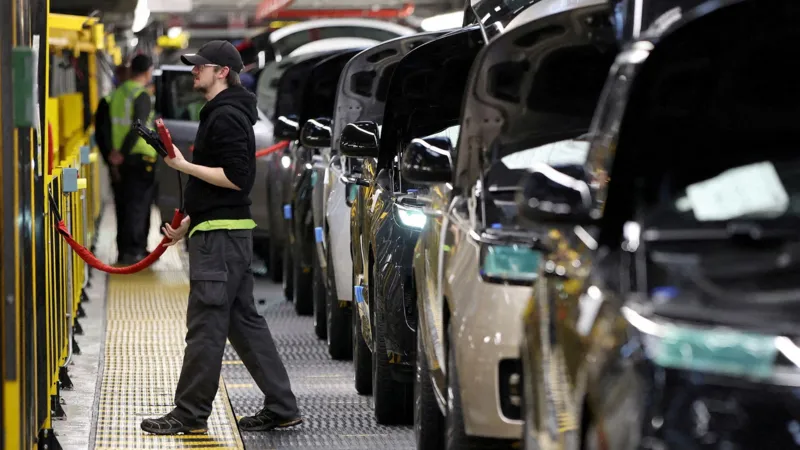
Jaguar Land Rover (JLR), a subsidiary of Tata Motors, has announced plans to reduce its workforce by 4,000 positions over the next two years. This decision is driven by several factors, including heightened competition from Chinese automakers, US tariffs, and the ongoing transition to electric vehicles. The job cuts will predominantly impact the company's UK head office. JLR, which employs approximately 43,000 people globally, is facing significant financial pressures exacerbated by a cyber-attack last year, which had forced the firm to halt production for more than a month.
Chief Executive Officer PB Balaji remarked on the company's commitment to approach the redundancy process with “care, fairness and respect”. He highlighted the unique challenges confronting the automotive sector, including transformative technological changes, intense competition, and ongoing geopolitical instability. In a bid to manage these challenges, the company aims to achieve its job reductions primarily through voluntary redundancies, with applications being accepted until 4 October. However, it has also indicated that compulsory redundancies may be necessary, albeit on less favourable terms.
Affected employees have been informed that they will receive further communication in the coming days regarding the redundancy process. The organisation intends to save around £1.7 billion over the forthcoming two years as part of its restructuring efforts.
David Bailey, a business and economics professor at Birmingham University, described JLR as crucial to the UK economy, noting that many jobs in the British supply chain depend on the firm’s health. He commented on last year’s cyber-attack, stating that the disruption had a broader negative impact on the UK economy. “It’s the centre of our automotive industry,” he noted.
Despite initial optimism, JLR has struggled to maintain sales in the face of aggressive competition from Chinese car manufacturers. In addition to this, tariffs imposed by the United States during the Trump administration have further complicated operations, as JLR lacks a manufacturing facility in the US, unlike many competitors. The company reported a drop in sales of nearly 20% over the year ending March, with revenues declining from £29 billion to £22.9 billion, a contraction attributed chiefly to tariffs and the cyber-attack.
Former BMW director Ian Robertson suggested that JLR should have emulated its rivals by establishing a manufacturing presence in the US earlier. He remarked, “JLR didn’t take that decision early enough in my view.” Furthermore, he commented on the company's delayed entry into the electric vehicle market, referencing the 2018 launch of the I-PACE as its first fully-electric model, with its upcoming electric Range Rover set to be the first of its kind since.
The UK government has expressed understanding regarding the concerns of affected employees. A spokesperson for the Prime Minister acknowledged the uncertainty facing workers and their families but ruled out the possibility of government bailouts for JLR. Business Secretary Jonathan Reynolds is expected to meet with JLR representatives to discuss the situation, although he has indicated that the government’s focus is on maintaining competitiveness in the sector rather than providing direct financial support.
Liam Byrne, Chair of the Business and Trade Committee, condemned the job cuts as a severe blow to workers and community stability in the West Midlands. He urged for assurances of support for those impacted by the job reductions, emphasising the need for revitalising their job prospects.
Union leader Sharon Graham has called for clarification regarding the redundancies and is advocating for measures to assist affected employees. She stressed the importance of exploring all avenues to reduce job losses, stating, “It cannot be acceptable that workers again are made to pay the price for failings not of their making.”
Critics have pointed to the zero emission vehicle mandate enforced by the UK government as a contributing factor to JLR's struggles, despite its intended benefits for the wider transition to electric vehicles. Shadow Transport Secretary Richard Holden pledged to scrap the mandate, citing it and rising energy costs as detrimental to the British automotive industry. In contrast, the UK Sustainable Investment and Finance Association has defended the mandate as essential for fostering investment in electric vehicle infrastructure.
As Jaguar Land Rover navigates these turbulent times, the sustainability of its operations and the well-being of its workforce remain at the forefront of public and economic discourse.
Kerala Initiates Probe into 2006 Suicide Case Involving CEC

Extradition of Sheikh Hasina Feasible, Says Indian High Commissioner

Punjabi Makeup Artist Mad Sandhu Shot Dead in Amritsar

India Achieves Fourth Place at Asian Games 2026 Through Late Success