Indian Stock Market Declines Amid Escalating US-Iran Tensions


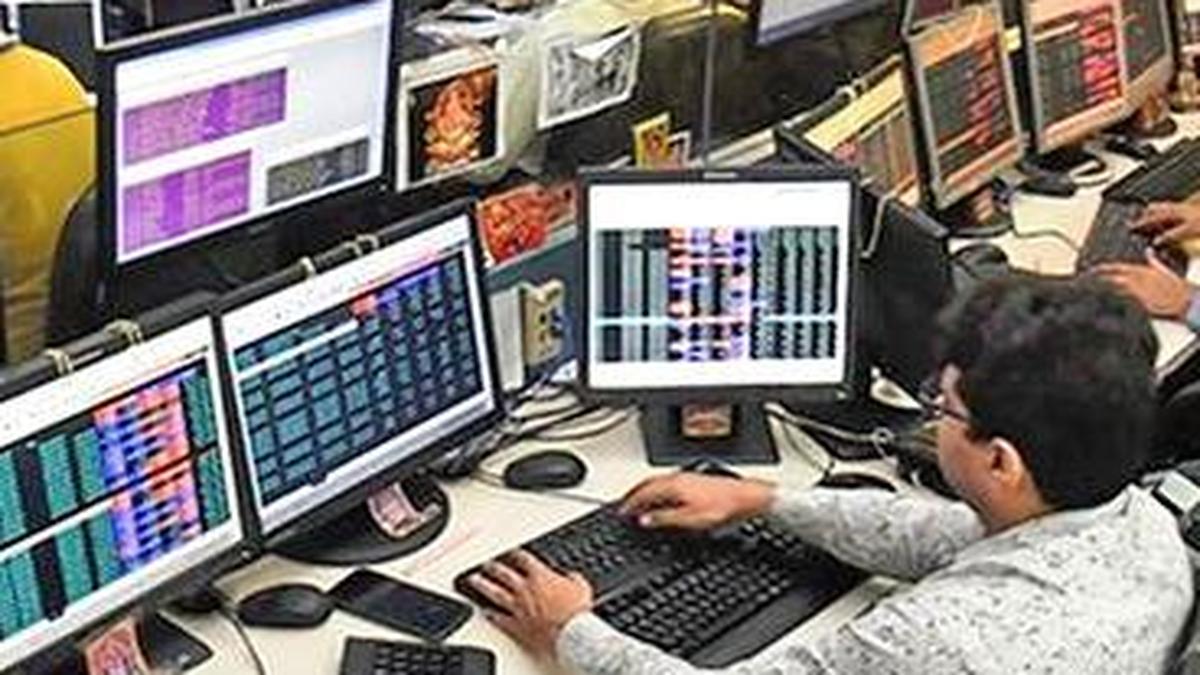
Indian equity markets faced a substantial downturn on July 8, 2026, as escalating tensions between the United States and Iran prompted widespread selling. This sell-off coincided with remarks made by US President Donald Trump, who indicated that negotiations with Iran were effectively ceased and confirmed renewed military actions against Iranian targets.
The outcome of Trump's statements led to heightened fears regarding geopolitical risks in the Middle East, casting shadows over global oil supply. Brent crude oil prices surged nearly 6.3%, reaching around $79 per barrel. This sharp increase spurred concerns over rising inflation and its potential impact on the Indian economy, which is significantly reliant on crude oil imports.
The BSE Sensex plunged 1,677.12 points, or 2.15%, closing at 76,503.60, while the Nifty 50 index dropped by 516.65 points, or 2.12%, to settle at 23,882.05. The decline marked one of the most significant sell-offs in recent months, with all sectoral indices registering losses. Financials and Information Technology sectors were particularly affected, with declines of 2.5% and 1.4% respectively, amidst heightened risk aversion among investors.
Market volatility was underscored by a more than 26% surge in the India VIX index, reflecting the increased uncertainty surrounding the markets. Analysts noted that the intensified geopolitical tensions were instrumental in driving investors to reduce their exposure to equities.
As coalitions of financial analysts explained, the repercussions of Trump's announcement unravelled the positive sentiment that had characterised the markets over the past months. Sarvam Goel, Founder of Pocketful, highlighted that the market reaction was not merely a correction but rather a reversal of the “tailwinds” that had supported the recent bullish trend.
Goel remarked, “Everything markets celebrated over the past two months... all unravelled in a single session.” He emphasized that the ramifications of rising crude prices extend well beyond immediate market impacts, affecting inflation, the currency, and monetary policy.
The rupee weakened by 0.62%, trading at ₹95.5550 against the US dollar, while the yield on the benchmark 10-year government bond rose by over 7 basis points to reach 6.7692%. The breadth of the market leaned heavily negative, with declines significantly outnumbering advances. The foreign institutional investor landscape saw potential selling activity emerging after several days of inflows, as concerns about macroeconomic stability resurfaced.
Sector-wise, oil marketing companies, airlines, and other related industries faced intense selling pressure due to the implications of increasing oil prices on operating costs and profit margins. The rising costs coupled with geopolitical uncertainties have further complicated India’s economic outlook.
Amidst all this, gold prices experienced a decline of ₹2,308 per 10 grams, hinting at weakening demand as market uncertainties persisted. In the midst of these tumultuous developments, companies such as Edelweiss Life Insurance reported their highest-ever claim settlement ratio of 99.31% for the financial year, reflecting their commitment to customer service despite broader financial sector challenges.
With crude oil prices showing no immediate signs of stabilization, market participants are urged to exercise caution, prioritising capital preservation amidst the uncertainty. As noted by analysts, market sentiment will likely remain under pressure until a clearer resolution emerges regarding the geopolitical landscape in the Middle East.

Kerala Initiates Probe into 2006 Suicide Case Involving CEC

Extradition of Sheikh Hasina Feasible, Says Indian High Commissioner

Punjabi Makeup Artist Mad Sandhu Shot Dead in Amritsar

India Achieves Fourth Place at Asian Games 2026 Through Late Success