India to Reduce FY27 Gross Borrowing to ₹15.99 Lakh Crore



The Government of India has revealed its intention to lower the gross market borrowing programme for the fiscal year 2027 to ₹15.99 lakh crore, which is beneath the initial budget estimate of ₹17.20 lakh crore. This decision is largely credited to enhanced tax collections and a rise in monetisation receipts. The government plans to secure ₹7.86 lakh crore through dated securities during the second half of the financial year, which includes an allocation of ₹15,000 crore via Sovereign Green Bonds.
In the previous fiscal year 2026, gross borrowings amounted to ₹14.8 lakh crore. Sources from the Finance Ministry indicated that the net market borrowings, which finance the fiscal deficit, will remain aligned with the budgeted figures. This indicates the government's dedication to maintaining fiscal prudence amid rising fiscal pressures.
Economists have highlighted that robust tax and non-tax revenues contributed to this reduction in the borrowing plan. Ranen Banerjee, a Partner and Leader in Economic Advisory at PwC India, noted, "The surprise profits reported by companies in recent quarterly reports and the pace of monetisation receipts have enabled the government to accommodate increased expenditures. This trend is expected to persist, as evidenced by the higher-than-expected growth in direct tax receipts. Consequently, this has facilitated a lower borrowing requirement that will be included in the debt calendar."
The government has garnered ₹55,500 crore so far this financial year through disinvestment, against a budget target of ₹80,000 crore. An additional ₹6,367 crore has been raised via the monetisation of assets held by public sector undertakings, while ₹15,000 crore has resulted from dividends paid by central public sector enterprises.
The planned borrowing of ₹7.86 lakh crore for the latter half of the financial year will be conducted through a series of 23 weekly auctions. The maturity distribution of the borrowings is set at 6.9% for three-year securities, 12.1% for five-year, 9.1% for seven-year, 26.3% for ten-year, 17.6% for fifteen-year, 9.2% for thirty-year, 8.9% for forty-year, and 9.9% for fifty-year securities. Furthermore, the government is expected to borrow ₹23,000 crore weekly through Treasury Bills in the third quarter.
A source from the Finance Ministry remarked, "The focus on longer-term securities will help us enhance our Weighted Average Maturity (WAM), which had decreased during the first half of the year. A longer WAM will aid in mitigating rollover risks."

Court Allows Seven Foreign Nationals to Return Home in Drone Case
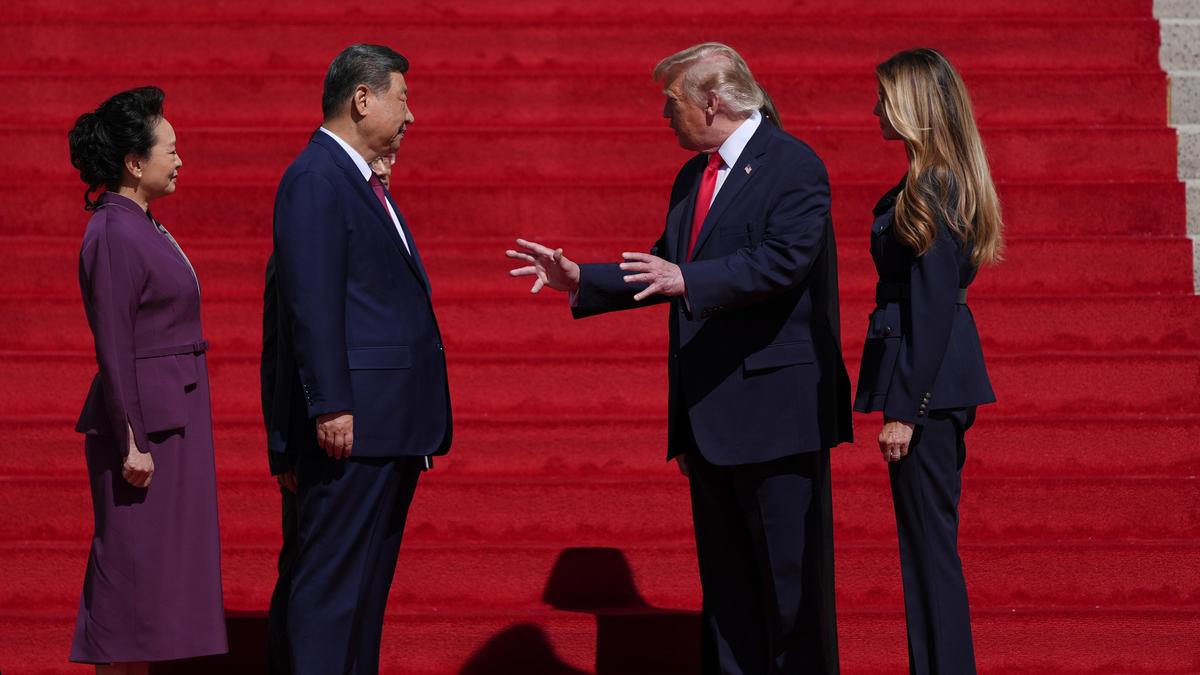
Trump and Xi Discuss AI and Iran During Productive Meetings

Iran Proposes Fund Agreement for Strait of Hormuz Reopening

Congo Plane Crash Claims 14 Lives, Including Military Officials