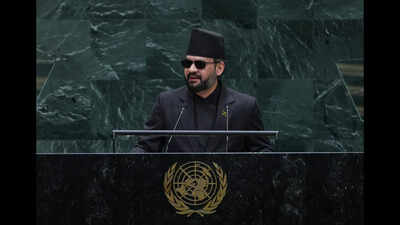
Pakistan Prime Minister to Address UN General Assembly on Kashmir


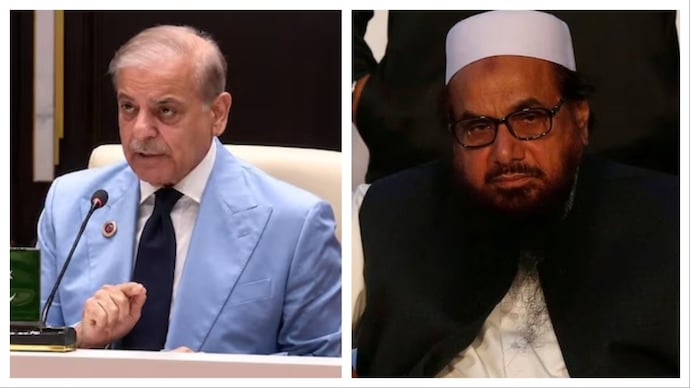
As Pakistan Prime Minister Shehbaz Sharif prepares to address the 81st United Nations General Assembly (UNGA) on 25 September, a reference from his previous speech has gained renewed attention. In his remarks at last year's UNGA, Sharif highlighted Pakistan's efforts in combating terrorism, stating, "Had these terrorists not been encountered by us, they would have been roaming on the streets of New York and London and God knows far East." This statement underscores Pakistan's ongoing narrative concerning security and terrorism in the region.
This forthcoming address marks Sharif's third appearance as Prime Minister at the UNGA. He intends to discuss the May 2025 conflict, known as the four-day war, triggered by India's Operation Sindoor. In his 2022 speech, he proclaimed, “We have won the war and now we seek to win peace in our part of the world,” before proposing a comprehensive dialogue with India on all unresolved issues, a statement interpreted as a reference to Kashmir.
Historically, Pakistan has used the UNGA platform to highlight its position on Kashmir, consistently presenting a narrative that includes calls for the self-determination of Kashmiris and framing accusations against India for alleged human rights violations. This theme has been evident in speeches by various Pakistani leaders, from former Prime Minister Zulfikar Ali Bhutto in 1965 to Imran Khan in 2019.
Sharif indicated that Pakistan’s military action sent India “back in humiliation, delivering a bloody nose,” even as he acknowledged Islamabad's acceptance of a ceasefire facilitated by then-US President Donald Trump. In his remarks, Sharif commended Trump’s involvement, stating, “Had he not intervened timely and decisively, the consequences of a full-fledged war would have been catastrophic.” In recognition, Sharif nominated Trump for the Nobel Peace Prize, an assertion that reveals Pakistan's attempts to foster international diplomatic relationships.
The Prime Minister also extended gratitude towards several nations, including China, Qatar, Turkey, and Saudi Arabia, for their diplomatic support at this pivotal moment. This collaboration aligns with Pakistan's long-standing strategy of seeking global backing concerning the Kashmir issue.
Prime Minister Imran Khan’s speech in September 2019 remains significant, as it coincided with the Pulwama terror attack and India’s subsequent military strikes. Khan's address deviated from the typical 15-minute format, lasting approximately 50 minutes. He articulated that Kashmir was the primary reason for his appearance at the UNGA, noting his attempts to initiate dialogue with Indian Prime Minister Narendra Modi. He expressed that Modi's administration was reluctant to engage due to terrorist attacks, while simultaneously pointing out that Pakistan faced similar issues.
Khan further elaborated on the Pulwama incident, depicting the attacker as a radicalised individual and criticising India's narrative surrounding the event. He stated, “If you give us any iota of proof, we will immediately take action… Rather than sending us any proof, they sent their jets and bombed us.” This claim encapsulates the ongoing tensions between the two nations regarding accusations of terrorism and military aggression.
The narrative on Kashmir remains a cornerstone of Pakistan’s diplomatic strategy at the UNGA, with historical precedents illustrating a pattern of addressing this sensitive issue on a global stage. From the speeches of past leaders to the current Prime Minister, Pakistan continues to advocate for international awareness and dialogue related to the Kashmir conflict, maintaining that self-determination is a critical issue requiring global attention and action.
As the UNGA convenes once more, the international community will be watching closely to see how these longstanding diplomatic tensions will be navigated and whether dialogues may finally take a constructive turn amidst this ongoing narrative.
Court Allows Seven Foreign Nationals to Return Home in Drone Case
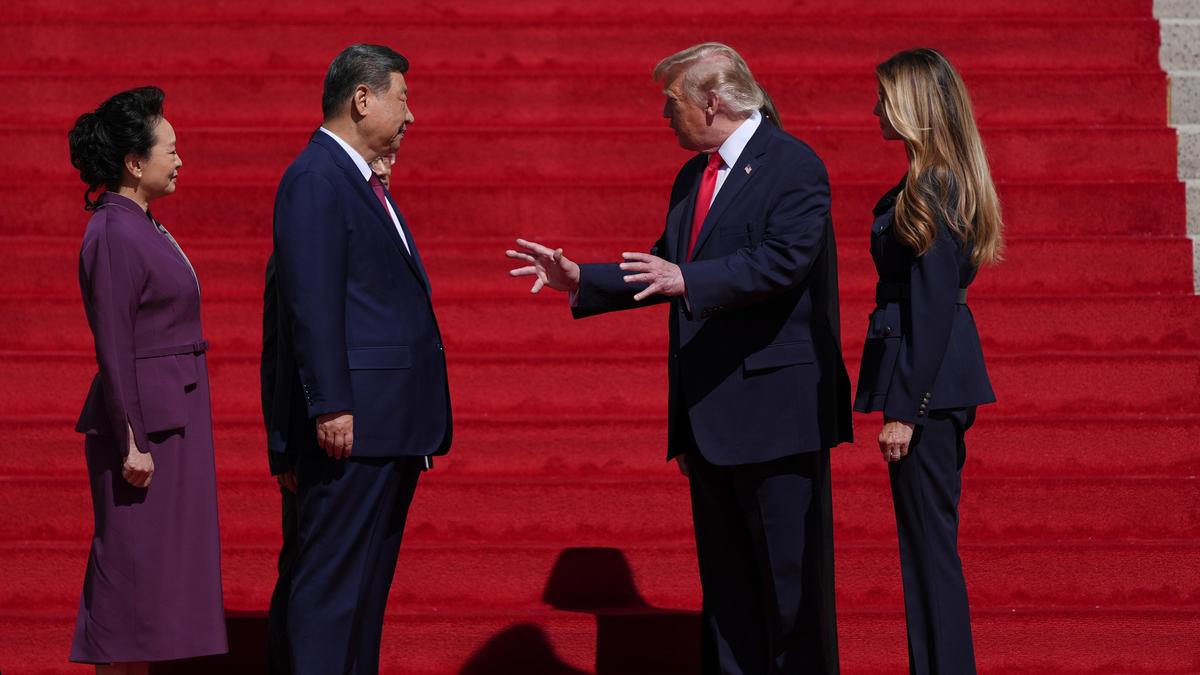
Trump and Xi Discuss AI and Iran During Productive Meetings
Iran Proposes Fund Agreement for Strait of Hormuz Reopening
Congo Plane Crash Claims 14 Lives, Including Military Officials